
 inquiry@tibettourism.com


.webp)


Qinghai-Tibet Railway: World’s Highest Rail from Xining to Lhasa
The Qinghai-Tibet Railway or Qingzang / Ching Hai Tibet Railway (Chinese: 青藏铁路) is the world highest elevation railway which connects Xining in Qinghai Province to Lhasa, Tibet Autonomous Region of China, and to the whole China railway network. On this railway, passenger trains run from Xining, Lanzhou, Chengdu, Chongqing, Beijing, Shanghai, and Guangzhou since 2006.
Qinghai-Tibet Railway Facts:
1. Starting & Terminal Station: Xining Railway Station - Lhasa Railway Station
2. Operation Date: 1984 (Xining-Golmud); 2006 (Golmud-Lhasa)
3. Rail Length: Xining-Lhasa (1,956km, 1,215mi) = Xining-Golmud (814km) + Golmud-Lhasa (1,142km)
4. Operating Speed: Xining-Golmud: 140 km/h; Golumd-Lhasa: 100 km/h in permafrost area and 120 km/h in non-permafrost area; Lhasa-Nyingchi: 160km/h; Lhasa-Shigatse: 120 km/h
5. Travel Duration: 19-22 hours depending on route
6. Train Ticket Class: Hard Seat, Hard Sleeper, Soft Sleeper
7. Altitudes Change: From 2,275m (Xining) to 5,231m (Tanggula Pass)
8. Highlights: Scenic plateau views, unique oxygen systems, engineering achievements
9. Major Train Stations: Xining, Delingha, Golmud, Tanggula, Amdo, Nagqu, Damxung, Lhasa
10. Qinghai-Tibet Railway Extensions: Lhasa-Nyingchi, Lhasa-Shigatse, Shigatse-Gyirong (China-Nepal Railway)
1. Highest Altitude Railway (max elevation 5,072m)
The Qinghai-Tibet Railway traverses 960 kilometers above 4,000 meters above sea level and reaches its highest point at Tanggula Pass (5,072m), making it the highest altitude railway ever constructed.
2. Longest Plateau Railway (1,956km)
The Golmud-Lhasa section traverses the Gobi Desert, marshy wetlands, and snow-capped mountains and grasslands, totaling 1,142 kilometers.
3. Longest Permafrost Railway (550km)
About 550km of tracks were built on unstable permafrost, requiring innovative cooling technologies to prevent melting.
4. Highest Railway Station (Tanggula Station, 5,069m)
Tanggula Station holds the record as the world’s highest railway station, located just below the pass at 5,069m above sea level.
5. Highest Permafrost Tunnel (Fenghuoshan Tunnel, 4,905m)
The Fenghuoshan Tunnel cuts through mountains at 4,905m elevation, making it the highest rail tunnel on Earth.
6. Longest Permafrost Tunnel (Kunlun Mountain Tunnel, 1,686m)
The Kunlun Mountain Tunnel, at 1,686 meters in length, is the world's longest permafrost tunnel on a plateau.
7. World’s Highest Track-Laying Base (Amdo Track-laying Base, 4,704m)
The Amdo track-laying base operates at 4,704m - the highest elevation for such railway construction facilities.
8. World’s Longest Permafrost Railway Bridge
The 11.7km Qingshui River Super Bridge is the longest bridge built on frozen ground.
9. Highest Speed Railway above 4,000m (100km/h)
Trains maintain 100km/h on permafrost sections and 120km/h on non-permafrost sections, unprecedented for such high-altitude operations.
Political Significance
Located at the southwest border of China, India, Nepal, Bhutan and Pakistan, Tibet has
the very important geographical position. It promoted the economic development of
Nepal's northern mountainous areas, and helped Nepal to appear on the world political
stage independently.
Economic Factors
As the limited industrial capacity of Tibet, the Tibetan economy highly depends on imports from mainland China provinces. It is an important issue to transfer goods in and out of the region. Before the railway’s operation, the basic route was the Qinghai-Tibet Highway which was build in the 1950s and connects Tibet to the neighbouring Qinghai province. Each year, there are only less than a million tonnes of goods being transferred. After the new railway’s operation, it brought a significant reduction in transport costs increased goods’ movement. By 2010, about 2.1 million tonnes were carried by train. The operation of the Qinghai-Tibet Railway also has shortened the land transportation time of trade between major cities in mainland China and Nepal from 12 to 18 days to less than one week.
Social Implications
At the same time, the Qinghai-Tibet Railway strengthens ties of Tibet and other Chinese areas, promotes cultural exchanges between Tibetans and other ethnic groups, and enhances the need for national unity. It is also expected to promote the development of Tibet tourism. Chinese state media ever reported that from January to July of 2007, Tibet had seen over 1.7 million arrivals - only slightly fewer than that of the whole 2005. In summer of 2018, the Qinghai-Tibet Railway has accepted 2.862 million passengers.
For centuries, Tibet was till cut off from the outside world by its remote location, extreme climate and geographic environment. The isolated region stopped all the explorers and travelers, until the operation of the Qinghai-Tibet Railway in 2006 when it connected Tibet to the rest of China.
1) In the 1950s, the CPC Central Committee decided to build the railway to Lhasa.
2) Since 1956, the first Survey and Design Institute of Ministry of Railways has carried
out a comprehensive survey and design work for the over 2000km line from Lanzhou to
Lhasa.
3) In 1984, the railway from Xining to Golmud was completed and opened to traffic.
4) In May 2002, the permafrost test on Qingzang Plateau was carried out.
5) In March 2003, the train track was laid through Kunlun mountain tunnel; in June,
Tanggula
Railway Station, the highest altitude in the world, was started to build; in August, the
laying and erecting project of train track successfully passed through Hoh Xil
depopulated
zone.
6) In August 2005, the subgrade, tunnel, bridge and culvert works of the whole
Qinghai-Tibet
railway were basically completed; on August 24, the railway track was laid through
Tanggula
Mountain; on October 12, the track laying of the whole railway was completed.
7) On March 1, 2006, Qinghai-Tibet freight train started operation test; on May 1,
Qingha-Tibet no passenger train started operation test; on July 1, the whole
Qinghai-Tibet
railway was put into trial operation.
A modern American train traveler Paul Theroux once wrote in his book "Riding the Red Rooster" that the Kunlun Range was "a guarantee that the railway will never get to Lhasa". But the assertion has been broken as a train coded "Qing 1" from Golmud to Lhasa runed through a 1,686-meter-long tunnel in Kunlun Mountain July 1, 2006.
The monumental Qinghai-Tibet Railway project was constructed between 2001 and 2006, representing one of the most ambitious engineering feats of the 21st century. This historic project connected Xining to Lhasa, finally realizing a dream first proposed in the 1950s but long considered technologically impossible. The construction crews overcame four extraordinary challenges that had previously made the project unfeasible:
1. Permafrost Construction
Engineers developed innovative cooling systems using thermosyphons and stone embankments to stabilize 550km of tracks built on permanently frozen ground that becomes unstable when thawed.
2. High-Altitude Work Conditions
Over 100,000 workers faced severe health risks from altitude sickness while constructing the railway at elevations above 4,000m, requiring special medical support systems.
3. Environmental Protection
The project implemented unprecedented ecological measures including 33 wildlife crossings and elevated tracks to protect Tibet’s fragile ecosystems and allow animal migration.
4. Oxygen Supply Systems
The railway pioneered special pressurized carriages with dual oxygen systems to ensure passenger safety.
Qinghai-Tibet Railway Map: Xining to Lhasa Train Schedule, Stations, and Highlights
The Qinghai Tibet Railway stretches 1,956km from Xining (the official starting point for all Tibet-bound trains) to Lhasa, passing through spectacular landscapes. The route features 45 stations, with major stops at Golmud, Tanggula Pass, Nagqu, Amdo, etc. Travelers witness diverse scenery from Qinghai Lake to snow-capped Kunlun Mountains and vast Changtang grasslands. Below you’ll find detailed schedules and highlights of this unforgettable journey.
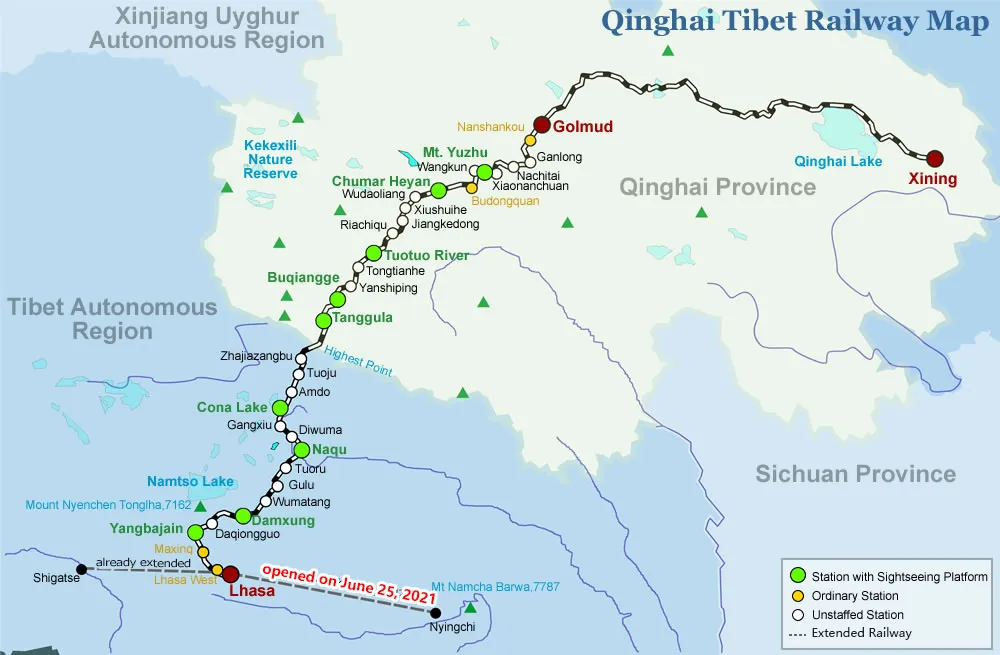
Qinghai-Tibet Railway Map
Qinghai-Tibet Railway Length and Train Journey Time
Extending from Xining to Lhasa, the whole length of Qinghai-Tibet Railway is 1956km. It takes only about 21 hours for Tibet trains running on it. Among them, there are 960km of the railway located at more than 4000m. All Tibet-bound trains must pass through Xining, the gateway to the Qinghai-Tibet Railway where you’ll transfer to oxygen-supplied trains. The oxygen systems are activated after reaching Golmud Station before ascending to the plateau.
| No. | Departure | Arrival | Duration | Frequency |
|---|---|---|---|---|
| Z323 from Chengdu | Xining (11:52) | Lhasa (07:41) | 19hrs 49mins | Every other day |
| Z223 from Chongqing | Xining (11:52) | Lhasa (07:41) | 19hrs 49mins | Every other day |
| Z8981 | Xining (12:50) | Lhasa (10:20) | 21hrs 30mins | Daily |
| Z21 from Beijing | Xining (15:32) | Lhasa (11:42) | 20hrs 10mins | Daily |
| Z265 from Guangzhou | Xining (18:19) | Lhasa (14:54) | 20hrs 35mins | Daily |
| Z165 from Shanghai | Xining (19:28) | Lhasa (15:30) | 20hrs 02mins | Daily |
| Z8991 | Xining (21:50) | Lhasa (18:26) | 20hrs 36mins | Daily |
The railway’s key stations include Xining (2,275m), Golmud (2,829m), Tanggula (5,069m), Nagqu (4,500m), and Lhasa (3,650m). The altitude changes dramatically along the route, beginning gently from Xining to Golmud, then rising steeply through the Kunlun Mountains to the Tanggula Pass summit. After crossing this highest point, the train gradually descends through the Tibetan Plateau to Lhasa. Oxygen supply systems and medical personnel support ensure passenger comfort during these extreme elevation changes.
Scenery along Qinghai-Tibet Railway
Reputed at “the Sky Road”, the Qinghai-Tibet Railway itself is a great wonder without doubt. In Addition, the breathtaking scenery is also worth your attraction along the railway. Traversing plains, mountain ranges, rivers and lakes, grasslands, densely populated cities and the desolate Gobi, the scenery of Qinghai-Tibet Plateau is majestic and of various types, especially the section from Golmud to Nagqu.
-
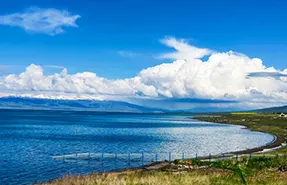
1. Qinghai Lake
-
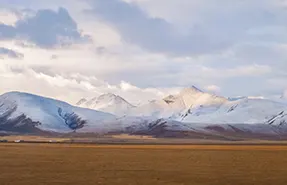
2. Kunlun Mountains
-
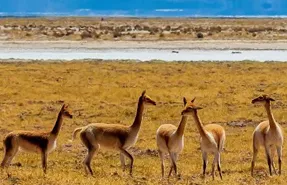
3. Hoh Xil National Nature Reserve
-
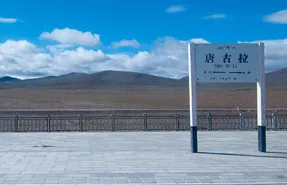
4. Tanggula Railway Station
The famous sites along the railway include vast and clear Qinghai Lake, marvelous Kunlun Mountains and Tanggula Mountain ranges, uninhabited Hoh Xil National Nature Reserve, the origin of Yangtze River, and Qiangtang National Nature Reserve etc. Together with the rare wild animals like Tibetan antelopes and yaks, Tibetan folk houses, prayer flags and Mani stones, they will reward tourists with a lifetime unforgettable memories.
-
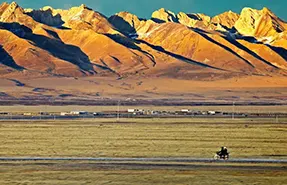
5. Tanggula Mountain Ranges
-
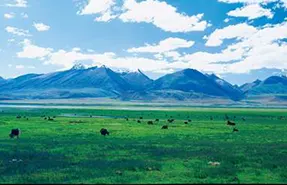
6. Nagqu Grassland
-
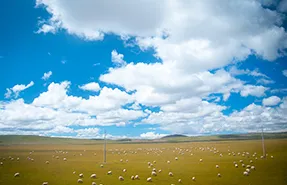
7. Tibetan Sheep
-

8. Namtso Lake
Do not miss any moment of extraordinary nature which you will sea through the Qinghai-Tibet train windows. Passing through the Fenghuoshan Tunnel of Tanggula Mountain, you really get a sense of the altitude at which you're moving. At a soaring 5068m above sea level, Tanggula Station is the world highest railway station. As the Tibet train climbs up a mountain pass trudging toward Lhasa, the lofty snow-capped Kunlun Mountains are veiled in a wispy mist. Through the train window, the great expanses of the Qinghai-Tibet Plateau roll into view: the grasslands dotted with black yaks and prayer flags fluttering from gold-topped temples. This is definitely the “Roof of the World”.
Qinghai-Tibet Railway Routes: All Lhasa Trains Running on Qingzang Railway
The highest Qinghai-Tibet Railway in the world connects Lhasa not only to Xining but also to the whole Chinese railway network. Since its opening in 2006, Tibet train has become a good choice for international and domestic tourists to Tibet. Nowadays, passengers can take a direct train from these cities to Lhasa, such as Xining, Lanzhou, Chengdu, Chongqing, Beijing, Shanghai and Guangzhou. Every day, there are 5 to 6 trains running the same route between Xining and Lhasa.The trains from these cities to Lhasa:
| Tibet Train Route No. | Duration | Distance | Frequency | Soft Sleeper | Hard Sleeper | Hard Seat | Book |
|---|---|---|---|---|---|---|---|
| Z21 Beijing West (19:22) - Lhasa (11:42) | 40h20m | 3,757km | Daily | $164upper / $170lower | $103upper / $106middle / $109lower | $52 | Book |
| Z164 Shanghai (18:33) - Lhasa (15:30) | 44h57m | 4,373km | Daily | $180upper / $187lower | $114upper / $117middle / $120lower | $58 | Book |
| Z264 Guangzhou Baiyun (09:27) - Lhasa (14:54) | 53h27m | 4,980km | Daily | $210upper / $218lower | $124upper / $128middle / $131lower | $64 | Book |
| Z322 Chengdu West (21:10) - Lhasa (07:41) | 34h31m | 3,014km | Every other day | $143upper / $148lower | $86upper / $92middle / $95lower | $43 | Book |
| Z223 Chongqing West (21:53) - Lhasa (07:41) | 33h48m | 3,055km | Every other day | $143upper / $148lower | $86upper / $92middle / $95lower | $43 | Book |
| Z165 Xi’an (09:27) - Lhasa (15:30) | 30h03m | 2,864km | Daily | $118upper / $122lower | $88upper / $90middle /$93lower | $42 | Book |
| Z323 Lanzhou (08:40) - Lhasa (11:20) | 20h30m | 2,118km | Daily | $112upper / $116lower | $75upper / $77middle / $79lower | $34 | Book |
| Z8991 Xining (22:00) - Lhasa (18:26) | 20h26m | 1,956km | Daily | $112upper / $116lower | $71upper / $73middle/ $74lower | $42 | Book |
Of course, you can also board the train at stopover stations to Lhasa, such as Shijiazhuang North, Taiyuan, Zhongwei, Suzhou, Wuxi, Nanjing, Bengbu, Xuzhou, Zhengzhou, Xian, Nanchong North, Guangyuan, Chenzhou, Changsha, Wuchang, Delingha, Golmu, Nagqu, etc.

China-Tibet Railway Map
Tibet Train Ticket Class: Which Type to Choose and How to Book
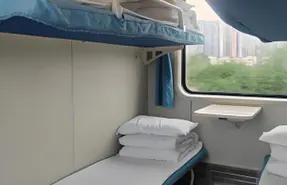
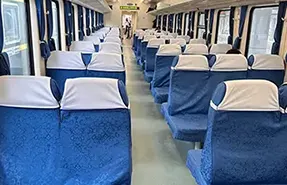
Choosing the right class significantly impacts your Tibet train experience. Hard Seat (cheapest) features upright benches suitable for short journeys but uncomfortable for overnight trips. Hard Sleeper offers open-plan six-bunk compartments with reasonable comfort for budget travelers. Soft Sleeper provides private four-bunk cabins with more space and amenities, ideal for the full journey. Prices vary by 30-50% between classes. Booking requires passport copies or photo, best arranged through authorized agencies like us Tibet Horizon 60 days in advance due to high demands.
| Feature | Soft Sleeper | Hard Sleeper | Hard Seat |
|---|---|---|---|
| Xining to Lhasa Train Z8981 / Z8991 | 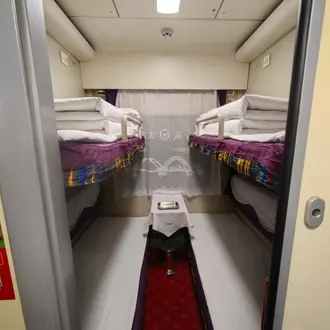
|
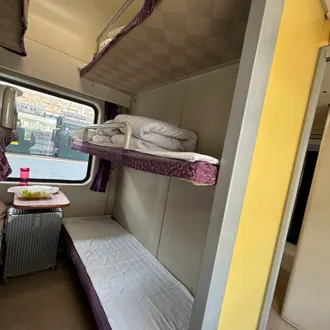
|
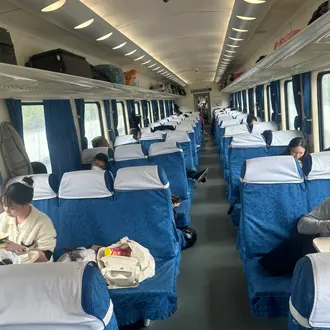
|
| Comfort Level | ★★★★☆ (High) | ★★★☆☆ (Medium) | ★☆☆☆☆ (Low) |
| Berths per Compartment | 4 (2 upper, 2 lower) | 6 (2 upper, 2 middle, 2 lower) | No berths (seats only) |
| Privacy | More (with door) | Less (no door) | None |
| Bed Softness | Softer mattress | Firmer mattress | No bed |
| Space | More spacious | Less spacious | Very cramped |
| Noise Level | Lower | Higher | Very high |
| Cost | Most expensive Upper Berth: $108, Lower Berth: $112 |
Moderate Upper Berth: $69, Middle Berth: $70, Lower Berth: $72 |
Cheapest Hard Seat: $31 |
| Best for | Comfortable travel | Budget travelers | Short trips or low-budget travelers |
Tibet Train Facilities and Life Onboard: Experience the Unique Qinghai-Tibet Railway Journey
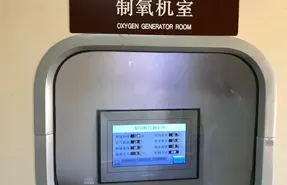
The specially designed trains feature pressurized carriages with dual oxygen systems, large scenic windows, and comfortable seating areas. Each carriage maintains constant temperature and humidity despite extreme outside conditions. Passengers enjoy clean facilities, regular meal service, and breathtaking views of the Tibetan landscape throughout the journey.
-
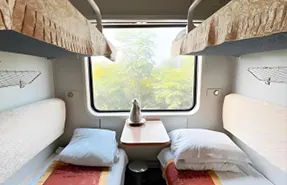
1. Soft Sleeper
-
2. Hard Sleeper
-
3. Hard Seat
-
4. Oxygen Supply System
The train offers three accommodation tiers with varying comfort levels. Hard Seat provides basic transportation, while sleeper classes add privacy and rest opportunities. All classes benefit from the unique oxygen enrichment systems that make high-altitude travel possible.
-
5. Restroom
-
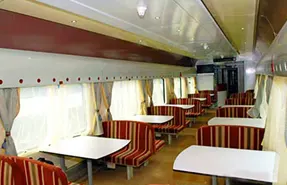
6. Dining Car
-

7. Medical Service
-
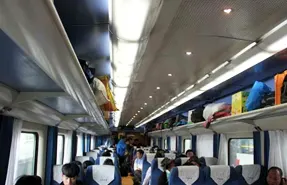
8. Luggage Allowance
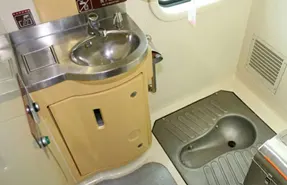
Modern sanitation facilities, a dining car serving Chinese and Tibetan meals, medical support for altitude issues, and generous luggage allowances ensure a comfortable journey. Staff are trained to assist with altitude-related concerns and general needs throughout the trip.
Lhasa-Nyingchi Railway: Tibet’s Newest Highland Route
Opened in 2021, this 435km extension connects Lhasa to Nyingchi in southeast Tibet, crossing 47 bridges and 121 tunnels. The route descends from 3,650m to 3,100m, offering spectacular views of the Yarlung Tsangpo Canyon and Namcha Barwa peak. This bullet train line reduces journey time to 3.5 hours through Tibet’s most fertile and scenic regions.
| Train No. | Departure | Arrival | Duration | Frequency | Book |
|---|---|---|---|---|---|
| C881 | Lhasa (07:45) | Nyingchi (11:33) | 3hrs 48mins | Daily | Book |
| K6831 | Lhasa (11:15) | Nyingchi (16:16) | 5hrs 1min | Mon., Wed., Fri., Sun. | Book |
| K6833 | Lhasa (16:10) | Nyingchi (21:44) | 5hrs 34mins | Daily | Book |
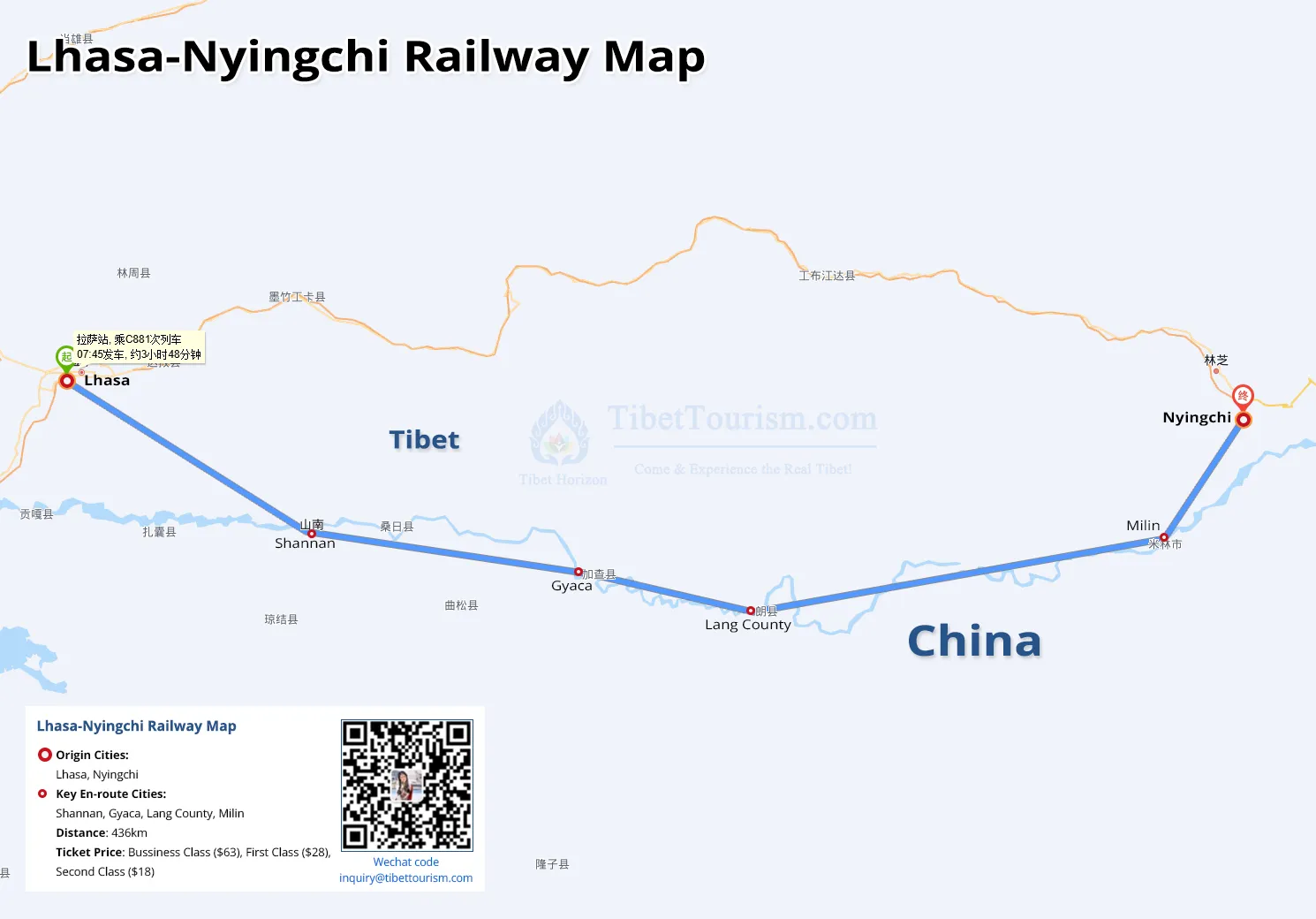
Lhasa-Nyingchi Railway Map
Lhasa-Kathmandu Railway: Future Connection of Qinghai-Tibet Railway to Nepal
In a meeting between Chinese and Nepalese officials on 25 April 2008, the Chinese delegation announced the intention to extend the Qinghai-Tibet railway to Zhangmu (Nepali: Khasa) , the China-Nepal border. Nepal had requested that the railway be extended to enable trade and tourism between both countries. The Lhasa-Shigatse railway opened in August 2014. In June 2018, China and Nepal signed a series of agreements including the construction of Shigatse-Kathmandu railway during Nepali prime minister Oli's visit to China. Construction is expected to be completed by 2030.
Lhasa-Shigatse Railway: Connecting Tibet’s Two Great Cities
This 253km vital rail link connects Tibet’s capital Lhasa with the historic city of Shigatse, traversing the spectacular Yarlung Tsangpo River valley. Opened in 2014, it was Tibet’s first railway extension beyond the original Qinghai-Tibet line. This railway has transformed travel between Tibet’s two most important cities, reducing the lengthy mountain drive to a comfortable 2.5h train ride while boosting regional tourism.
| Train No. | Departure | Arrival | Duration | Frequency | Book |
|---|---|---|---|---|---|
| C4391 | Lhasa (08:55) | Shigatse (11:35) | 2hrs 40mins | Daily | Book |
| C887 | Lhasa (13:00) | Shigatse (15:20) | 2hrs 20mins | Daily | Book |
| C4393 | Lhasa (15:05) | Shigatse (18:07) | 3hrs 2mins | Daily | Book |
| C883 | Lhasa (16:30) | Shigatse (19:02) | 2hrs 32mins | Fri., Sun. | Book |
Shigatse-Gyirong Railway: Gateway to Nepal
This 556km route extends from Shigatse to Gyirong on the China-Nepal border, reaching elevations up to 4,200m. The railway facilitates cross-border trade and tourism, with future plans to connect to Kathmandu. The journey travels through Himalayan foothills, passing traditional Tibetan villages and monasteries. If completed, it will be one of the busiest route connecting Tibet and Nepal.
Gyirong-Kathmandu Railway: Future International Link
Planned as China-Nepal cooperation, this 559.41km trans-Himalayan railway will connect Gyirong to Kathmandu through challenging mountain terrain. When completed, it will be the first direct rail link between China and South Asia.
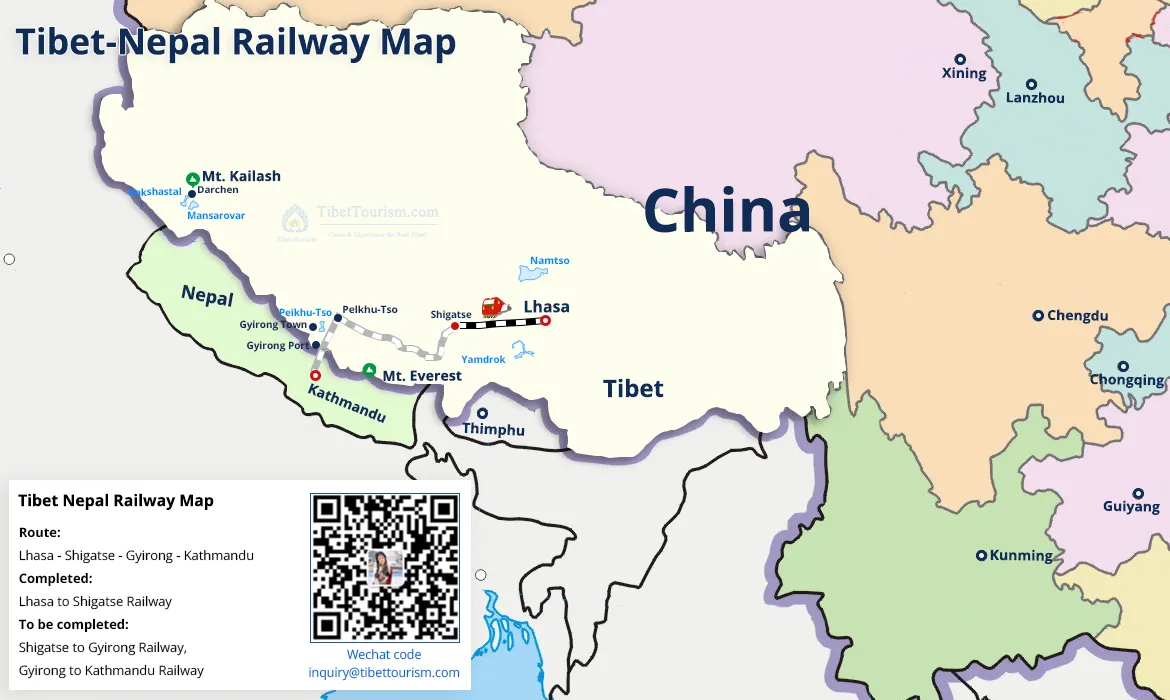
Tibet-Nepal Railway Map
New China-Tibet Railway Under Construction: The Future of High-Altitude Rail Travel to Lhasa
China is currently undertaking an ambitious expansion of its railway network to Tibet that will revolutionize access to the Himalayan region. Several groundbreaking projects are either under construction or in advanced planning stages that will dramatically improve connectivity between Tibet and other parts of China. The economic and tourism implications are enormous- these routes could double visitor numbers to Tibet while stimulating regional development along their paths. For travelers, the benefits will be transformative: shorter journey times, more route options, and improved comfort on next-generation trains designed specifically for high-altitude operation. The new railways will also facilitate cultural exchange and economic integration, connecting remote Tibetan communities with major urban centers. These projects represent not just engineering milestones but a new chapter in Tibet’s development and accessibility. Below we examine each route in detail.
Sichuan-Tibet Railway : Most Challenging New Route from Chengdu to Lhasa
The Sichuan-Tibet Railway (Sichuan-Xizang Railway or Chuanzang Railway), already under construction, represents just one component of this sweeping infrastructure initiative that includes the proposed Yunnan-Tibet and Xinjiang-Tibet routes. When completed, these new rail lines will reduce travel times from China’s southwest to Lhasa by an unprecedented 50-70%, making Tibet more accessible than ever before.
Yunnan-Tibet Railway: Scenic Southern Approach from Kunming to Lhasa
Spanning 1,877 kilometers from Kunming to Lhasa, the Ynnan-Tibet railway (Yunnan-Xizang Railway or Dianzang Railway) operates at 140-160 km/h speeds, traversing spectacular landscapes from Yunnan's fertile plains to Tibet’s high plateaus. Ity represents China’s third major rail route to Tibet and a vital transportation artery in Southwest China. When completed, it will offer the most spectacular mountain scenery of any Tibet railway route.
Xinjiang-Tibet Railway: Connecting Western China from Hotan to Lhasa
The proposed Xinjiang-Tibet Railway (Xinjiang-Xizang Railway or Xinzang Railway) represents one of China’s most ambitious future rail projects, designed to create a direct transportation link between Xinjiang and Tibet. This strategic route will connect Hotan in Xinjiang to Lhasa in Tibet, with the line branching from the existing Hotan-Ruoqiang Railway at Zangge Station. The railway comprises two key sections: the Hotan-Shigatse segment and the already operational Shigatse-Lhasa line (part of the Lhasa-Xigaze Railway completed in 2014). This strategic route would create a new overland corridor between Xinjiang and Tibet, though permafrost and extreme weather present significant engineering challenges.
Travel along Qinghai-Tibet Railway with Tibet Horizon
Ready to experience Tibet’s magic via the legendary Qinghai-Tibet Railway? Travel with Tibet Horizon-we turn this iconic rail journey into smooth and meaningful adventures, blending stunning views and easy acclimatization. Below are our curated Tibet train tour packages along the Qinghai-Tibet Railway for your trip.
-
![9 Days Xining Train to Lhasa Shigatse Everest Base Camp Tour]()
9 Days Xining Train to Lhasa Shigatse Everest Base Camp Tour
Features:
Unparalleled train trip experience
The most scenic train ride
A time-reasonable optionGroup size: Min.1 pax
Tour price: free enquire >
-
![10 Days Lanzhou Train to Lhasa Shigatse Everest Base Camp Namtso Tour]()
10 Days Lanzhou Train to Lhasa Shigatse Everest Base Camp Namtso Tour
Features:
Lifetime train ride experience on the Qinghai-Tibet Railway
Mysterious and profound Tibetan Buddhism
Sacred lakes on the Tibet PlateauGroup size: Min.1 pax
Tour price: free enquire >
-
![10 Days Xian Train to Lhasa Shigatse Everest Base Camp and Namtso Tour]()
10 Days Xian Train to Lhasa Shigatse Everest Base Camp and Namtso Tour
Features:
Experience a train journey on the plateau
Traverse the rail to heaven
Vast grassland and serene lakesGroup size: Min.1 pax
Tour price: free enquire >
-
![10 Days Shanghai Train to Lhasa Shigatse and Namtso Lake Tour]()
10 Days Shanghai Train to Lhasa Shigatse and Namtso Lake Tour
Features:
An epic train journey
From eastern to western China
Different vibes of Chinese citiesGroup size: Min.1 pax
Tour price: free enquire >
-
![11 Days Shangri-La Xining Train to Lhasa Shigatse Everest Base Camp Namtso Tour]()
11 Days Shangri-La Xining Train to Lhasa Shigatse Everest Base Camp Namtso Tour
Features:
Train Ride to the Roof of the World
Sacred Lakes Surrounded by Snowy Mountains
Grand Himalayan RangeGroup size: Min.1 pax
Tour price: free enquire >
-
![11 Days Macau Train to Lhasa Shigatse Everest Base Camp Namtso Tour]()
11 Days Macau Train to Lhasa Shigatse Everest Base Camp Namtso Tour
Features:
Scenic Train to the Roof of the World
Solemn Tibetan monasteries
Grand Himalayan RangeGroup size: Min.1 pax
Tour price: free enquire >
-
![11 Days Kunming Xining Train to Lhasa Shigatse Everest Base Camp Namtso Tour]()
11 Days Kunming Xining Train to Lhasa Shigatse Everest Base Camp Namtso Tour
Features:
Lifetime Train Journey to the Tibet Plateau
Renowned landmarks deep in religious and cultural atmosphere
Snowy-capped Himalayan RangeGroup size: Min.1 pax
Tour price: free enquire >
-
![11 Days Hong Kong Train to Lhasa Shigatse Everest Base Camp Namtso Tour]()
11 Days Hong Kong Train to Lhasa Shigatse Everest Base Camp Namtso Tour
Features:
Sky Train to the Roof of the World
Tibetan Buddhism Learning at renowned monasteries
Breathtaking Scenery of the HimalayasGroup size: Min.1 pax
Tour price: free enquire >
-
![11 Days Beijing Xian, Qinghai-Tibet Train to Lhasa and Shanghai Tour]()
11 Days Beijing Xian, Qinghai-Tibet Train to Lhasa and Shanghai Tour
Features:
Ultimate China tour with Tibet
Best choice forfirst-timers in China
Diverse landscapes and city vibesGroup size: Min.1 pax
Tour price: free enquire >
-
![12 Days Chengdu Train to Lhasa Shigatse Everest Base Camp and Namtso Lake Tour]()
12 Days Chengdu Train to Lhasa Shigatse Everest Base Camp and Namtso Lake Tour
Features:
Eastern Himalaya discovery
From basin to plateau
Snowy mountains and ancient glaciersGroup size: Min.1 pax
Tour price: free enquire >
-
![12 Days Chongqing Train to Lhasa Shigatse Everest Base Camp and Namtso Lake Tour]()
12 Days Chongqing Train to Lhasa Shigatse Everest Base Camp and Namtso Lake Tour
Features:
Budget-friendly train trip
Popular tourist destinations
Ascend to the Roof of the WorldGroup size: Min.1 pax
Tour price: free enquire >
-
![12 Days Guangzhou Train to Lhasa Shigatse Everest Base Camp and Namtso Lake Tour]()
12 Days Guangzhou Train to Lhasa Shigatse Everest Base Camp and Namtso Lake Tour
Features:
Major start of Tibet train
Explore port city and holy city
Diverse Lingnan and Tibetan cultureGroup size: Min.1 pax
Tour price: free enquire >
-
![14 Days Beijing Xian, Qinghai-Tibet Train to Lhasa Chongqing Yangtze Cruise to Shanghai Tour]()
14 Days Beijing Xian, Qinghai-Tibet Train to Lhasa Chongqing Yangtze Cruise to Shanghai Tour
Features:
China wish list tour
Historical and natural wonders
China's longest river cruiseGroup size: Min.1 pax
Tour price: free enquire >
-
![11 Days Xinjiang Xining Train to Lhasa Shigatse Everest Base Camp Namtso Tour]()
11 Days Xinjiang Xining Train to Lhasa Shigatse Everest Base Camp Namtso Tour
Features:
Lifetime Train Journey to the Tibet Plateau
Snowy-capped Himalayan Range
Shimmering Lakes Nestled in MountainsGroup size: Min.1 pax
Tour price: free enquire >
-
![12 Days Taiwan Chengdu Train to Lhasa Shigatse Everest Base Camp and Namtso Lake Tour]()
12 Days Taiwan Chengdu Train to Lhasa Shigatse Everest Base Camp and Namtso Lake Tour
Features:
Sky Train to the Roof of the World
Diverse Chinese cultures encounter
Breathtaking Scenery of the Himalayan MountainsGroup size: Min.1 pax
Tour price: free enquire >


Qinghai-Tibet Railway Travel Guide
-

Sichuan Tibet Railway: Route Map, Progress & Completion Date
-

Lhasa to Gyirong Railway and Train: Latest Status, Map, and How to Travel
-

Lhasa Railway Station: Get Fully Prepared for Your Tibet Train Tour
-

Qinghai-Tibet Railway Stations: Tibet Train Stops from Xining to Lhasa Explained (2026 Update)
-

Tibet Train Scenery: What Can You See along Qinghai-Tibet Railway