
 inquiry@tibettourism.com


.webp)


Tibet Weather
Understanding Tibet's weather patterns and climate ensures your visit coincides with the most favorable conditions. Whether you're drawn to the allure of Lhasa, the grandeur of Mount Everest, or the sacredness of Mount Kailash, knowing when to go is key to a rewarding experience.
Check our comprehensive guide on Tibet Weather, which delves into the climatic characteristics of Tibet, providing insights into the best times to visit popular destinations. We offer a detailed month-by-month breakdown of weather conditions, so you can anticipate the weather and prepare accordingly. From the warm summers to the crisp winters, each season in Tibet has its own charm and set of activities. We aim to help you make informed decisions about when to embark on your journey, ensuring that you can fully appreciate the natural beauty and cultural richness of Tibet, no matter when you choose to travel.
Tibet Weather and Climate by Month & Season
Find out seasonal variations of Tibet, where each season paints the landscape with a different palette and offers different festival experiences. Understanding the advantages of each season helps you plan your Tibet journey and experience the best of Tibet at your preferred times. Check out our month-by-month guide to Tibet’s weather and climate. Discover the temperature and precipitation of different months and suitable clothing and activities during each month. Our detailed overview equips you with the knowledge to plan your visit to Tibet at the perfect time.
.webp "Tibet Weather Map")
Tibet Temperature Map
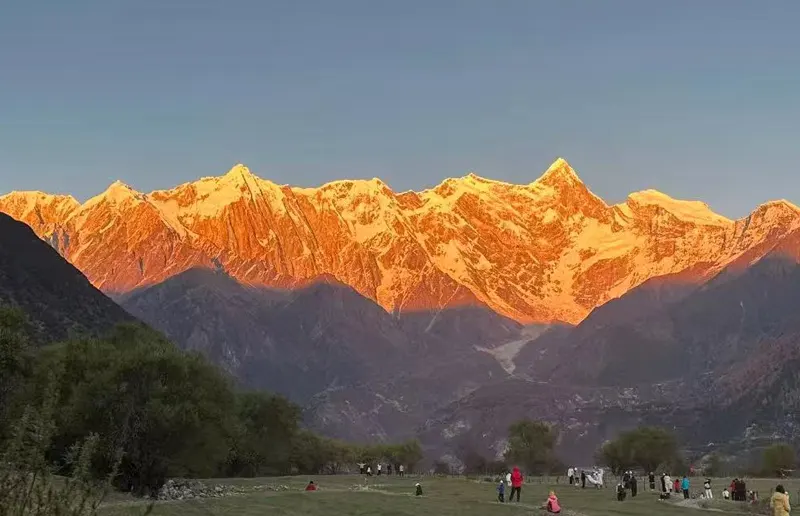
January ranks as Tibet’s coldest month with frigid nights, scarce precipitation and nonstop bright sunshine. Snow covers surrounding mountains, tourist numbers are extremely low, yet high mountain roads to remote lakes remain blocked by heavy snow.
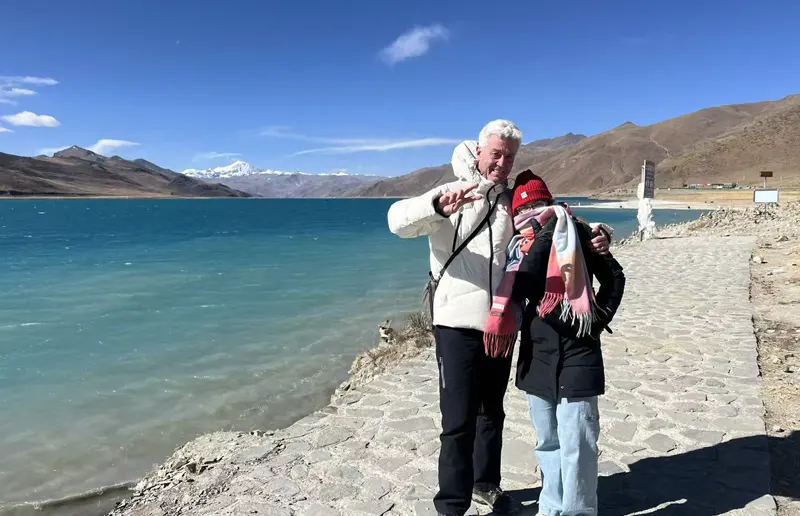
February brings slightly warmer daytime temperatures than January with ultra-dry weather and snow-capped mountain landscapes. If Losar falls this month, you can experience authentic Tibetan New Year customs amid quiet off-season sightseeing.

Winter is walking away from Tibet in March gradually, with lingering cold and frequent dusty afternoon winds. Clear skies deliver wonderful mountain views, while the mountain ranges is still snow-capped. Regardless of the cold temperature during the night, Tibet will surprise every tourist with its natural views and cultural sites.

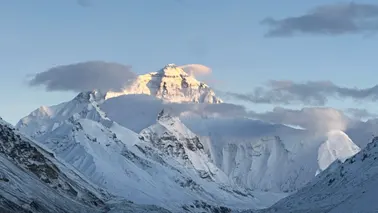
April indicates the coming of Tibet’s spring days. It brings steadily rising spring temperatures, melted snow on main highways and blooming peach blossoms in Nyingchi. Crystal-clear skies greatly boost your chance to capture unobstructed views of Everest summit.

May features mild pleasant weather and little rainfall, with green meadows spreading across the plateau. Roads to Namtso and Everest Base Camp fully reopen, ideal for cultural and alpine landscape tours.

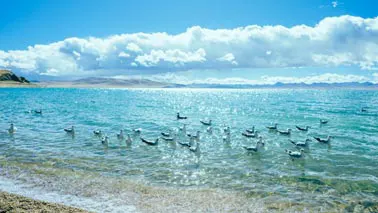
June stays warm and mostly dry before the arrival of monsoon rains. Lush grasslands and turquoise lakes form perfect photography scenes, with far fewer tourists than July and August.

July is Tibet’s warmest month and the core rainy season. Rain mostly falls overnight without disrupting daytime tours, yet thick clouds often block distant Himalayan mountain summits.

August remains rainy with warm weather and lush green scenery, overlapping with Lhasa’s grand Shoton Festival. Tourist crowds hit annual peak, and mountain visibility fluctuates due to seasonal clouds.

After monsoon ends, September owns dust-free transparent air and zero persistent rain. It offers flawless Himalayan visibility, the perfect month for Everest shooting and Kailash pilgrim trekking.

October boasts golden autumn plateau scenery and stable clear weather. High-altitude overland routes stay open in early October before snow seals mountain passes for winter.

November enters dry low tourist season with rapidly falling temperatures. High-altitude lakes start to freeze over and lofty mountains like Kailash Parvat may be closed for trekking due to the dangerous ice-capped roads. Lhasa city and nearby regions like Shigatse and Nyingchi are still accessible with abundant shunshine.
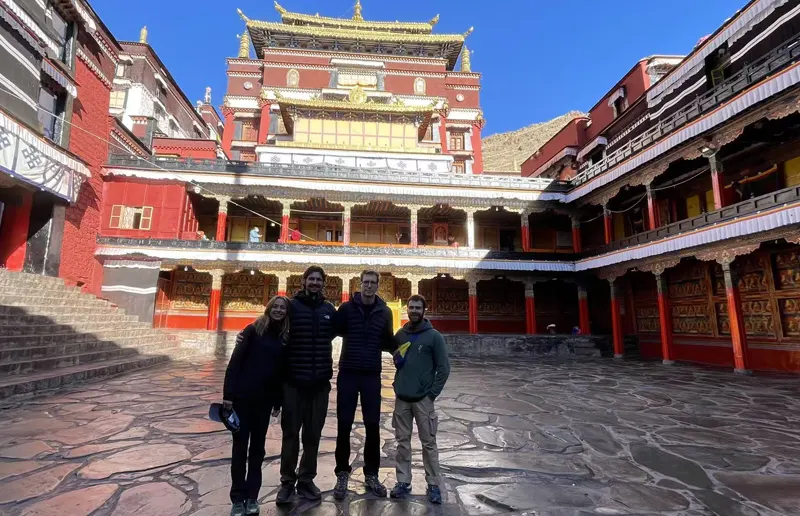
Tibet will see some international tourists in December because of the Christmas Holidays. It rarely rains at the end of the year. On the contrary, December features constant bright sunshine and nearly zero rainfall, which will make this mysterious place more beautiful and spectacular.

When is the best time to travel to Tibet? Tibet can be visited all year around. Every season has its own unique beauty. Accordingly, the best time to visit Tibet should depend what you want to see and do and your personal interests are.

Find the min. and max degrees of major Tibet tourist regions each month, such as: Lhasa, Nyingchi, Shigatse, EBC, Mount Kailash, etc. And choose one of the best time and suitable time for yourself here.

In the vast land of China, if you want to name a place you must visit in your life, it must be Tibet. Winter goes and spring comes, when this winter is over, let's travel to Tibet to enjoy flowers and blossoms together.

Travelling to Tibet in winter is recommended by our travel agency. You will avoid peak travel times and the noisy crowds, experience the unique festival culture, view the purer and more extreme plateau scenery, and save money.

Here are some tips for tourists who wish to travel Tibet in winter to appreciate the breathtaking scenery in Tibet in winter.
Best Time to Visit Tibet Popular Travel Destinations
With a vast coverage and diverse landscapes, Tibet sees diverse climatic features in different cities and prefectures with our comprehensive guide. This page offers a detailed look at the weather and climate across various regions, guiding you to the best travel times for different areas. Discover the optimal moments to explore Tibet's most popular destinations with our guide to the best travel times. We highlight the peak seasons for must-see spots like Lhasa, Everest Base Camp, Mount Kailash and Lake Manasarovar, ensuring your visit aligns with Tibet's most splendid offerings. Plan your adventure wisely with insights into Tibet weather for an experience that's nothing short of extraordinary. Read on for more knowledge about Tibet weather and prepare for a journey tailored to these elements.
Best Time to Visit Lhasa
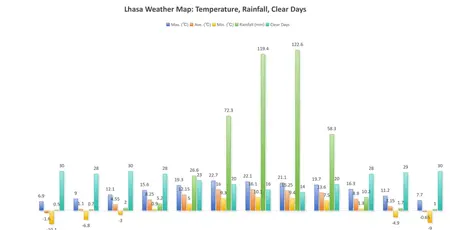
Lhasa enjoys year-round accessibility for sightseeing, with May, June, September and October standing out as the prime visiting window. These months deliver mild temperatures, clear skies and far fewer crowds than summer. Winter tours from December to February bring budget prices and quiet pilgrim scenes.
Best Time to Visit Tibet Everest Base Camp & Shigatse
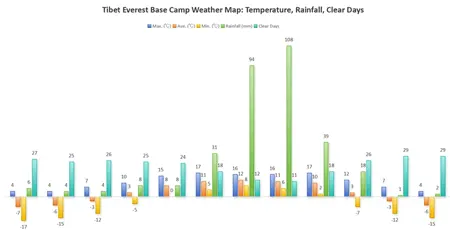
The optimal window for Everest Base Camp and Shigatse runs from April to October, with September and October offering the clearest mountain views and most stable weather. Summer brings warmer temperatures but afternoon clouds often obscure Everest's summit. Spring and autumn deliver crisp air, minimal rainfall, and excellent visibility—perfect for photography. Winter is cold but you can enjoy beatiful snowscape.
- Best Time to Visit Tibet Everest Base Camp
- Shigatse Climate and Weather
- Everest Base Camp Temperature in January
- Everest Base Camp Temperature in April
- Everest Base Camp Temperature in May
- Everest Base Camp Temperature in June
- Everest Base Camp Temperature in July
- Everest Base Camp Temperature in August
- Everest Base Camp Temperature in September
- Everest Base Camp Temperature in October
- Everest Base Camp Temperature in November
- Everest Base Camp Temperature in December
Best Time to Visit Kailash Mansarovar
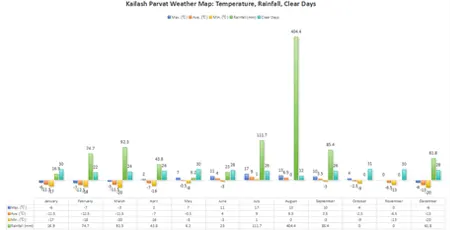
The travel window for Kailash and Lake Mansarovar runs late-April to October. Late May to June and September to early October are ideal for the Kailash kora trek, featuring mild daytime temperatures and passable mountain roads. From mid-October until April, heavy snow seals high passes, fully closing this sacred area to all overseas visitors.
- Best Time to Visit Kailash
- Kailash Parvat Temperature in April
- Kailash Parvat Temperature in May
- Kailash Parvat Temperature in June
- Kailash Parvat Temperature in July
- Kailash Parvat Temperature in August
- Kailash Parvat Temperature in September
- Kailash Parvat Temperature in October
- Best Time to Visit Kailash and Manasarovar: what are the best months for Kailash Yatra
Best Time to Visit Nyingchi
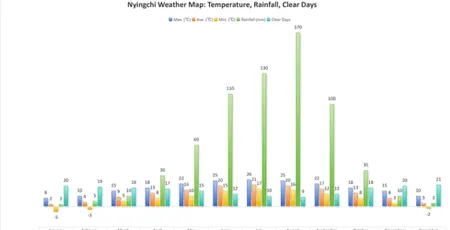
Nyingchi is best visited in March and April, when the famous Peach Blossom Festival transforms the valleys into a sea of pink blossoms against snow-capped mountain backdrops. The weather during this period is mild and pleasant. For those seeking summer greenery, June to September offers lush landscapes, though afternoon showers are common. Autumn brings clear skies, golden foliage, and excellent visibility—ideal for photography and gentle hiking. Winter is chill and quiet, with snow-dusted scenery and clear skies.
Most Classic Tibet Tour Packages
Embark on a memorable trip to Tibet with our classic itineraries at your preferred time. From the remarkable Potala Palace and the serene Lake Namtso to the lofty Everest Base Camp and sacred Mount Kailash, our packages offer a journey through Tibet’s most iconic landmarks. With the addition of our festival experiences, you can align your travels with the calendar of Tibetan festivities, including the Tibetan New Year to Nyingchi Peach Blossom Festival, Shoton Festival, and Saga Dawa Festival. Our tailored packages ensure that you not only witness but also participate in the vibrant celebrations that define the spirit of Tibet.
-
![Lhasa Everest Base Camp Kathmandu Overland Small Group Tour]() Small Group Tour
Small Group Tour7 Days Lhasa Everest Base Camp Kathmandu Overland Small Group Tour
Promo: Classic overland travel route from Lhasa to Kathmandu via Gyirong / Nyalam
Dates & Price
![rili]()
![xiala]()
-
![Lhasa Shigatse Mount Everest Small Group Tour]() Small Group Tour
Small Group Tour8 Days Lhasa Shigatse Mount Everest Small Group Tour
Promo: Once-in-a-lifetime chance to face the tallest mountain in the world
Dates & Price
![rili]()
![xiala]()
-
![Kathmandu to Lhasa Overland Small Group Tour with EBC]() Small Group Tour
Small Group Tour8 Days Kathmandu to Lhasa Overland Small Group Tour with EBC
Promo: Drive Across Himalaya Overland Tour with altitude rising slowly
Dates & Price
![rili]()
![xiala]()
-
![Lhasa Everest Kailash Mansarovar Gyirong/Zhangmu Kathmandu Small Group Tour]() Small Group Tour
Small Group Tour12 Days Lhasa Everest Kailash Mansarovar Gyirong/Zhangmu Kathmandu Small Group Tour
Promo: Uncover the spiritual and natural secrets hidden within Tibet
Dates & Price
![rili]()
![xiala]()
-
![Lhasa to Everest Kailash and Mansarovar Small Group Tour]() Small Group Tour
Small Group Tour15 Days Tibet Mount Kailash and Lake Mansarovar Small Group Tour
Promo: Western Tibet tour around Mount Kailash
Dates & Price
![rili]()
![xiala]()
-
![Lhasa Everest Kailash Mansarovar Lhasa Tour with Inner Travel Gateway]() Small Group Tour
Small Group Tour16 Days Lhasa Everest Kailash Mansarovar Lhasa Tour with Inner Travel Gateway
Promo: Complete 3-Day Kailash Kora and 1-Day Inner Kora Gateway Excursion
Dates & Price
![rili]()
![xiala]()
-
![Holy Lhasa City Small Group Tour]() Small Group Tour
Small Group Tour4 Days Holy Lhasa City Small Group Tour
Promo: Explore the Architecture & Landscape of Lhasa
Dates & Price
![rili]()
![xiala]()
-
![Lhasa Yamdrok Shigatse Central Tibet Culture Small Group Tour]() Small Group Tour
Small Group Tour6 Days Lhasa Yamdrok Shigatse Central Tibet Culture Small Group Tour
Promo: Taste the essence of Tibetan Culture in central Tibet
Dates & Price
![rili]()
![xiala]()
-
![Lhasa Shigatse Everest Base Camp Namtso Small Group Tour]() Small Group Tour
Small Group Tour9 Days Lhasa Shigatse Everest Base Camp Namtso Small Group Tour
Promo: Unveil the profound spirituality and natural beauty that lie within the heart of Tibet.
Dates & Price
![rili]()
![xiala]()
-
![Lhasa Everest Kailash Mansarovar Guge Kingdom Full Moon Small Group Tour]() Small Group Tour
Small Group Tour17 Days Lhasa Everest Kailash Mansarovar Guge Kingdom Full Moon Small Group Tour
Promo: Explore western Tibetan spirituality and culture around the sacred Mount Kailash
Dates & Price
![rili]()
![xiala]()
-
![Lhasa Yamdrok Lake Small Group Tour]() Small Group Tour
Small Group Tour5 Days Lhasa Yamdrok Lake Small Group Tour
Promo: Marvel at the Heavenly Lake - Yamdrok Lake
Dates & Price
![rili]()
![xiala]()
-
![Lhasa Namtso Lake Small Group Tour]() Small Group Tour
Small Group Tour5 Days Lhasa Namtso Lake Small Group Tour
Promo: Expose the age-old spiritual wisdom and magnificent natural wonders that are concealed in the heartland of Tibet.
Dates & Price
![rili]()
![xiala]()
-
![Lhasa Ganden Monastery Drak Yerpa Small Group Tour]() Small Group Tour
Small Group Tour5 Days Lhasa Ganden Monastery Drak Yerpa Small Group Tour
Promo: Reveal the deep-seated religious essence and stunning landscapes that exist within the core of Tibet
Dates & Price
![rili]()
![xiala]()
-
![Old Tingri to Everest Base Camp Trek Small Group Tour]() Small Group Tour
Small Group Tour10 Days Old Tingri to Everest Base Camp Trek Small Group Tour
Promo: Embark on the ultimate trekking adventure to Mount Everest Base Camp.
Dates & Price
![rili]()
![xiala]()
-
![Tibet Nepal Bhutan Small Group Tour]() Small Group Tour
Small Group Tour13 Days Tibet Nepal Bhutan Small Group Tour
Promo: Unveil the spiritual and natural mysteries concealed in the Himalayan Mountains.
Dates & Price
![rili]()
![xiala]()
-
![Lhasa Everest Seling Tso & Namtso Lake Loop Small Group Tour]() Small Group Tour
Small Group Tour10 Days Lhasa Everest Seling Tso & Namtso Lake Loop Small Group Tour
Promo: Experience Tibet’s cultural heart and Himalayan beauty
Dates & Price
![rili]()
![xiala]()


.webp)






FAQs on Tibet Weather and Temperature
Tibet’s thin high-altitude air cannot store heat well. The plateau ground warms quickly under sunlight during the day, yet heat dissipates rapidly after sunset, creating a temperature gap of 10-15°C every day in all seasons. Layered clothing is a must for all Tibet trips.
2. Does Tibet have four distinct seasons?Yes, but the seasons are more extreme than in most places. Spring is dry and windy, with warming days. Summer brings the afternoon showers. Autumn offers the most stable weather—crisp, clear, and comfortable. Winter is cold, especially at night, but bright and sunny.
3. Does it rain all day during Tibet’s rainy season (July & August)?No, most rainfall takes place at night. Mornings and afternoons stay sunny for sightseeing, though brief light showers may occur occasionally in the afternoon. Prepare a lightweight foldable rain jacket for sudden rain.
4. Do I still need sunscreen when traveling to Tibet in cold winter?Absolutely. High-altitude ultraviolet rays remain intense all year round, even on cold cloudy days. Bring SPF50+ sunscreen, UV-resistant sunglasses and moisturizing lip balm to avoid sunburn and chapped skin.
5. Which month has the best visibility for shooting snow-capped mountains in Tibet?September and October rank first, followed by April and May. The air after monsoon in autumn is dust-free and transparent, offering unobstructed panoramic views of Mount Everest, Mount Kailash, Nyenchen Tanglha and other Himalayan mountain ranges.
6. Are mountain passes open in winter?Most high passes (e.g., lofty mountain passes in western Tibet) may close temporarily during heavy snowfalls, especially from December to March. Road conditions vary year to year. We recommend checking with our travel consultant for the latest road status before traveling in winter.
7. Does Tibet have dust storms?Occasional dust storms can occur in late winter and early spring (February-April), especially in the western regions and along the northern plateau. These are usually brief and rarely disrupt travel significantly. A scarf or light face mask can help on windy days.
8. Is it safe to travel to Tibet in winter?Yes, with proper preparation. The main concerns are cold temperatures, snow on mountain passes, and reduced daylight hours. Our Tibet winter tours use vehicles equipped with emergency oxygen and experienced drivers familiar with winter road conditions. As long as you pack appropriately and follow your guide's advice, winter travel is safe and rewarding.
9. Can I visit Tibet during the monsoon season?You can absolutely travel to Tibet in the monsoon months of July and August. The plateau monsoon differs greatly from tropical downpours, as nearly all precipitation arrives as gentle overnight showers rather than all-day rain. Days stay bright and suitable for visiting monasteries and lakes, and the grasslands turn vivid emerald green, creating soft pastoral scenery. The only downside is thick floating clouds that often cover the Himalayan summits, making it hard to capture unobstructed shots of Everest or Nyenchen Tanglha peaks. Tourist numbers also hit their annual peak during this period.
10. Will rain ruin my Everest Base Camp trip?Rain will not fully spoil your EBC journey, but it impacts mountain visibility. Summer monsoon rain mostly falls after sunset, so early mornings usually offer clear sky windows to watch Mount Everest sunrise. As midday arrives, moisture-laden clouds gradually climb the mountain slopes and shroud the summit for hours. You need to pack lightweight waterproof jackets and quick-dry layers to cope with sudden drizzles. If capturing complete unclouded Everest views is your priority, spring and autumn are far better choices than the rainy season.
11. What is the weather like on the Kailash trek?The Kailash kora trek only opens from April to early October due to harsh high-altitude conditions. Late May to June and September to October bring the most pleasant trekking weather: mild 10–15°C daytime temperatures, minimal rain and crystal-clear skies to gaze at Mount Kailash’s pyramid peak. July and August bring frequent short thunder showers on open passes. From late October to April, heavy snow seals all mountain trails, with nighttime temperatures plummeting below -10°C, making trekking completely impossible.
12. How does Tibet's weather compare with Nepal?Tibet sits on a high cold plateau, while Nepal has diverse terrain ranging from low steamy plains to Himalayan ridges. Tibet stays much drier all year, with thin air and extreme day-night temperature gaps. Nepal’s southern lowlands suffer sweltering heat and heavy continuous monsoon rains between July and August. Tibet’s summer temperatures are far cooler, yet its winters are significantly colder than Nepal’s tourist hubs like Kathmandu, which rarely sees freezing weather.
13. What is the warmest place in Tibet?Nyingchi, especially Medog County in southeastern Tibet, is the warmest region across the whole plateau. Thanks to its low altitude and moist airflow from the Indian Ocean, it enjoys a mild subtropical climate with lush forests, blooming wildflowers and relatively stable temperatures. Unlike frigid Lhasa or Shigatse, Nyingchi rarely sees freezing days even in winter, with higher oxygen levels that greatly ease altitude discomfort for new visitors.
14. Does weather affect the Tibet train journey?Bad weather rarely stops the Qinghai-Tibet Railway from running. All trains are equipped with oxygen supply, heating and sealed carriages to resist plateau wind and cold. In winter, heavy snow may force trains to slow down temporarily. During summer monsoons, light rain has zero impact on rail travel. You only need warm layers for the long trip, as temperatures drop sharply when the train passes high mountain sections.
