
 inquiry@tibettourism.com


.webp)


Everest Base Camp Temperature in July


.webp) Content
ContentStanding at the foot of Mount Everest is a dream that draws adventurers from around the globe. If you’re considering a trip to the Tibetan side of Everest Base Camp (EBC) in July, you might be wondering: at an elevation of 5,150 meters (16,900 feet), is “summer” truly as warm as spring, or does a chill still linger? A common misconception is that July is guaranteed to bring mild, stable weather. In reality, while July does indeed see the highest daytime temperatures of the year, temperatures can change dramatically once the sun sets or clouds roll in, especially when influenced by the Tibetan monsoon.
For international travelers planning a July expedition to EBC, it’s essential to understand these temperature fluctuations and pack appropriately for the ever-changing weather. As a travel agency specializing in serving international travelers, we’ll handle all the logistics and administrative details of your Everest trip, allowing you to fully immerse yourself in the experience. In this guide, we’ll provide a detailed breakdown of temperature conditions at Everest Base Camp in July, including average daily temperatures, rainfall forecasts, visibility at the summit, and practical packing advice to help you fully prepare for this unforgettable journey to the north face of the world’s highest peak.
Everest Base Camp Temperature in July: Detailed Breakdown
For travelers planning to visit Everest Base Camp in July, it is essential to understand the local temperature patterns. Although July marks the height of summer in Tibet, the combination of extreme altitude and monsoon conditions creates a unique environment that differs significantly from what most travelers expect.
Daytime Temperature at Everest Base Camp in July: 15°C to 18°C (59°F to 64°F)
During July, daytime temperatures at Everest Base Camp typically range from 15°C to 18°C (59°F to 64°F). According to weather data from the Everest region, the average daytime temperature at EBC in July is about 16°C to 19°C, with some records showing highs of around 18°C.
It is important to note that on sunny days, the actual perceived temperature may be significantly higher than the recorded temperature. Due to its high altitude, the Qinghai-Tibet Plateau is exposed to intense ultraviolet (UV) radiation. UV intensity in July is extremely high, causing exposed skin to perceive the air temperature as noticeably warmer. However, this warmth is deceptive; once clouds roll in or you step into the shade, the temperature drops noticeably.
Nighttime Temperature at Everest Base Camp in July: 3°C to 6°C (37°F to 43°F)
After sunset, temperatures at Everest Base Camp drop rapidly. Average nighttime lows in July range from 3°C to 6°C (37°F to 43°F). Multiple sources confirm that nighttime temperatures in July typically hover around 5°C to 8°C, with lows occasionally dropping to 4°C to 6°C.
Visitors to Everest Base Camp should be prepared for temperatures occasionally dropping below freezing (0°C / 32°F), especially during the day when it rains or wind speeds increase. The combination of humidity and strong winds can make the wind chill feel much colder than the actual temperature. Even in July, it is not uncommon to wake up in the early morning to find frost on tents or car windows.
Everest Base Camp’s Weather Patterns in July
In July, the weather patterns at Everest Base Camp are unpredictable. Warm sunshine can give way to biting rain within a matter of hours, and by the time you raise your camera, the summit may already be hidden behind clouds. For travelers arriving from lower elevations, understanding these unique July weather conditions is not just about packing the right layers, but also knowing when to wake up to catch unobstructed views and how to plan your itinerary around afternoon showers.
How Much Does It Rain at Everest Base Camp in July?
July is one of the months with the highest precipitation on the Qinghai-Tibet Plateau. At Everest Base Camp, there are an average of 14 rainy days in July, with about 94 millimeters of rainfall. However, it is worth noting that Tibet is a relatively dry region compared to the Nepalese side of the Himalayas--for instance, Kathmandu receives nearly four times as much rainfall in July as Everest Base Camp. A notable characteristic of July rainfall at Everest Base Camp is its timing. Most precipitation occurs as afternoon showers or nighttime drizzle, meaning that daytime sightseeing activities are usually unaffected. For tourists planning to visit Everest Base Camp, it is advisable to travel in early July to minimize the chances of encountering rain and mountain fog, as precipitation tends to be lighter during the first half of the month.
When Can I See Mount Everest Clearly?
Visibility is a key factor determining whether you can catch a glimpse of the majestic summit of Mount Everest. The summer monsoon brings thicker cloud cover to the Everest region, making July weather cloudier compared to September and October, which often limits visibility. Morning mist and afternoon clouds frequently obscure the view of the summit, which can be disappointing for tourists unfamiliar with these weather patterns.
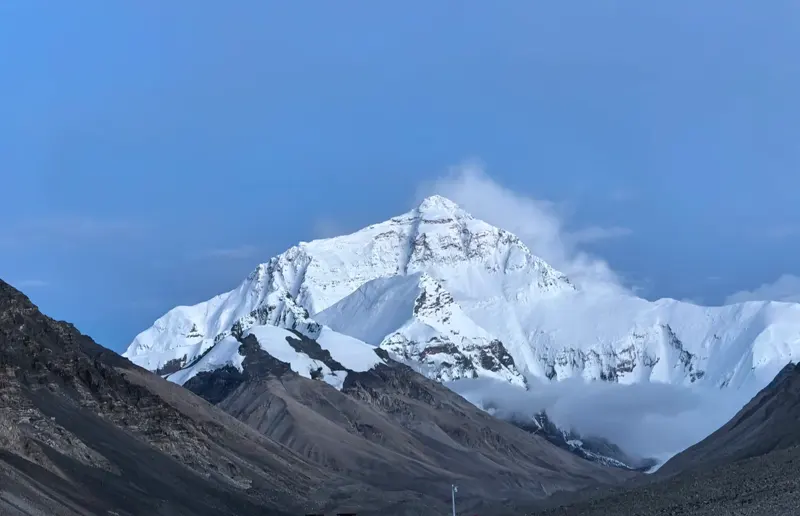
Despite increased cloud cover, the early morning hours still offer the clearest viewing conditions. Summer sunrise typically occurs between 6:50 and 7:00 AM, providing the best opportunity to enjoy unobstructed views before clouds begin to gather. It is recommended to capture the spectacular "golden peak" phenomenon before 6:00 AM, when the first rays of sunlight illuminate the summit of Mount Everest. Afternoons in July often see significant cloud accumulation that may completely shroud the peak, but even when the summit is hidden by clouds, the surrounding landscape is at its lushest and most photogenic time of the year, standing in stark contrast to the relatively desolate scenes of winter and spring.
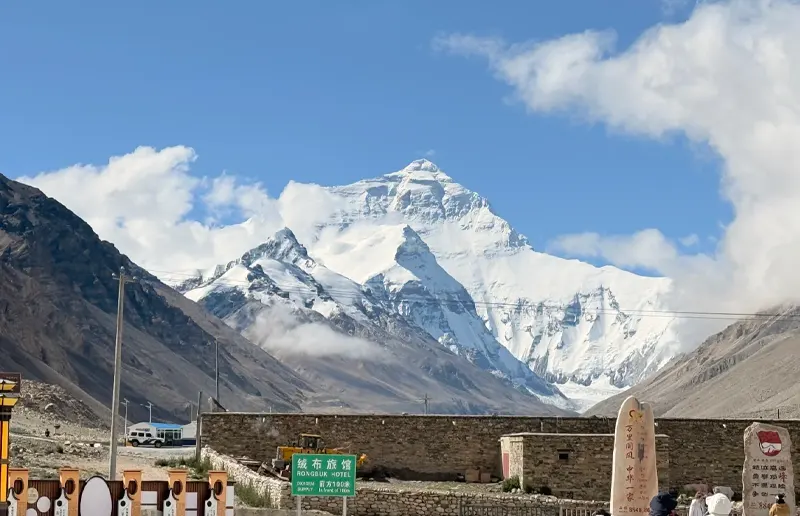 Although the thin mist obscures Mount Everest, added to its mystique
What to Wear in July: Packing List for Everest Base Camp
When it comes to dressing for a trip to Everest Base Camp in July, the most important principle is: layering. At an altitude of 5,150 meters, temperatures can change dramatically within just a few hours, from the warmth of the afternoon sun to near-freezing cold after sunset. The key is to establish a layering system that allows you to add or remove clothing as weather conditions shift. A well-planned layering strategy will keep you warm when it's cold, cool when it's warm, and dry when it rains. Below is a complete list of gear by layer, designed to keep you comfortable throughout your long journey from sunrise to late night.
Base Layer for Everest Base Camp: Moisture-Wicking Thermal Underwear
The base layer sits directly against your skin and serves to keep you dry while providing warmth. Merino wool is the top choice for Everest Base Camp--it wicks moisture away from the skin, retains warmth even when damp, and has natural odor-resistant properties, allowing you to wear it for multiple days without washing. If you prefer a more budget-friendly option, synthetic thermal tops and bottoms are also a good choice.
Avoid cotton at all costs. Cotton acts like a sponge, absorbing sweat and holding it against your skin. Once temperatures drop, you’ll find yourself cold, damp, and extremely uncomfortable. Prepare at least two sets of base layers so you can change into dry clothing after a day of trekking or in case of an unexpected afternoon downpour.
Mid Layer for Everest Base Camp: Fleece or Lightweight Down Jacket
The mid-layer is your primary insulation layer and is essential during the evening, early morning, and whenever the sun is obscured by clouds. A fleece jacket is a versatile choice that provides warmth while remaining breathable, making it suitable for daytime wear. For additional warmth, especially during cold nights, a lightweight down jacket is highly recommended. Down jackets are compact, lightweight, and offer an excellent warmth-to-weight ratio. If rain is expected, consider opting for a synthetic insulated jacket, as synthetic materials retain warmth even when damp.
Outer Layer for Everest Base Camp: Waterproof and Windproof Jacket
Even in July, a waterproof and windproof outer layer is essential. Afternoon showers are common at Everest Base Camp, and wind can significantly lower the perceived temperature. Your outer layer should be fully waterproof (not just water-resistant) and come with a hood. A jacket with underarm zippers or breathable features is recommended, as you may need to wear this layer over your mid-layer during trekking activities.
Conclusion
So, is July a good time to visit Everest Base Camp? The answer is yes. If you prefer warm daytime temperatures, long daylight hours, and fewer crowds, July offers a unique experience. During this time, the mountain landscape appears lusher, the sunshine is pleasantly warm, and you’ll avoid the peak tourist rush of spring and autumn. However, please be prepared for afternoon showers and occasional cloud cover that may partially obscure the summit. The reward of warmth often comes with the price of unpredictability.
No matter when you visit, choosing the right travel agency is equally important for international travelers. We specialize in assisting overseas visitors with their Tibet journeys, including arranging necessary Tibet travel permits, customizing itineraries, and providing guides--offering professional support every step of the way. Ready to plan your July Everest adventure? Contact us to start customizing your own Tibet tour.
3 years exp.| 5.0
 | Reviews
Tell me about your travel plan or contact me via inquiry@tibettourism.com
Tibet Everest Travel Guide and Advice
Most Popular Tibet Everest Tour Packages
-
![8 Days Lhasa Yamdrok Mount Everest Base Camp Join-in Group Tour]() Real Join-in Group Tour
Real Join-in Group Tour8 Days Lhasa Yamdrok Mount Everest Base Camp Join-in Group Tour
Promo: Comprehensive Trip to Discover Tibet’s Magic
Dates & Price (More Traveler, Lower Price)
![rili]()
![xiala]()
-
![9 Days Lhasa Mount Everest Base Camp Namtso Join-in Group Tour]() Real Join-in Group Tour
Real Join-in Group Tour9 Days Lhasa Mount Everest Base Camp Namtso Join-in Group Tour
Promo: Classic trails to discover natural and cultural splendors of Tibet
Dates & Price (More Traveler, Lower Price)
![rili]()
![xiala]()


Please share your contact information, so we can send you the answer directly by email.

