
 inquiry@tibettourism.com








Tibetan Antelopes (Chiru): Habitat, Migration & Facts


 Content
The Tibetan antelope, scientifically known as Pantholops hodgsonii, is a unique species native to the Tibetan Plateau. Its population has recovered thanks to conservation efforts. These animals inhabit remote grasslands across Tibet, Qinghai, and parts of Xinjiang. During a Tibet tour, you may have the chance to see them in their natural habitat.
This guide covers their physical features, habitat, seasonal migration, conservation status, and the best times and locations for wildlife viewing.
Quick Facts About Tibetan Antelopes:
Scientific Name: Pantholops hodgsonii
Common Names: Tibetan antelope, chiru
IUCN Red List Status: Near Threatened
Estimated population: Over 300,000 individuals
Migration Distance: Up to 300 km, depending on the migration route
Elevation range: Approximately 4,000–5,500 meters
Distinctive Feature: Exceptionally fine underfur used to make shahtoosh; international trade is prohibited
Average Lifespan: 8 years (males), up to 10–12 years (females) in the wild
Habitat: High-altitude alpine grasslands and steppes of the Tibetan Plateau
Best Viewing Season: May–July, when females migrate to calving grounds; sightings are not guaranteed
What Is the Tibetan Antelope (Chiru)?
The Tibetan antelope is a high-altitude species native to the Tibetan Plateau. It is known for its exceptionally fine underfur and adaptations to cold, dry alpine environments. The species also forms part of the plateau’s wider ecosystem.
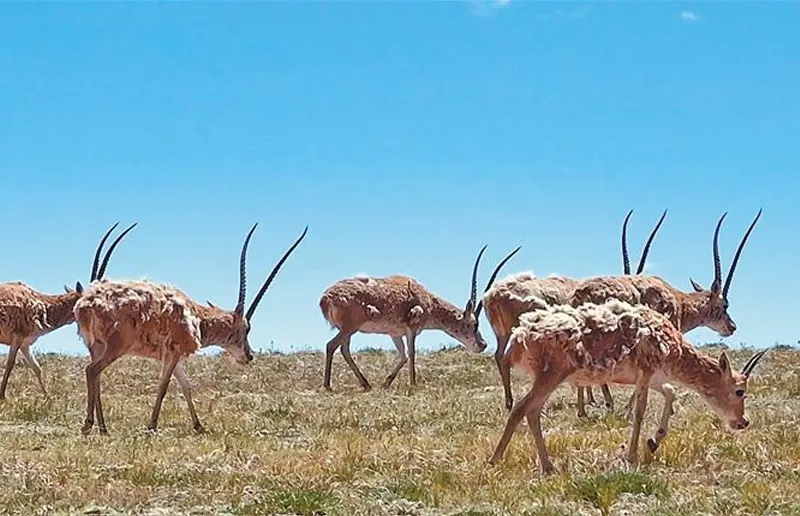 Tibetan Antelopes
Key Characteristics and High-Altitude Adaptations
Tibetan antelopes have slender bodies, long legs, and light-brown coats with pale undersides. Males grow long, slender horns, while females are usually hornless. Their dense underfur provides insulation against freezing temperatures, while other physiological adaptations help them cope with the plateau’s thin air.
Shahtoosh: The Fine Underfur That Threatens Tibetan Antelopes
Prized for its exceptional fineness, this underfur is traditionally woven into shahtoosh shawls. The wool is so fine that it can pass through a ring, earning these shawls the nickname “ring shawls.” However, producing shahtoosh has traditionally involved killing Tibetan antelopes to obtain their underfur. Tibetan antelopes are protected by law, and international trade in shahtoosh is prohibited under CITES regulations.
Tibetan Antelope Habitat: Where Do They Live?
Tibetan antelopes typically inhabit high-altitude areas around 4,000–5,500 meters above sea level, where cold temperatures, strong winds, and low oxygen levels shape the landscape. They prefer open alpine grasslands and high-altitude steppes with sparse vegetation, where grasses, sedges, and other low-growing plants provide food. These open landscapes provide grazing grounds and connect seasonal habitats used during migration.
The Qinghai-Tibetan Plateau: A Harsh High-Altitude Environment
The Qinghai–Tibet Plateau has cold winters, strong winds, low oxygen levels, and limited rainfall. These harsh conditions shape the habitat available to Tibetan antelopes. Their dense underfur helps protect them from the cold, while the open terrain allows them to detect predators such as wolves.
Protected Areas: Changtang, Hoh Xil, and Sanjiangyuan
Several protected areas, including Changtang, Hoh Xil, and Sanjiangyuan, help safeguard Tibetan antelope habitats, migration routes, and calving grounds.
Changtang National Nature Reserve: Located in Tibet, it forms the core of the antelope's natural range, offering vast, undisturbed plains where herds roam freely.
Hoh Xil National Nature Reserve: Situated in Qinghai, Hoh Xil is a major calving area where pregnant female chirus gather in large numbers every summer.
Sanjiangyuan National Park: Encompassing major highland wetland and grassland ecosystems, this massive protected area plays a crucial role in safeguarding the region's unique biodiversity.
The Spectacular Tibetan Antelope Migration
Each year, female Tibetan antelopes migrate from their wintering ranges to traditional calving grounds across the Qinghai–Tibet Plateau. The migration generally takes place in late spring and early summer, with calves born during the summer season.
1) Why and When Do Tibetan Antelopes Migrate?
Female Tibetan antelopes migrate mainly to reach traditional calving grounds. The migration generally occurs from May to July, when females give birth and nurse their calves.
2) The Female Migration Route to Calving Grounds
Female Tibetan antelopes travel from their wintering areas to traditional calving grounds in the Hoh Xil region of Qinghai. Some herds cover hundreds of kilometers, depending on their starting points and routes. After the calving season, females and their young gradually return to their seasonal ranges.
3) Challenges Along the Tibetan Antelope Migration Route
Tibetan antelopes face several challenges during migration.
Weather and Terrain: Extreme cold, severe weather, and difficult terrain can make migration challenging.
Predators: Natural predators may threaten vulnerable calves during the calving season.
Infrastructure and Wildlife Protection: Wildlife passages and other mitigation measures along roads and railways can help maintain migration connectivity.
Conservation Status: From Endangered to Near Threatened
Poaching for the exceptionally fine underfur used in shahtoosh shawls once posed a severe threat to Tibetan antelopes. Following population recovery, the species was reclassified from Endangered to Near Threatened on the IUCN Red List.
Major Threats: Poaching, Habitat Fragmentation, and Climate Change
Historical Poaching: Poaching for shahtoosh caused a sharp decline in Tibetan antelope populations during the late 20th century.
Habitat Encroachment & Fragmentation: Infrastructure expansion, fencing, and mining activities historically disrupted migration routes and limited access to grazing pastures.
Emerging Climate Change Threats: Rising temperatures can alter grassland ecosystems and reduce the availability of suitable food and water. Changes in snow cover and weather patterns may also affect migration routes and calving grounds.
Conservation Measures and Population Recovery
China has introduced strict wildlife protection laws and increased anti-poaching patrols across the Tibetan antelope's range. Nature reserves, including Changtang and Hoh Xil, protect important habitats and breeding grounds. Wildlife passages along roads and railways also help maintain migration routes.
These efforts have contributed to a significant population recovery. Continued habitat protection, law enforcement, and scientific monitoring remain important for the species' future. You can support conservation by observing Tibetan antelopes from a safe distance and never buying products made from shahtoosh.
Best Places to See Tibetan Antelopes in Tibet
Potential viewing areas include Changtang in northern Tibet and parts of the Qinghai–Tibet transport corridor, particularly near Hoh Xil in Qinghai. Sightings depend on the season, weather, animal movements, and local access restrictions.
1) Changtang National Nature Reserve
Located in northern Tibet, Changtang National Nature Reserve protects extensive alpine grasslands within the Tibetan antelope's range. Herds may sometimes be seen grazing across open plains, but sightings are not guaranteed. Visitors should check access regulations and travel with appropriate local support.
2) Hoh Xil Nature Reserve
Hoh Xil in Qinghai is an important habitat and calving area for Tibetan antelopes. During the summer migration, travelers along parts of the Qinghai–Tibet Highway or railway may spot herds on nearby grasslands. Access restrictions apply, and sightings are never guaranteed.
3) Sanjiangyuan National Nature Reserve
The Sanjiangyuan region in Qinghai protects important river headwaters, grasslands, and alpine wildlife. Tibetan antelopes inhabit parts of the region, although access to specific protected areas may be restricted. Check local visitor regulations before planning a wildlife-viewing trip.
4) Qinghai-Tibet Highway and Railway
The road and railway routes between Golmud and Lhasa cross remote grasslands where Tibetan antelopes may be visible, especially near Hoh Xil during the summer migration. Road travelers should stop only in designated safe areas, while train passengers should watch wildlife from their windows without disturbing the animals.
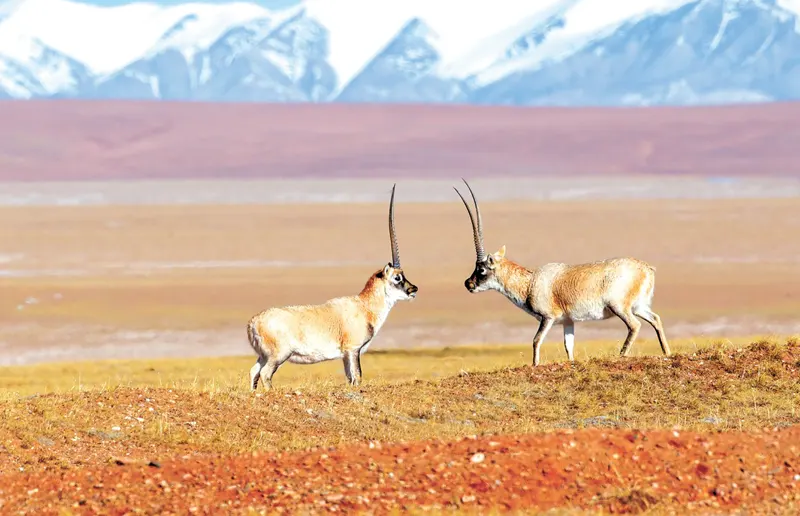 Tibetan Antelopes at Sanjiangyuan National Nature Reserve
Best Time to See Tibetan Antelopes in Tibet
May to July is a potential viewing period for Tibetan antelopes, particularly around their calving grounds in Hoh Xil, Qinghai. Summer conditions may make travel along the Qinghai-Tibet corridor more convenient, but wildlife sightings are never guaranteed. Keep a safe distance and follow local access regulations.
| Month | Migration and Calving Activity | What to Expect |
|---|---|---|
| May | Migration period | More females travel toward calving grounds, especially in the Hoh Xil region. |
| June | Peak calving season | Many pregnant females reach calving grounds, offering good potential viewing opportunities. |
| July | Calving season | Females give birth and care for their calves. Herds may be visible near suitable grasslands. |
Note: Actual sightings depend on animal movements, weather, road conditions, and access restrictions. Calving activity and migration timing can vary by year and location.
Why Do Tibetan Antelopes Matter to Tibetan Culture and the Ecosystem?
Tibetan antelopes are important to both Tibetan culture and the ecosystem of the Tibetan Plateau. They symbolize the region’s wild beauty and resilience. As grazers, they help shape alpine grasslands and serve as prey for predators such as wolves. Protecting Tibetan antelopes also helps preserve their natural habitats and the wider ecosystem.
FAQs about Tibetan Antelopes
1) Where am I most likely to see Tibetan antelopes?
Tibetan antelopes are most likely to be spotted in remote grasslands of the northern Tibetan Plateau and the Hoh
Xil region of Qinghai. Changtang and areas along the Qinghai–Tibet Highway and Railway also offer potential
viewing opportunities. Sightings depend on the season, weather, and animal movements.
2) Can I visit Hoh Xil to see Tibetan antelopes?
Hoh Xil in Qinghai is an important habitat and calving area for Tibetan antelopes. You may spot herds near the
Qinghai–Tibet Highway or Railway, especially during the summer migration from May to July. However, access to
protected areas may be restricted, and sightings are never guaranteed. Check local regulations before your trip.
3) Can I visit Changtang National Nature Reserve?
Foreign tourists should check current access regulations before planning a visit to Changtang National Nature
Reserve in northern Tibet. The reserve contains remote, ecologically sensitive areas, and access may be
restricted. Travel with an authorized local agency and follow all permit requirements and wildlife protection
rules.
Conclusion
Tibetan antelopes are an important part of the Qinghai-Tibetan Plateau’s wildlife. Their seasonal migrations and recovery through conservation efforts highlight the value of protecting high-altitude habitats. If you travel to areas where they live, observe them from a safe distance and respect local conservation rules.
10 years exp.| 5.0
 | Reviews
Tell me about your travel plan or contact me via inquiry@tibettourism.com
Related Tibet Travel Guide and Advice



Most Popular Tibet Tour Packages
-
![Lhasa Everest Base Camp Kathmandu Overland Small Group Tour]() Small Group Tour
7 Days Lhasa Everest Base Camp Kathmandu Overland Small Group Tour
Promo: Classic overland travel route from Lhasa to Kathmandu via Gyirong / Nyalam
Dates & Price
![rili]()
![xiala]()
-
![Lhasa Shigatse Mount Everest Small Group Tour]() Small Group Tour
8 Days Lhasa Shigatse Mount Everest Small Group Tour
Promo: Once-in-a-lifetime chance to face the tallest mountain in the world
Dates & Price
![rili]()
![xiala]()
-
![Kathmandu to Lhasa Overland Small Group Tour with EBC]() Small Group Tour
8 Days Kathmandu to Lhasa Overland Small Group Tour with EBC
Promo: Drive Across Himalaya Overland Tour with altitude rising slowly
Dates & Price
![rili]()
![xiala]()



Please share your contact information, so we can send you the answer directly by email.

