
 inquiry@tibettourism.com


.webp)


Tibetan Sand Mandala: Meaning, History & Creation Process


.webp) Content
ContentA Tibetan sand mandala is a sacred Buddhist artwork that represents compassion, wisdom, and the impermanence of life. Learn about its history, spiritual meaning, and the step-by-step creation process. Discover how Tibetan monks turn colored sand into intricate works of art through patience, devotion, and careful craftsmanship.
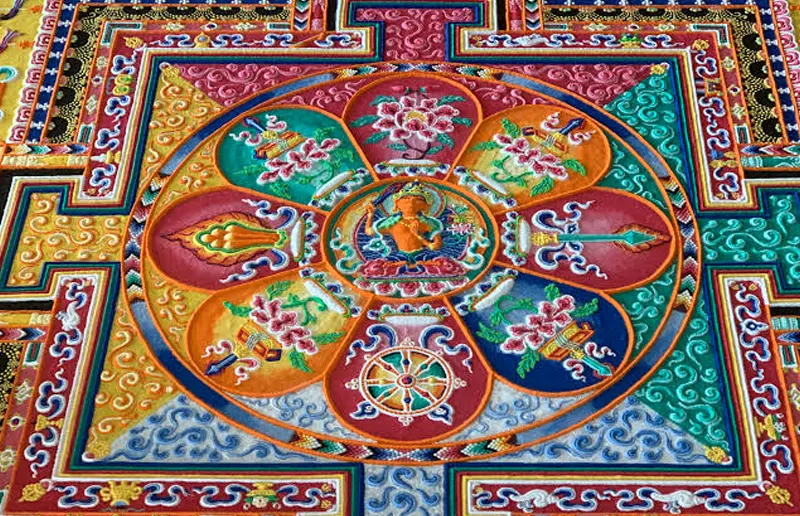 Sand Mandala
What Is a Tibetan Sand Mandala?
A Tibetan sand mandala is a sacred Buddhist artwork made from colored sand. It represents a sacred universe and serves as a visual guide to a deity’s palace, meditation, and spiritual practice. Its intricate patterns symbolize wisdom, compassion, and the impermanent nature of life.
1) The Literal and Spiritual Meaning of "Mandala"
The word mandala comes from the Sanskrit term maṇḍala, meaning "circle" or "essence container." In Tibetan Buddhism, a sand mandala is known as dul-tson-kyil-khor, meaning "mandala of colored powders." Its circular design symbolizes a sacred space where spiritual practice and meditation take place. Each shape, color, and pattern carries a specific religious meaning.
2) Core Symbolism in Tibetan Buddhism
In Tibetan Buddhism, sand mandalas represent sacred spaces and the palaces of Buddhist deities. Their geometric patterns show the relationship between the physical world and spiritual wisdom. Monks create these designs as visual aids for meditation and religious practice. By focusing on the mandala, practitioners develop concentration, compassion, and a deeper understanding of Buddhist teachings.
3) The Philosophy of Impermanence (Anicca)
The ritual dissolution of the mandala after its completion reflects anicca, the Buddhist teaching that conditioned things are impermanent. By sweeping away weeks of meticulous work in seconds, practitioners cultivate non-attachment and demonstrate that nothing in the physical world is permanent.
The Fascinating History of Sand Mandalas
Tibetan sand mandalas have a long history rooted in Indian Tantric Buddhism. Over centuries, the practice spread to Tibet and became an important part of Tibetan Buddhist rituals. Monasteries preserved this tradition through religious teachings, sacred texts, and generations of skilled monks.
1) Ancient Origins in Sacred Indian Tantra
The broader history of mandalas can be traced back to ancient Indian religious traditions, including Vedic and Tantric practices. Over time, Mahayana and Vajrayana Buddhists developed these diagrams into mandalas for visualizing deities and sacred spaces during meditation. These early traditions laid the foundation for the intricate Tibetan sand mandalas practiced today.
2) Introduction and Evolution in Tibet
Mandalic traditions spread from India to the Tibetan Plateau during the development of Tibetan Buddhism. In the 8th century, during the reign of King Trisong Detsen, Indian Buddhist masters helped introduce Tantric teachings and ritual practices to Tibet. Over time, Tibetan Buddhist communities adapted these traditions and developed distinctive methods for creating sand mandalas. Monks refined the designs, symbolism, and ceremonial procedures through religious study and practice.
3) Preservation in Tibetan Monasteries
Tibetan monasteries have preserved sand mandala traditions through monastic lineages, including the Gelug and Nyingma schools. Monks learn the designs and ritual procedures through teacher-to-student instruction, supported by sacred Buddhist texts known as Tantras. These teachings help maintain the religious meaning, artistic precision, and ceremonial importance of mandala creation across generations.
The Step-by-Step Creation Process of a Sand Mandala
Creating a Tibetan sand mandala is a careful ritual that combines Buddhist prayers, sacred geometry, and skilled craftsmanship. Tibetan monks follow a precise process, from preparing the site to consecrating the finished mandala. Each step carries religious meaning and demands patience and concentration.
Step 1: Purification and Opening Rituals
The process begins with purifying the site. Tibetan monks recite sacred chants and prayers to create a suitable space for the mandala. They also perform blessing rituals before beginning the design. These ceremonies prepare the monks and the site for the mandala’s creation.
Step 2: Drawing the Precise Geometric Grid (Chak-Thig)
Monks map the mandala using Chak-Thig, a traditional method for creating its geometric layout. They use chalked threads to mark straight lines, circles, and precise proportions. The grid follows sacred geometric rules and establishes the position of each symbol and deity within the mandala.
Step 3: Preparing the Colored Sand
Colored sand is prepared in different shades to create the mandala’s intricate patterns. Traditional materials may include crushed minerals, marble, and natural pigments. Today, some monasteries and artists also use commercially prepared colored sand. Each color has symbolic meaning in Tibetan Buddhist tradition.
Step 4: Applying the Sand with the Chak-Pur
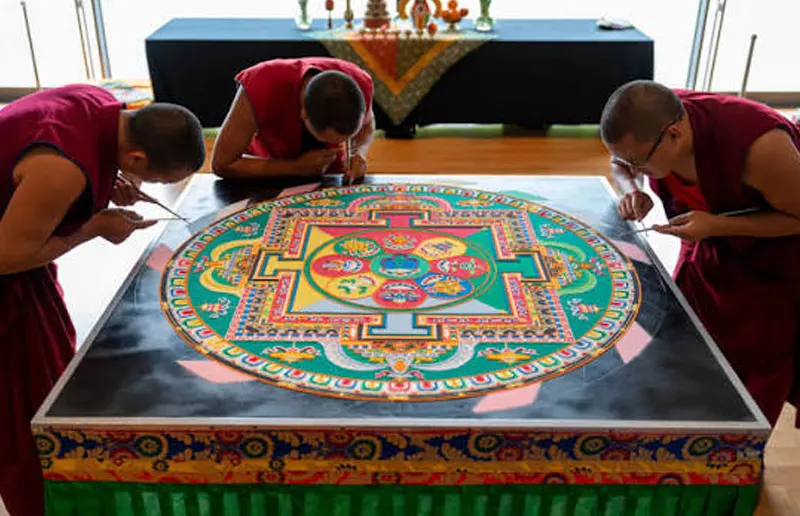
Monks use a traditional metal funnel called a Chak-Pur to place the sand onto the geometric grid. They rub a metal rod or rasp along the funnel to create vibrations that release tiny grains. This technique allows them to form extremely fine lines and detailed patterns with remarkable precision.
Step 5: Final Consecration Ceremony
Once the mandala is complete, monks perform a consecration ceremony with prayers and sacred chants. The ritual symbolically invites the deities into the completed mandala and dedicates it to spiritual practice. The finished artwork then serves as a focus for meditation and religious contemplation.
The Dissolution Ceremony: Why Sand Mandalas Are Destroyed
The dissolution ceremony is an important part of Tibetan sand mandala practice. After days or weeks of careful work, monks intentionally dismantle the completed mandala. This ritual teaches the Buddhist principle of impermanence and reminds practitioners that all physical forms are temporary.
The Ritual of Dissolution
The ceremony begins with prayers and chants before the monks carefully sweep the colored sand toward the center. The intricate design is gradually swept away until the mandala is no longer recognizable. This act symbolizes the dissolution of physical form and the release of attachment to material beauty.
Returning the Sand to Water and Nature
After the mandala is dismantled, the blessed sand is traditionally placed in a body of flowing water, such as a river. The water carries the sand into the surrounding environment. This practice symbolizes the sharing of the mandala's blessings with all beings and the return of the sacred materials to nature.
Main Types of Sacred Sand Mandalas
Tibetan Buddhist lineages create different sand mandalas to represent specific spiritual qualities and benefits.
| Mandala Type | Primary Deity | Key Spiritual Focus & Purpose |
|---|---|---|
| Medicine Buddha Mandala | Bhaisajyaguru | Promotes physical, mental, and spiritual healing while purifying negative karma and removing health obstacles. |
| Kalachakra Mandala | Kalachakra ("Wheel of Time") | Promotes global harmony, inner peace, and positive cosmic energy. It is one of the most complex mandala designs. |
| Chenrezig Mandala | Avalokiteshvara | Invokes boundless compassion, loving-kindness, and emotional purification for all living beings. |
| Mandala Type | Primary Deity | Key Spiritual Focus & Purpose |
|---|---|---|
| Medicine Buddha Mandala | Bhaisajyaguru | Promotes physical, mental, and spiritual healing while purifying negative karma and removing health obstacles. |
| Kalachakra Mandala | Kalachakra ("Wheel of Time") | Promotes global harmony, inner peace, and positive cosmic energy. It is one of the most complex mandala designs. |
| Chenrezig Mandala | Avalokiteshvara | Invokes boundless compassion, loving-kindness, and emotional purification for all living beings. |
Where and When to See Tibetan Sand Mandalas
Seeing a Tibetan sand mandala in person offers a closer look at Tibetan Buddhist art and ritual practice. You may encounter mandalas in monasteries, religious festivals, cultural events, and traveling exhibitions. Availability varies by monastery and event, so check the schedule in advance.
1) Major Tibetan Monasteries in Tibet (Lhasa, Shigatse & Shannan)
Major monasteries in Tibet, including Sera Monastery, Tashilhunpo Monastery, and Samye Monastery, are important centers of Tibetan Buddhist culture. During certain religious events, monks may create sand mandalas as part of ceremonial practices. You should follow monastery rules and check whether viewing is permitted.
Sera Monastery (in Lhasa): Famous for its Buddhist study and monastic debate, Sera Monastery may feature sand mandala creation during special religious ceremonies. Public viewing depends on monastery rules.
Tashilhunpo Monastery (in Shigatse): It is one of the major monasteries of Tibetan Buddhism. Its religious ceremonies may include the creation and display of Tibetan sand mandalas. These artworks reflect Buddhist teachings through detailed symbols, geometric patterns, and sacred imagery.
Samye Monastery (in Shannan): It is traditionally regarded as Tibet's first Buddhist monastery. Its long history is closely connected with the development of Tibetan Buddhism. During certain religious events, sand mandalas may be created as visual aids for meditation, prayers, and Buddhist rituals.
2) Cultural Festivals and Monastic Ceremonies
Some Tibetan Buddhist festivals and monastic ceremonies feature the creation of elaborate sand mandalas.
Monlam Prayer Festival: Held after the Tibetan New Year (Losar), the festival features religious ceremonies and prayer gatherings. Sand mandala activities may take place at some locations.
Saga Dawa: Celebrating the Buddha's birth, enlightenment, and parinirvana, this sacred month sees increased mandala rituals across monasteries in Tibet, India, and Nepal.
 Tibetan Sand Mandala
Etiquette and Tips for Viewing a Sand Mandala
Viewing a Tibetan sand mandala requires respect for its religious and cultural meaning. Visitors should follow monastery rules and avoid disturbing monks during prayers or the creation process. A little preparation can help you enjoy a more comfortable and respectful visit.
Rules of Respect Inside the Monastic Hall
Wear modest and appropriate clothing when entering a monastery. Keep your voice low and avoid unnecessary noise. Do not touch the sand mandala, its tools, or the surrounding sacred area. Photography may be restricted, especially during religious ceremonies, so always ask for permission before taking photos or videos. Follow instructions from monks, guides, or monastery staff.
Best Time to Observe the Monks at Work
Creating a sand mandala can take several days or even weeks, depending on its size and complexity. The monks work gradually, adding fine layers of colored sand to complete the design. If you want to watch the creation process, check the monastery’s schedule in advance, as viewing times may vary.
Conclusion
Tibetan sand mandalas combine Buddhist spirituality, sacred symbolism, and traditional craftsmanship. From their ancient history to their detailed creation and final dissolution, each mandala reflects the teachings of impermanence and compassion. During your Tibet tour, visiting a monastery or cultural exhibition offers a meaningful way to explore this unique Tibetan Buddhist tradition.
2 years exp.| 5.0
 | Reviews
Tell me about your travel plan or contact me via inquiry@tibettourism.com
Related Tibet Travel Guide and Advice

Most Popular Tibet Tour Packages
-
![Lhasa Everest Base Camp Kathmandu Overland Small Group Tour]() Small Group Tour
Small Group Tour7 Days Lhasa Everest Base Camp Kathmandu Overland Small Group Tour
Promo: Classic overland travel route from Lhasa to Kathmandu via Gyirong / Nyalam
Dates & Price
![rili]()
![xiala]()
-
![Lhasa Shigatse Mount Everest Small Group Tour]() Small Group Tour
Small Group Tour8 Days Lhasa Shigatse Mount Everest Small Group Tour
Promo: Once-in-a-lifetime chance to face the tallest mountain in the world
Dates & Price
![rili]()
![xiala]()
-
![Kathmandu to Lhasa Overland Small Group Tour with EBC]() Small Group Tour
Small Group Tour8 Days Kathmandu to Lhasa Overland Small Group Tour with EBC
Promo: Drive Across Himalaya Overland Tour with altitude rising slowly
Dates & Price
![rili]()
![xiala]()



.webp)


Please share your contact information, so we can send you the answer directly by email.

