
 inquiry@tibettourism.com


.webp)


Tibetan Buddhism: History, Beliefs, Practices & Culture


.webp) Content
ContentWhat is Tibetan Buddhism? Tibetan Buddhism is a unique spiritual tradition that combines Mahayana Buddhism, Vajrayana (Tantric) practices, and elements of Tibet’s ancient Bon beliefs. Developed in Tibet over centuries, it has become the foundation of Tibetan culture, influencing art, architecture, philosophy, and daily life. As the spiritual heart of Tibet, Tibetan Buddhism has spread from the Himalayan region to communities around the world. This Tibetan Buddhism guide explores its history, beliefs, practices, etc., helping you better understand the role and profound influence of Buddhism in Tibet.
 Tibetan Buddhism
The Origin and History of Buddhism in Tibet
Buddhism in Tibet has a history of over 1,300 years, serving as the foundation of Tibetan spiritual and cultural life. Over centuries, Tibetan Buddhism grew into a unique spiritual system with influential schools, monasteries, and philosophical teachings. It continues to shape Tibetan society today.
The Introduction of Buddhism to Tibet in the 7th Century
Buddhism in Tibet began to spread during the reign of King Songtsen Gampo (618–650) in the 7th century. The king supported the introduction of Buddhist teachings from India and Nepal and built important temples, including Jokhang Temple in Lhasa. These early developments laid the foundation for the growth of Tibetan Buddhism.
The Rise of Tibetan Buddhism and Buddhist Schools
During the 8th and 9th centuries, Buddhism became more established in Tibet through the efforts of Indian masters such as Padmasambhava (Guru Rinpoche) and Tibetan scholars. The construction of Samye Monastery, the first Buddhist monastery in Tibet, marked an important milestone. Over time, different Tibetan Buddhist schools, including Nyingma, Kagyu, Sakya, and Gelug, developed with unique teachings and practices.
The four primary schools of Tibetan Buddhism:
Nyingma: The "Ancient School," preserving the earliest Vajrayana teachings from Padmasambhava.
Kagyu: The "Oral Lineage," famous for its devotion to intensive meditation masters like Milarepa.
Sakya: The "Pale Earth" tradition, recognized for its systematic academic scholarship and administrative history.
Gelug: The "Yellow Hat" order, founded by Tsongkhapa, which became the predominant school led by the Dalai Lama
lineage.
The Development and Global Influence of Tibetan Buddhism
After centuries of development, Tibetan Buddhism became deeply connected with Tibetan art, architecture, philosophy, and daily life. Famous landmarks and sacred sites such as Potala Palace, Jokhang Temple, and Tashilhunpo Monastery became important spiritual centers. Today, Tibetan Buddhism continues to influence the world through its teachings, practices, and cultural traditions.
Tibetan Buddhism Beliefs and Philosophical Teachings
Tibetan Buddhism beliefs are based on the teachings of the Buddha and focus on compassion, wisdom, karma, and the path to enlightenment. As a major tradition of Vajrayana Buddhism, Tibetan Buddhism combines meditation, spiritual practices, and philosophical study. It can help practitioners understand the nature of the mind and achieve inner peace. These Tibetan Buddhist teachings have shaped Tibetan culture, religious practices, and daily life for centuries.
1) The Four Noble Truths in Tibetan Buddhism
The Four Noble Truths are the foundation of Buddhist philosophy and explain the nature of suffering and the way to overcome it. Tibetan Buddhists believe that understanding suffering, following ethical actions, and practicing meditation can lead to spiritual growth and enlightenment. These teachings guide practitioners on the path toward wisdom and liberation.
2) Karma, Rebirth, and Spiritual Development
Karma and rebirth are important concepts in Tibetan Buddhism. Tibetan Buddhists believe that actions, thoughts, and intentions influence future experiences and spiritual development. Through positive actions, compassion, and meditation practices, practitioners seek to create good karma and progress toward enlightenment.
3) Compassion, Wisdom, and Bodhisattva Practice
Compassion and wisdom are central values in Tibetan Buddhist teachings. The Bodhisattva ideal encourages practitioners to help others while pursuing spiritual awakening. Through meditation, prayers, and daily practices, Tibetan Buddhists develop compassion, reduce suffering, and cultivate a deeper understanding of life.
Tibetan Buddhist Practices and Rituals
Daily spiritual life in Tibetan Buddhism blends formal monastic rituals with actionable, everyday practices. These methods allow practitioners to transform ordinary mind states into enlightened wisdom.
1) Meditation and Deity Visualization in Tibetan Buddhism
Meditation is a central practice in Tibetan Buddhism. Tibetan Buddhist practitioners use meditation and visualization techniques to train the mind, develop awareness, and achieve spiritual growth. Practices such as deity visualization and mindfulness help followers cultivate wisdom, compassion, and inner peace.
2) Sacred Mantras and the Power of Sound
Mantra recitation is a cornerstone of daily practice across Tibet and Buddhist communities worldwide. The most famous mantra, Om Mani Padme Hum, is chanted, or printed on scrolls enclosed within prayer wheels that are spun to generate compassion and purify mind, speech, and body. Sacred chants and ritual music are also central to group monastic ceremonies.
3) Daily Devotions: Prayer Wheels, Flags, and Prostrations
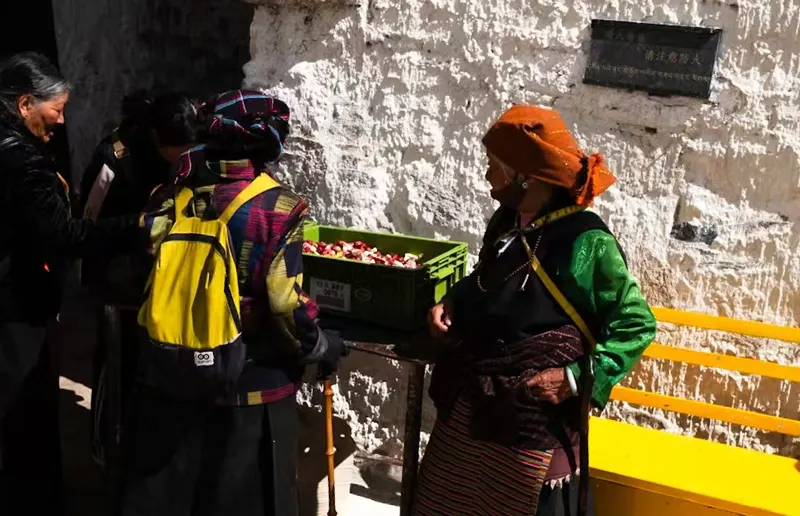
Lay practitioners and monks engage in physical devotions to cultivate humility and merit. They spin prayer wheels, hang colorful prayer flags, and make full-body prostrations at sacred sites such as Jokhang Temple in Lhasa.
4) Esoteric Vajrayana Rituals and Tantric Initiations
Advanced Tibetan Buddhist practices involve Tantric rituals that require formal empowerments (initiations) from a qualified guru or Lama. These methods utilize mudras (sacred hand gestures), mandalas, and subtle energy practices to accelerate the path toward enlightenment within a single lifetime.
Tibetan Buddhist Monasteries and Cultural Traditions
Tibetan Buddhist monasteries are important centers of religion, education, art, and culture in Tibet. These sacred places preserve the teachings of Tibetan Buddhism, traditional rituals, Buddhist philosophy, and ancient architectural styles. Visiting Tibetan monasteries offers a deeper understanding of Tibetan culture, religious practices, and spiritual heritage.
1) Famous Tibetan Buddhist Monasteries and Sacred Sites
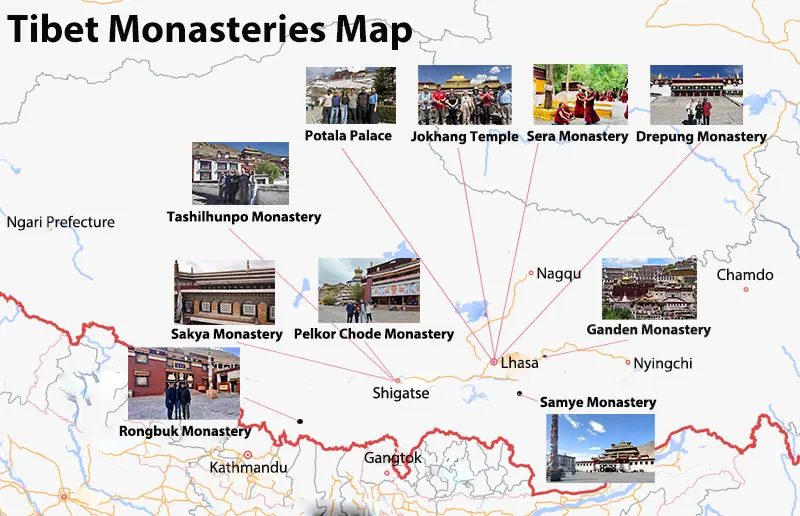
Potala Palace is one of the most famous symbols of Tibetan Buddhist culture. Located in Lhasa, it was an important center of Tibetan religious and political history. The palace features Buddhist murals, sacred statues, and traditional Tibetan architecture, showing the artistic achievements of Tibetan Buddhism.
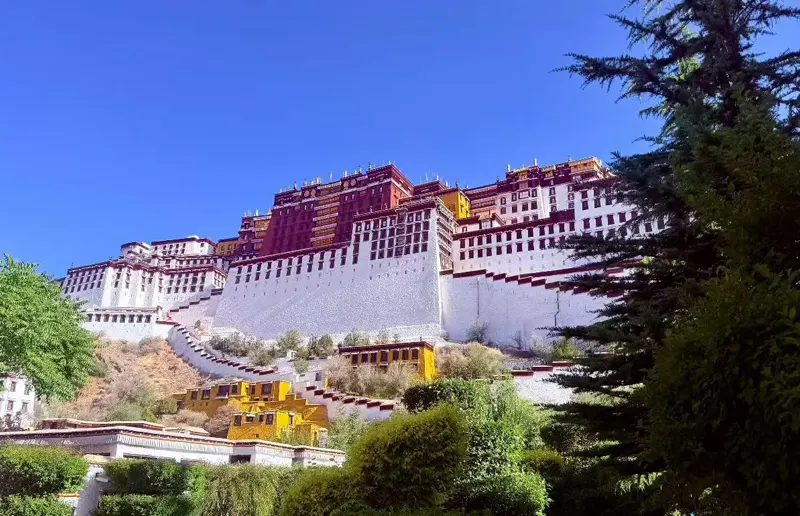 Potala Palace
Jokhang Temple in Lhasa is one of the most sacred Tibetan Buddhist temples in Tibet. Built in the 7th century, it houses the famous Jowo Shakyamuni Buddha Statue and attracts thousands of pilgrims every year. The temple represents the spiritual importance of Tibetan Buddhism and remains a major pilgrimage site for Tibetan Buddhists.
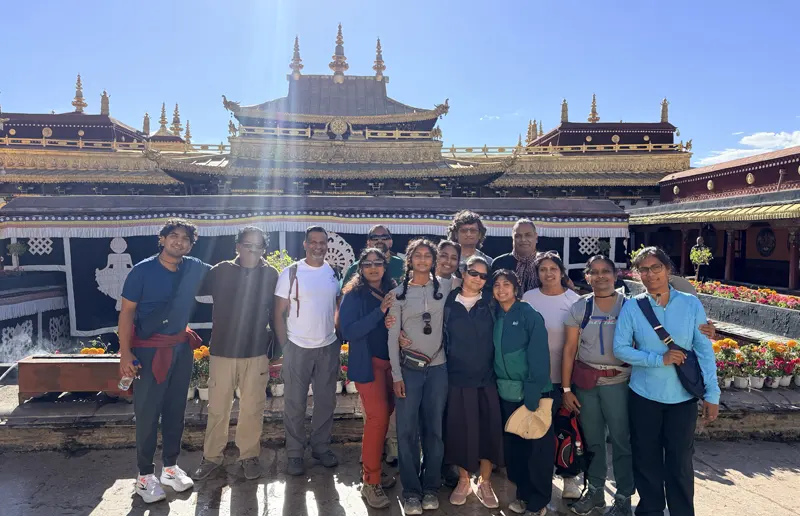 Jokhang Temple
Sera Monastery is one of the three great Gelugpa monasteries in Lhasa and an important center of Tibetan Buddhist learning. Founded in 1419, it is famous for its lively monk debates, where monks discuss Buddhist philosophy and teachings through traditional debate practices. You can explore its prayer halls, Buddhist scriptures, and experience the unique academic tradition of Tibetan Buddhism.
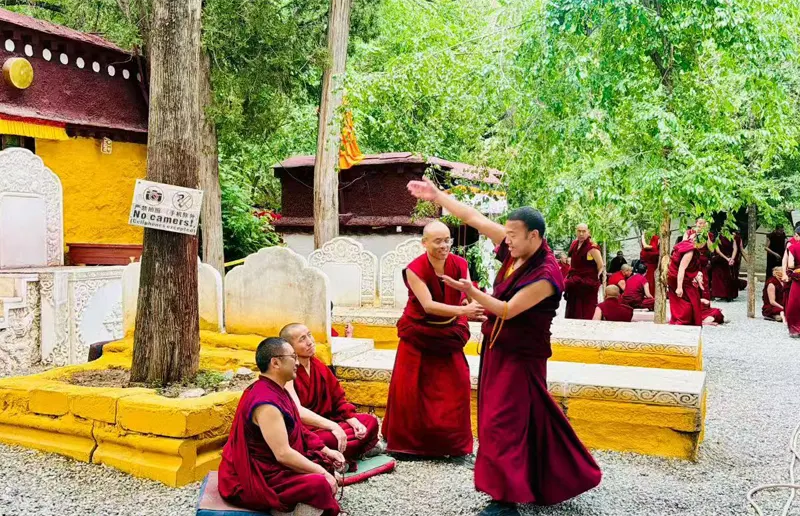 Sera Monastery
Drepung Monastery is one of the largest and most influential Tibetan Buddhist monasteries in history. Located near Lhasa, Drepung Monastery is known for its grand architecture, religious studies, and important role in the development of Gelugpa Tibetan Buddhism.
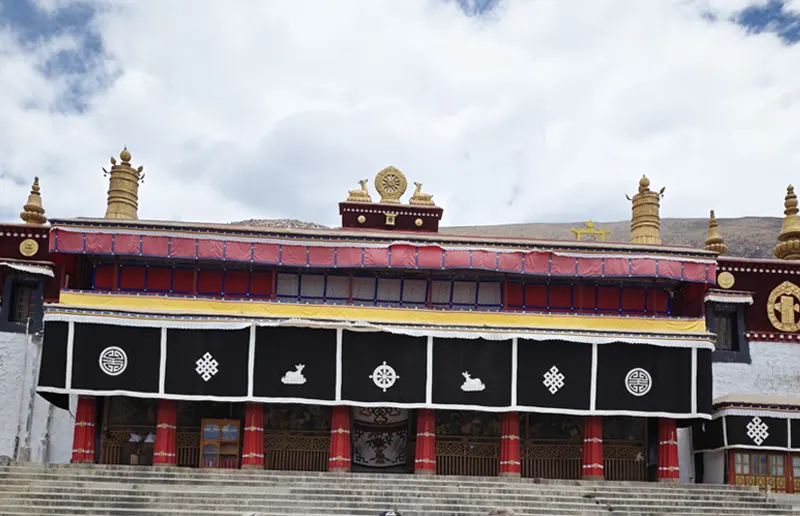 Drepung Monastery
Ganden Monastery is one of the most important Tibetan Buddhist monasteries and the first monastery of the Gelug School of Tibetan Buddhism. Founded in 1409 by Tsongkhapa, the founder of the Gelug tradition, it became a major center for Buddhist philosophy and meditation. Ganden Monastery is famous for its sacred atmosphere, mountain scenery, and historical significance in Tibetan Buddhist culture.
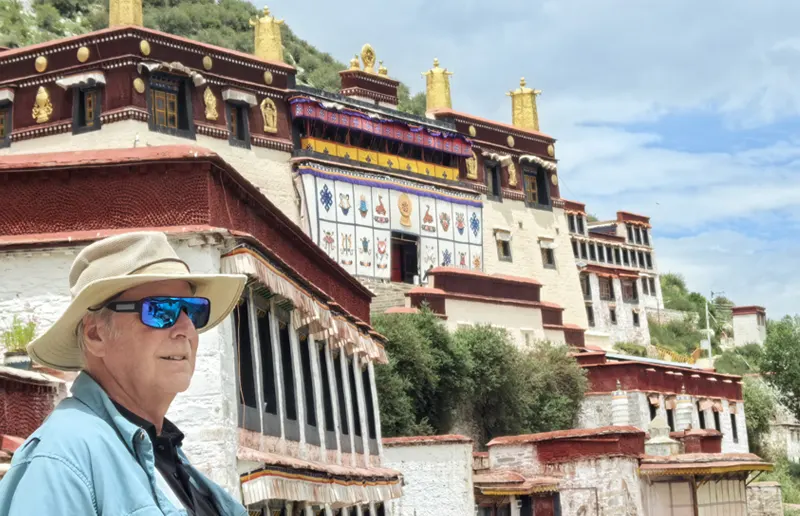 Ganden Monastery
2) Tibetan Festivals and Religious Traditions
Tibetan Buddhist festivals and traditions are important expressions of faith and culture. Events such as the Saga Dawa Festival, Losar (Tibetan New Year), and monastery prayer ceremonies bring communities together through prayers, rituals, and celebrations. These traditions preserve the spiritual values, customs, and cultural identity of Tibetan Buddhist communities.
Tibetan Buddhism’s Global Influence
Tibetan Buddhism has expanded beyond Tibet and the Himalayan region, becoming an important spiritual tradition around the world. Its teachings on compassion, meditation, wisdom, and mindfulness have attracted followers in many countries. Tibetan Buddhism influences global communities through its teachings, monasteries, and cultural traditions.
FAQs about Tibetan Buddhism
1) What are the three main beliefs of Tibetan Buddhism?
The three main beliefs of Tibetan Buddhism are compassion, wisdom, and karma. Tibetan Buddhists believe that
compassion for all living beings is an important part of spiritual practice. They seek wisdom through Buddhist
teachings and understand how actions influence life through karma. These beliefs help them achieve spiritual
growth and move closer to enlightenment. These core Tibetan Buddhist beliefs guide religious practices and daily
life.
2) How is Tibetan Buddhism different from other branches of Buddhism?
Tibetan Buddhism is a branch of Mahayana Buddhism that includes Vajrayana (Tantric) practices, meditation
techniques, rituals, and elements of Tibetan culture. Tibetan Buddhism emphasizes mantras, visualization,
spiritual teachers, and monastery traditions. It combines Buddhist philosophy with unique Tibetan religious
practices.
3) Where is Tibetan Buddhism practiced?
Tibetan Buddhism is mainly practiced in Tibet, the Himalayan region, and nearby areas, including parts of China,
Nepal, Bhutan, India, and Mongolia. Today, Tibetan Buddhist communities can also be found around the world
through monasteries, cultural centers, and meditation groups. Its teachings and traditions continue to influence
global Buddhist communities.
4) Can Tibetan Buddhists eat meat?
Some Tibetan Buddhists eat meat, while others choose a vegetarian diet based on personal beliefs and religious
practices. The traditional Tibetan diet developed partly because of the high-altitude environment, where
vegetables were historically limited. Many Tibetan Buddhist teachings emphasize compassion and avoiding harm to
living beings. However, different monasteries, teachers, and individuals have different views on eating meat.
Conclusion
Tibetan Buddhism is more than a religious tradition; it is an important part of Tibet’s history, culture, and spiritual heritage. From its origins in Tibet to its global influence today, Tibetan Buddhism has shaped art, architecture, philosophy, and daily life through its unique beliefs, practices, and rituals. Exploring Tibetan Buddhism offers a deeper understanding of this ancient spiritual system and its lasting impact around the world.
10 years exp.| 5.0
 | Reviews
Tell me about your travel plan or contact me via inquiry@tibettourism.com
Related Tibet Travel Guide and Advice


Most Popular Tibet Tour Packages
-
![15 Days Lhasa EBC Kailash Mansarovar Gyirong Sakya Shigatse Lhasa Join-in Group Tour]() Real Join-in Group Tour
Real Join-in Group Tour15 Days Lhasa EBC Kailash Mansarovar Gyirong Sakya Shigatse Lhasa Join-in Group Tour
Promo: Journey through the Himalayan mountains and lakes to uncover their mysteries
Dates & Price (More Traveler, Lower Price)
![rili]()
![xiala]()


Please share your contact information, so we can send you the answer directly by email.

