
 inquiry@tibettourism.com


.webp)


Tibetan Ethnic Group: Culture, Religion & Traditions


.webp) Content
ContentThe Tibetan ethnic group lives on the windswept Tibetan Plateau, known as the "Roof of the World." This ethnic group possesses one of the world's most resilient and spiritually rich cultures. Its unique geography, deep religious beliefs, and traditional way of life have shaped distinctive customs over centuries. Discover 10 unique Tibetan traditions that reflect the daily life, spirituality, and cultural heritage of the Tibetan people.
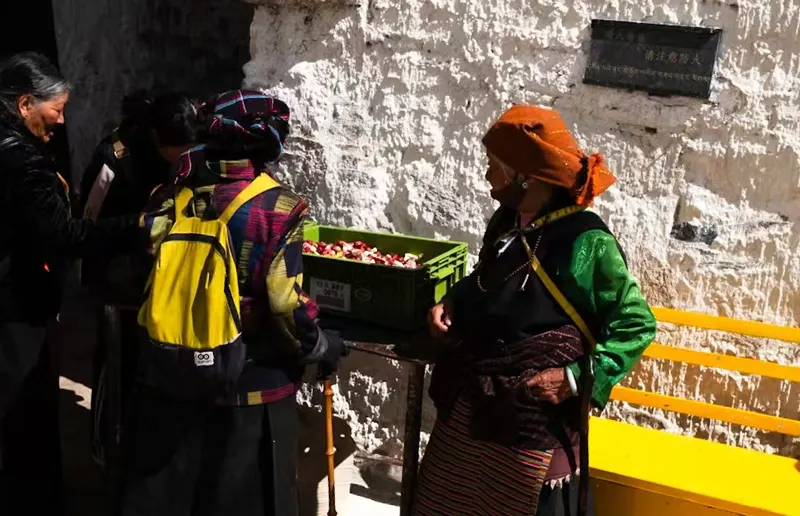 Tibetans
The Spiritual Heart: Tibetan Buddhism & Ancient Bon Beliefs
Religion is at the heart of Tibetan culture and daily life. Tibetan Buddhism has shaped Tibet's art, architecture, festivals, and customs for centuries, while the ancient Bon religion preserves many early spiritual traditions. Understanding these beliefs helps you better appreciate Tibet's unique cultural heritage.
1) Understanding Vajrayana (Tibetan Buddhism)
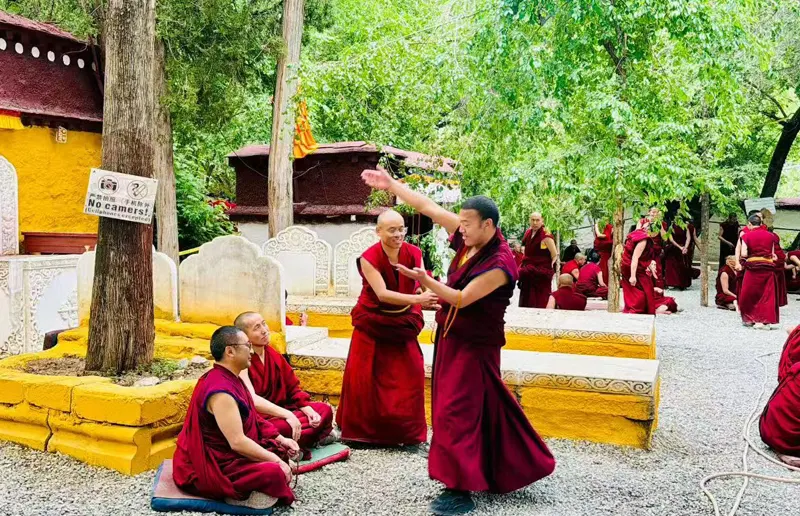
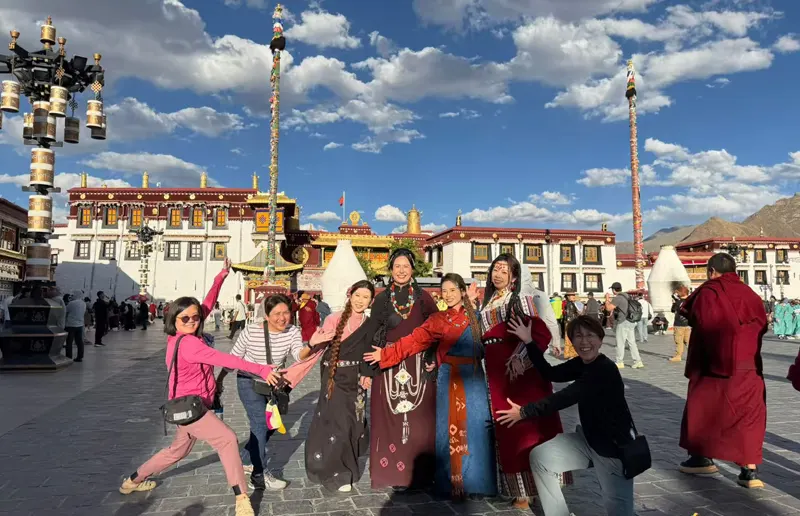
Tibetan Buddhism, also known as Vajrayana or Tantric Buddhism, is a distinctive branch of the Buddhist tradition. It combines deep philosophical study with powerful ritual practices to accelerate the path to enlightenment. Historic monasteries such as Jokhang Temple, Potala Palace, Sera Monastery, and Drepung Monastery remain important centers of Buddhist learning, prayer, and pilgrimage.
2) The Ancient Roots of Bon
Before Buddhism arrived in Tibet during the 7th century, Bon was the dominant spiritual practice on the plateau. It focuses on nature, mountains, rivers, and local guardian spirits. Many Bon traditions later blended with Tibetan Buddhism, creating unique religious customs that are still practiced today. Today, Bon continues to be recognized as one of Tibet's major spiritual traditions.
3) Sacred Mantras: The Power of "Om Mani Padme Hum"
"Om Mani Padme Hum" is the best-known mantra in Tibetan Buddhism. It is associated with Avalokiteshvara (Chenrezig), the Bodhisattva of Compassion. Tibetans chant this mantra while praying, spinning prayer wheels, or making pilgrimages. It is believed to cultivate compassion, bring inner peace, and accumulate spiritual merit. Today, the mantra can be seen carved on mani stones, prayer flags, and monastery walls throughout Tibet.
10 Unique Customs of the Tibetan Ethnic Group You Won't Find Anywhere Else
The Tibetan ethnic group has preserved many traditions that are deeply connected to religion, nature, and life on the high plateau. These customs have been practiced for centuries and continue to shape daily life across Tibet. Here are 10 unique Tibetan customs that make this culture unlike any other in the world.
Custom 1: Wind-Horse Prayer Flags (Lungta)
Lungta, or prayer flags, are one of Tibet's most recognizable symbols. The five colors represent the sky, air, fire, water, and earth. As the wind blows, Tibetans believe the printed prayers spread peace, compassion, and good fortune to all living beings.
Custom 2: Spinning Prayer Wheels (Mani Wheels)
Prayer wheels are found in monasteries, villages, and homes throughout Tibet. They contain sacred mantras, including "Om Mani Padme Hum." Spinning a prayer wheel is believed to have the same spiritual benefit as reciting the prayers inside and is a common daily practice.
Custom 3: Sky Burials (Jhator) and Spiritual Rebirth
Sky burial is a traditional Tibetan funeral custom. In Tibetan Buddhism, the body is viewed as an empty vessel after death. Offering it to vultures symbolizes compassion and the natural cycle of life, death, and rebirth.
Custom 4: The Nomad Lifestyle & the Sacred Yak
Many Tibetan nomads live on the grasslands of northern Tibet. The yak is essential to their way of life. It provides milk, meat, wool, hides, transportation, and fuel from dried yak dung. Yak-hair tents also protect families from the harsh mountain climate.
Custom 5: Butter Tea Hospitality (Po Cha)
Butter tea (Po Cha) is a traditional Tibetan drink made with tea, yak butter, salt, and water. It provides warmth and energy in the high-altitude environment. Offering butter tea to guests is an important symbol of Tibetan hospitality and respect.
Custom 6: Wearing the Versatile Chuba
The Chuba is the traditional Tibetan robe. It is made from wool or sheepskin to keep warm in cold weather. The loose design allows people to adjust to large temperature changes between day and night by adding or removing one sleeve. The extra-large pouch formed at the chest acts as a built-in pocket for carrying everything from wooden tea bowls to money.
Custom 7: Offering Hada - A Traditional Tibetan Greeting of Respect
Hada is a traditional white silk scarf that symbolizes purity, good wishes, and respect in Tibetan culture. Tibetans offer Hada to welcome guests, celebrate festivals, visit monasteries, or mark important occasions such as weddings and ceremonies. Receiving or presenting a Hada with both hands is a sign of courtesy and blessing, making it one of the most meaningful customs of the Tibetan ethnic group.
Custom 8: The Power of Sacred Dzi Beads
Dzi beads are treasured in Tibetan culture and are often referred to as "Heaven's Pearls" (or "heavenly pearls"). Many Tibetans wear them as amulets for protection, good fortune, health, and prosperity. They are also valued as family heirlooms passed down through generations.
Custom 9: Tibetan New Year (Losar) Celebrations
Tibetan New Year (Losar) is the most important festival in Tibet. Families clean their homes, prepare traditional foods, wear colorful clothing, and visit monasteries to pray for good fortune. Traditional dances and celebrations continue for several days.
Custom 10: The Sacred Pilgrimage (Kora)
Kora is the practice of walking clockwise around a sacred mountain, monastery, temple, or lake. Many pilgrims perform the Mount Kailash Kora or circle the Jokhang Temple and Potala Palace in Lhasa. Some complete the journey with full-body prostrations as an act of devotion and faith.
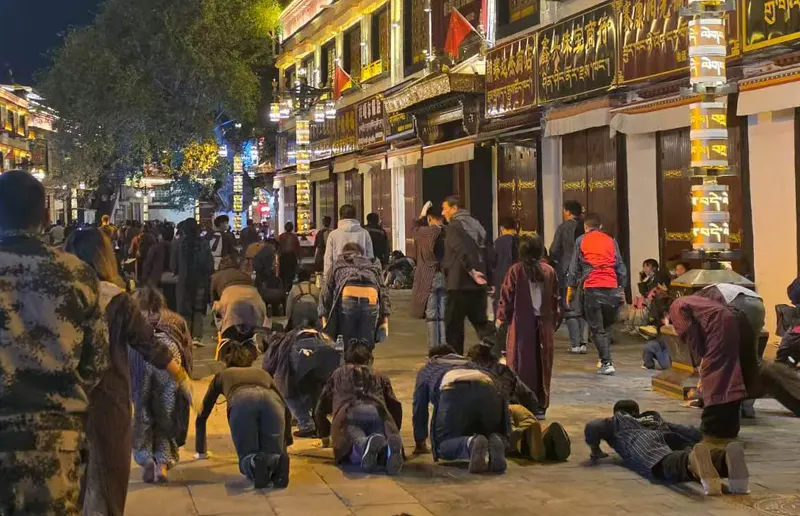 Sacred Kora in Lhasa
Visual Masterpieces: Sacred Art and Architecture
Tibetan culture is expressed through its remarkable religious art and architecture. From colorful Thangka paintings to the magnificent Potala Palace, these masterpieces reflect centuries of Buddhist belief, artistic skill, and cultural heritage. They are among the most iconic symbols of Tibet.
The Sacred Geometry of Tibetan Thangka Paintings
A Thangka is a highly detailed Tibetan Buddhist scroll painting on cotton or silk applique. Rather than being an expression of personal artistic freedom, a Thangka serves as a visual tool for meditation and teaching. Every detail follows strict Buddhist guidelines and carries symbolic meaning. Today, Thangka painting remains one of Tibet's most treasured art forms.
Architectural Wonders: The Potala Palace
The Potala Palace in Lhasa is Tibet's most famous architectural landmark and a UNESCO World Heritage Site. Built on Red Hill, it served as the winter residence of the Dalai Lamas for centuries. The palace features white and red palaces, golden roofs, chapels, and thousands of Buddhist statues and murals. It is one of the finest examples of traditional Tibetan architecture and a must-visit attraction in Tibet.
Preservation of Heritage: The Tibetan Ethnic Group Today
The Tibetan ethnic group continues to preserve its rich cultural heritage while adapting to modern life. Traditional customs, language, religious practices, and arts remain an important part of daily life. Today, local communities, families, monasteries, and cultural organizations all play a role in protecting Tibet's unique traditions.
Keeping Ancient Traditions Alive in a Modern World
Many young Tibetans continue to learn the Tibetan language, traditional script, music, dance, and handicrafts from their families and schools. This education, combined with modern technology, ensures their native language remains active even in everyday digital communication. Monasteries also help preserve Buddhist teachings, festivals, and traditional arts such as Thangka painting. These efforts ensure that Tibetan culture is passed on to future generations.
How to Respectfully Experience Tibetan Culture as a Traveler
If you plan to visit Tibet, practicing proper cultural etiquette is a meaningful way to show respect for their living heritage.
The Clockwise Rule: Always walk around monasteries, stupas (chortens), mani stone piles, and temples in a clockwise direction. This mirrors the path of the sun and represents harmony with natural forces.
Respecting Sacred Objects: Never step over religious items, prayer books, or people's feet. If you buy prayer flags, keep them off the ground; they are sacred objects meant to be hung high in the wind.
Monastery Decorum: Dress modestly (shoulders and knees covered) when entering temples, and always remove your hat and sunglasses. Do not take photos inside chapel halls unless you are explicitly given permission.
Conclusion
The Tibetan people are a living testament to human resilience and spiritual depth. They have inhabited the Tibetan Plateau for centuries. The plateau's unique geography, combined with deep religious beliefs and a traditional way of life, has shaped distinctive customs over centuries. Colorful prayer flags flutter in the mountain wind, while sacred pilgrimages remain an important part of daily life. These traditions are not just part of the past. They continue to reflect the Tibetan people's faith, compassion, and cultural identity today. Whether you visit Tibet or simply want to learn more, understanding these traditions offers a deeper appreciation of the Tibetan people's rich cultural heritage.
2 years exp.| 5.0
 | Reviews
Tell me about your travel plan or contact me via inquiry@tibettourism.com
Related Tibet Travel Guide and Advice


Most Popular Tibet Tour Packages
-
![15 Days Lhasa EBC Kailash Mansarovar Gyirong Sakya Shigatse Lhasa Join-in Group Tour]() Real Join-in Group Tour
Real Join-in Group Tour15 Days Lhasa EBC Kailash Mansarovar Gyirong Sakya Shigatse Lhasa Join-in Group Tour
Promo: Journey through the Himalayan mountains and lakes to uncover their mysteries
Dates & Price (More Traveler, Lower Price)
![rili]()
![xiala]()


Please share your contact information, so we can send you the answer directly by email.

