
 inquiry@tibettourism.com


.webp)


Tibetan Clothing: Traditional Dress, History, Culture & Meaning


.webp) Content
ContentWhat is Tibetan clothing? Tibetan clothing, the traditional dress of Tibet, reflects the region’s unique culture, history, and environment. The most iconic garment is the Chuba (Chupa), a long robe made from wool, sheepskin, or cotton to protect people from the cold plateau climate. Tibetan traditional dress often features colorful fabrics, embroidered patterns, silver jewelry, turquoise ornaments, and handmade accessories. These designs represent Tibetan beliefs, local customs, and the unique lifestyle of people living on the high plateau. This Tibetan clothing guide explores the history, styles, and meaning of Tibetan traditional dress, offering a deeper understanding of Tibet’s rich cultural heritage.
 Tibetan Clothing
Traditional Tibetan Dress for Men and Women
Traditional Tibetan clothing reflects the rich cultural heritage, regional diversity, and high-altitude lifestyle of the Tibetan people. Both men and women wear unique traditional Tibetan clothing—such as the iconic Chupa—tailored to withstand the harsh Himalayan environment. While the styles of men’s and women’s Tibetan dress vary by region, every Tibetan outfit embodies centuries of history, identity, and practical craftsmanship.
1) Tibetan Traditional Dress for Men: Bold, Practical, and Rugged
Men’s traditional Tibetan dress is mainly characterized by the Chupa, a long robe made from wool, sheepskin, or cotton. Tibetan men often wear leather belts, boots, and traditional hats with their robes, creating a practical style suitable for the cold plateau climate. During active labor or warm weather, men traditionally slide their right arm or both sleeves out of the robe, tying them neatly around the waist. In regions such as Lhasa, Kham, and Amdo, men’s Tibetan clothing may feature different materials, colors, and decorations that reflect local customs and lifestyles.
2) Tibetan Traditional Dress for Women: Elegant, Colorful, and Cultural
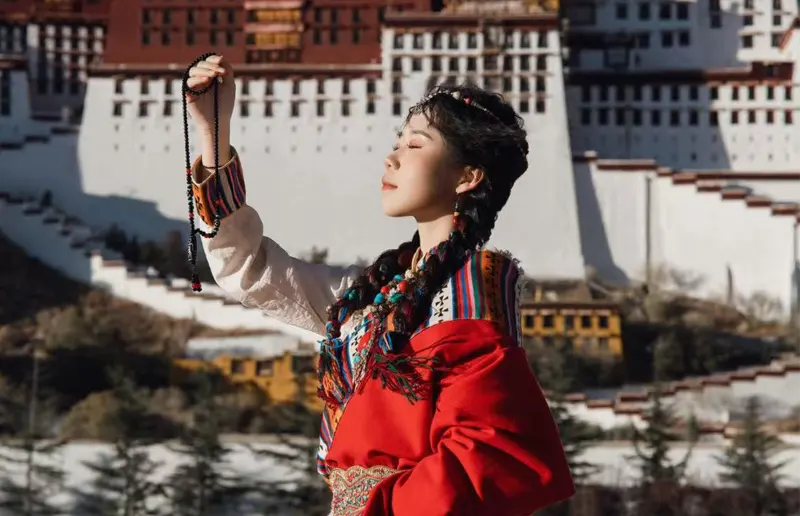
Women’s Tibetan traditional dress is known for its colorful fabrics, elegant designs, and beautiful accessories. Tibetan women often wear the Chupa robe, paired with embroidered aprons, silver jewelry, turquoise ornaments, and traditional headdresses. The famous Pangden apron, especially worn by married women, is an important symbol of Tibetan culture. These elements highlight the beauty, craftsmanship, and cultural meaning of Tibetan women’s clothing.
Types of Tibetan Traditional Dress
Tibetan traditional clothing includes a variety of garments and accessories that reflect Tibet’s climate, culture, and regional traditions. From the iconic Chupa robe to colorful Pangden aprons and traditional jewelry, each element of Tibetan clothing carries cultural meaning and shows the craftsmanship of Tibetan people.
1) Chupa (Tibetan Robe): The Essential Outer Garment for High-Altitude Life
The Chuba (Chupa) is the foundational element of Tibetan traditional dress. This long, heavy robe is folded around the body and tied at the waist with a sash, creating a spacious pocket (Ambag) on the chest for carrying everyday belongings. The loose design allows easy movement and helps people adapt to changing temperatures. Crafted from sheepskin, wool (Pulu), or silk, the versatile Tibetan Chupa is worn by both men and women across all regions.
2) Pangden (Tibetan Apron): Vibrant Striped Textile Symbolizing Marriage and Heritage
The Pangden is a traditional Tibetan apron mainly worn by married women. It is made from colorful wool or fabric strips with unique patterns and designs. The Tibetan Pangden apron is an important symbol of family status, cultural identity, and traditional craftsmanship. It is often worn together with the Chupa, creating a complete look of Tibetan women’s traditional clothing.
3) Tibetan Jewelry and Accessories: Spiritual Talismans and Status Symbols
Tibetan jewelry and accessories are important parts of Tibetan traditional clothing. Common decorations include silver jewelry, turquoise ornaments, coral beads, traditional hats, belts, and handmade accessories. These items not only enhance the beauty of Tibetan dress but also represent cultural beliefs, social status, and regional heritage. Traditional Tibetan jewelry adds unique artistic value to Tibetan clothing and reflects the rich history of Tibetan culture.
History of Tibetan Clothing: From Ancient Dress to Modern Fashion
The evolution of Tibetan traditional dress reflects a rich tapestry of climate adaptation, cultural exchange, and artistic innovation across the Himalayan plateau. Over centuries, practical nomadic garments transformed into sophisticated attire influenced by trade, spirituality, and regional identity. Understanding the history of Tibetan clothing reveals how ancient survival needs paved the way for the vibrant styles and modern adaptations seen today.
1) Ancient Roots: From Nomadic Furs to Silk Road Influences
The origins of traditional Tibetan clothing are deeply tied to the harsh environment of high-altitude pastoral life. Early Tibetans crafted heavy sheepskin coats (Drupa) and untanned leather garments designed to withstand freezing winds. As trade expanded along the ancient Silk Road and the Tea Horse Road, luxurious materials like brocade, silk, and woven wool (Pulu) were introduced into Tibetan dress. These foreign influences blended with native craftsmanship, giving rise to ornate trims, vibrant inner blouses (Wonju), and refined Tibetan Chupa styles. These styles reflected the wearer’s social status and regional heritage.
2) Regional Variations: Lhasa vs. Amdo vs. Kham Styles
The basic silhouette of Tibetan traditional attire is recognized everywhere. However, distinct regional aesthetics highlight the diversity of Tibetan culture:
Lhasa Style: Known for elegance and understatement, central Tibetan clothing features tailored silk Chubas, subtle colors, and delicate accessories suited for urban life.
Amdo Style: Reflecting a rich nomadic heritage, Amdo garments feature thick, sheepskin-lined Chubas adorned with wide, colorful fabric borders and striking headpieces.
Kham Style: Bold and elaborate, Kham Tibetan outfits showcase heavily decorated coats with broad fur collars, large coral and turquoise ornaments, and silver amulets (Gau).
3) Modern Tibetan Clothing: Contemporary Trends and Urban Fashion
Modern Tibetan clothing combines traditional elements with contemporary fashion trends. Many Tibetans now wear modern urban outfits in daily life while preserving cultural symbols such as the Chupa, Tibetan patterns, and traditional accessories. Designers also incorporate Tibetan embroidery, colors, and craftsmanship into modern clothing styles. These new designs show the connection between Tibetan traditional dress and today’s fashion, allowing Tibetan culture to continue evolving while maintaining its heritage.
Where to Buy the Tibetan Traditional Dress? How Much Do They Cost?
You can buy Tibetan traditional dress in major Tibetan cities such as Lhasa, Shigatse, and Nyingchi. Local markets, Tibetan handicraft shops, and cultural stores offer a variety of Tibetan clothing, including Chupa robes, Tibetan jewelry, hats, and traditional accessories. The price of Tibetan traditional clothing depends on the materials, craftsmanship, and design. Simple cotton or modern-style Tibetan dresses may cost a few hundred RMB. However, handmade wool Chubas, silk garments, and detailed traditional costumes can cost thousands of RMB or more. If you plan to buy Tibetan clothing, remember to browse around and bargain with the vendors. You can also rent a Tibetan traditional dress for cultural experiences and photography in Tibet.
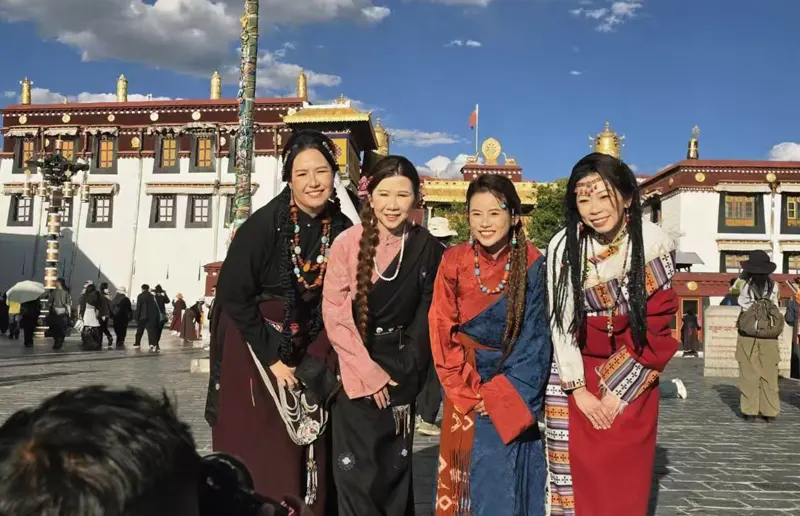 Tibetan Clothing Experience
How to Wear a Tibetan Chupa (Step-by-Step Guide)
Wearing a Tibetan Chupa is an important part of experiencing Tibetan traditional dress and culture. First, put the long Tibetan robe over your shoulders and adjust the inner layers for comfort. Next, wrap the Chupa around your body and secure it with a traditional belt. The loose upper part can be folded to create a comfortable pouch, which helps keep you warm in Tibet's cold plateau climate. Finally, accessorize with Tibetan boots, jewelry, or a traditional apron to complete the look.
FAQs about Tibetan Traditional Dress
1) Why do Tibetans only wear one sleeve?
Some Tibetans wear one sleeve of the Chupa robe off the shoulder to adapt to the high-altitude climate and daily
activities. The traditional Tibetan Chupa is designed as a warm and flexible garment, allowing people to adjust
their clothing according to temperature changes. Leaving one arm uncovered helps with movement, work, and
comfort while still keeping the body warm. This unique style is an important feature of Tibetan traditional
dress and clothing culture.
2) Why do Tibetans wear thick robes?
Tibetans wear thick robes such as the Chupa because of the cold and high-altitude climate of the Tibetan Plateau.
Traditional Tibetan clothing is designed to provide warmth, protect against strong winds, and adapt to large
temperature changes between day and night. Materials like wool and sheepskin help keep the body warm in harsh
weather conditions. The loose design of the Tibetan Chupa also allows easy movement and comfort during daily
activities, making it an important part of Tibetan traditional dress and culture.
3) What is the difference between a men's and women's Chupa?
The main differences between a men’s and women’s Chupa lie in their design, decorations, and accessories. Men’s
Chupa is usually simpler and more practical, often made from wool or sheepskin with leather belts and boots.
Women’s Chupa often features brighter colors, embroidered patterns, and accessories such as Tibetan jewelry and
the Pangden apron. Both styles represent the beauty and heritage of Tibetan traditional dress.
4) Can I wear traditional Tibetan clothing in Tibet?
Yes, you can wear traditional Tibetan clothing in Tibet as part of a cultural experience. Many tourists rent or
try on Tibetan Chupa robes for photography, festivals, and cultural activities in places like Lhasa. When
wearing traditional Tibetan dress, you should respect local customs and understand the cultural meaning behind
the clothing. Wearing Tibetan clothing will be a memorable way to experience Tibetan culture.
5) What to wear to a Tibetan wedding?
A Tibetan wedding often features colorful and meaningful Tibetan traditional dress. You may wear formal Tibetan
clothing, such as a Chupa robe, traditional accessories, or elegant modern outfits with Tibetan cultural
elements. Tibetan weddings may include beautiful jewelry, embroidered fabrics, and symbolic decorations that
represent blessings and prosperity. Choosing respectful and appropriate clothing helps you enjoy the unique
traditions of Tibetan wedding culture.
Conclusion
Tibetan traditional dress is more than just clothing; it is a symbol of Tibet’s history, culture, and way of life. Every detail of Tibetan clothing reflects the high-altitude environment, local customs, and cultural beliefs of the Tibetan people. Exploring Tibetan traditional dress provides a deeper understanding of Tibetan heritage, craftsmanship, and identity. Whether learning about Tibetan clothing history, traditional styles, or their cultural meaning, you can discover the rich stories behind one of the world’s most unique clothing traditions.
2 years exp.| 5.0
 | Reviews
Tell me about your travel plan or contact me via inquiry@tibettourism.com
Related Tibet Travel Guide and Advice

Most Popular Tibet Tour Packages
-
![15 Days Lhasa EBC Kailash Mansarovar Gyirong Sakya Shigatse Lhasa Join-in Group Tour]() Real Join-in Group Tour
Real Join-in Group Tour15 Days Lhasa EBC Kailash Mansarovar Gyirong Sakya Shigatse Lhasa Join-in Group Tour
Promo: Journey through the Himalayan mountains and lakes to uncover their mysteries
Dates & Price (More Traveler, Lower Price)
![rili]()
![xiala]()


Please share your contact information, so we can send you the answer directly by email.

