
 inquiry@tibettourism.com


.webp)


Tibetan Tea: History, Types, Culture & How to Make It


.webp) Content
ContentWhat is Tibetan tea? Tibetan tea is a traditional drink deeply rooted in Tibetan culture. Popular varieties include butter tea, sweet tea, and dark tea. What does Tibetan tea taste like? Different types of Tibetan tea have different flavors. Tibetan butter tea has a rich, savory, and slightly salty flavor, while Tibetan sweet tea is smoother and sweeter. Dark tea has a strong, earthy taste and is often enjoyed plain or used to make butter tea. What is Tibetan tea good for? Beyond its cultural significance, Tibetan tea provides warmth, fluids, and energy. In addition, people traditionally drink Tibetan tea after meals to aid digestion. This guide explores its origins, types, cultural significance, and traditional uses.
The History of Tibetan Tea: From the Ancient Tea Horse Road to High-Plateau Traditions
Tibetan tea has a history of more than a thousand years and is closely linked to trade between Tibet and China. Through the ancient Tea Horse Road, Chinese tea was exchanged for Tibetan horses and gradually spread across the Tibetan Plateau. Local communities adapted the strong brick tea by adding yak butter and salt, creating a nourishing drink suited to the harsh high-altitude climate. Over time, Tibetan tea became an important part of daily life, hospitality, spiritual practices, and Tibetan cultural heritage.
The Main Types of Tibetan Tea
Tibetan tea comes in several forms, each with its own flavor, preparation method, and cultural role. The three main types are Tibetan butter tea, sweet tea, and dark tea, each deeply rooted in everyday life across the region.
1) Butter Tea (Po Cha / Cha Süma) - The National Beverage
Tibetan butter tea, known as Po Cha, is one of the most iconic Tibetan drinks. It is traditionally made by blending strong tea with yak butter and salt. Its rich, savory flavor and high energy content make it well suited to the cold, high-altitude environment of the Tibetan Plateau. Butter tea is commonly served at home, during social gatherings, and as a gesture of Tibetan hospitality.
 Butter Tea
2) Tibetan Sweet Tea (Cha Ngamo) - The Daily Favorite
Tibetan sweet tea, or Cha Ngamo, is made with black tea, milk, and sugar. It has a smooth, creamy, and mildly sweet taste, making it quite different from savory butter tea. It became especially popular in Lhasa, where visiting a local teahouse is a classic way to experience the city's relaxed atmosphere.
 Tibetan Sweet Tea
3) Tibetan Dark Tea (Hei Cha / Brick Tea) - The Pure Brew Base
Tibetan dark tea, often called Hei Cha or brick tea, is a fermented tea traditionally brought to Tibet through historic trade routes. It is usually pressed into compact bricks for easier transport and storage. With its strong, earthy flavor, it is often used as the base for butter tea or enjoyed plain. Traditionally, plain dark tea is also served after heavy meals. It played an important role in the development of Tibetan tea culture and the historic Tea Horse Road.
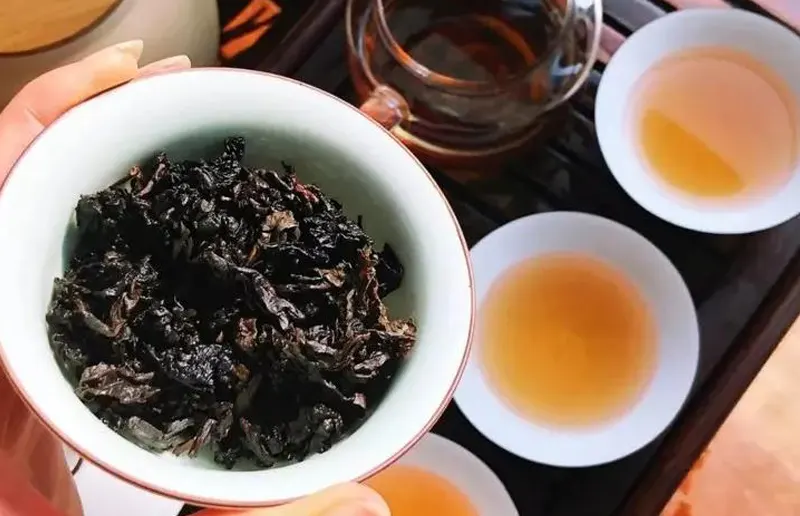 Tibetan Dark Tea
How to Make Tibetan Tea: Step-by-Step Recipe
Traditional Tibetan tea is simple to prepare, but the method varies by type. The following steps show how to make traditional Tibetan butter tea and sweet tea at home.
How to Make Tibetan Butter Tea?
Step 1: Boil the Tea. Boil strong black or dark tea in water for several minutes. Pressed brick tea is
traditionally used for a rich, bold flavor.
Step 2: Strain the Tea. Strain the brewed tea to remove tea leaves or small pieces of brick tea.
Step 3: Add Yak Butter and Salt. Pour the tea into a traditional churn or blender. Add yak butter and a small amount of salt. Regular unsalted butter can be used if yak butter is unavailable, but the flavor will differ.
Step 4: Churn or Blend. Churn the mixture until the tea becomes smooth and creamy. This step gives Tibetan butter
tea its distinctive texture and savory taste.
Step 5: Serve Hot. Pour the tea into cups and serve it hot. Tibetan butter tea is traditionally offered to guests
as a sign of hospitality.
How to Make Tibetan Sweet Tea?
Step 1: Boil the tea. Brew strong black tea in hot water. Let it steep until it develops a rich flavor.
Step 2: Add milk. Pour in fresh milk and bring the mixture to a gentle boil. Stir occasionally to combine the tea
and milk.
Step 3: Add sugar. Add sugar according to your taste. Stir well until the sugar is fully dissolved.
Step 4: Strain and serve. Strain the tea to remove any tea leaves. Serve the sweet tea hot in a traditional bowl or cup.
Where to Drink Tibetan Tea: Teahouses, Restaurants or Local Homes
Tibetan tea is easy to experience in Lhasa. Iconic spots like the historic Guang Ming Gang Qiong Sweet Teahouse and the Tsamkhung Nunnery (Cang Gusi Nunnery) offer an authentic setting. Locals, pilgrims, and travelers gather there to chat, relax, and enjoy freshly brewed tea.
Local restaurants also serve Tibetan butter tea and sweet tea with Tibetan dishes. For a more authentic experience, sharing tea with local families offers a closer look at everyday Tibetan tea culture and traditional hospitality.
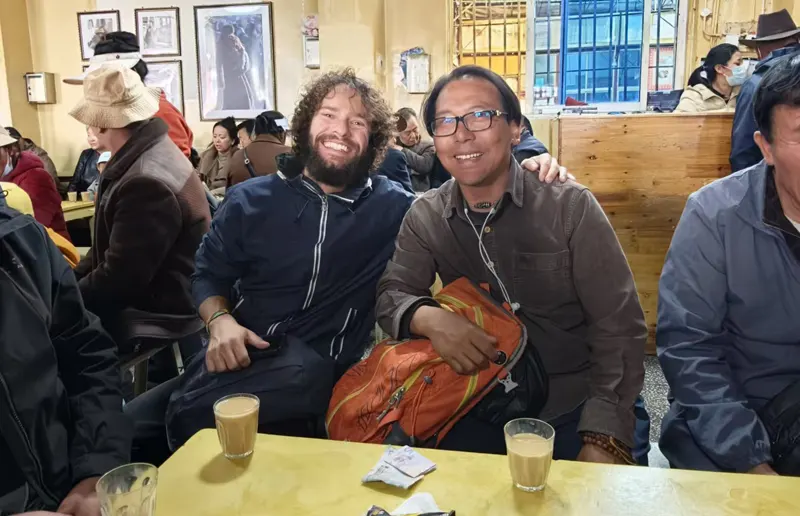 Drink Tibetan Tea
Tibetan Tea Etiquette & Cultural Significance
Tibetan tea is more than a daily drink; it is an important part of Tibetan culture, hospitality, and social life. From welcoming guests to supporting religious and daily routines, tea reflects the warmth and traditions of Tibetan communities.
1) Hospitality & The Rule of the Never-Empty Cup
Offering Tibetan tea is a traditional way to welcome guests and show respect. Hosts often keep guests’ cups filled during a visit, creating the custom of the never-empty cup. Accepting tea and taking part in this simple ritual is a meaningful way to experience Tibetan hospitality.
2) Traditional Teaware: The Chandong Churn & Wooden Bowls (Phorpa)
The preparation and serving of Tibetan tea rely on distinct traditional teaware. Po Cha is traditionally churned in a Chandong, a tall wooden cylinder with a plunger that blends tea, butter, and salt. Once churned, the tea is served in hand-carved wooden bowls called Phorpa, which retain heat well and enhance the traditional drinking experience.
3) Tibetan Tea in Monasteries and Daily Rituals
Tea has an important place in Tibetan monasteries and daily life. Monks may drink tea during religious gatherings and communal activities, while local families serve it throughout the day. Tibetan tea also plays a role in festivals, social visits, and other traditional occasions.
FAQs about Tibetan Tea
1) What is the difference between Tibetan butter tea and sweet tea?
Tibetan butter tea is made with strong tea, yak butter, and salt, giving it a rich and savory taste. Tibetan
sweet tea is made with black tea, milk, and sugar, so it has a smoother and sweeter flavor. Butter tea is
closely associated with traditional Tibetan culture, while sweet tea is especially popular in Lhasa teahouses.
2) Is Tibetan tea good for high-altitude travel?
Tibetan tea can be a comforting drink during high-altitude travel. Butter tea provides fluids, salt, and
calories, while hot tea can help keep you warm in cold weather. However, tea should not replace proper
hydration, rest, acclimatization, or medical care at high altitudes.
3) Can Tibetan tea help with altitude sickness?
No. Tibetan tea is not a treatment for altitude sickness. Although drinking tea can provide fluids and energy, it
does not prevent or cure altitude sickness. You should acclimatize gradually, avoid strenuous activity at first,
and seek medical help if serious symptoms develop.
4) How is Tibetan sweet tea different from regular milk tea?
Tibetan sweet tea is traditionally made with strong black tea, milk, and sugar. It usually has a rich tea flavor
and a simple, comforting sweetness. Compared with many modern milk teas, traditional Tibetan sweet tea is less
focused on added flavors and toppings and is commonly enjoyed in local teahouses.
Conclusion
Tibetan tea is more than a traditional drink; it reflects Tibet’s history, daily life, hospitality, and cultural heritage. From savory Tibetan butter tea to sweet tea and dark tea, each type has its own flavor and traditions. Learning how Tibetan tea is made and enjoyed offers a deeper understanding of Tibetan culture. Visit Tibet and experience the unique flavors and traditions of Tibetan tea firsthand.
10 years exp.| 5.0
 | Reviews
Tell me about your travel plan or contact me via inquiry@tibettourism.com
Related Tibet Travel Guide and Advice

Most Popular Tibet Tour Packages
-
![Lhasa Everest Base Camp Kathmandu Overland Small Group Tour]() Small Group Tour
Small Group Tour7 Days Lhasa Everest Base Camp Kathmandu Overland Small Group Tour
Promo: Classic overland travel route from Lhasa to Kathmandu via Gyirong / Nyalam
Dates & Price
![rili]()
![xiala]()
-
![Lhasa Shigatse Mount Everest Small Group Tour]() Small Group Tour
Small Group Tour8 Days Lhasa Shigatse Mount Everest Small Group Tour
Promo: Once-in-a-lifetime chance to face the tallest mountain in the world
Dates & Price
![rili]()
![xiala]()
-
![Kathmandu to Lhasa Overland Small Group Tour with EBC]() Small Group Tour
Small Group Tour8 Days Kathmandu to Lhasa Overland Small Group Tour with EBC
Promo: Drive Across Himalaya Overland Tour with altitude rising slowly
Dates & Price
![rili]()
![xiala]()



.webp)


Please share your contact information, so we can send you the answer directly by email.

