
 inquiry@tibettourism.com


Mani Stones: Meaning, Symbols & Tibetan Buddhist Traditions


 Content
Across Tibet, stone piles and walls adorned with colorful prayer flags are familiar sights that reflect the region’s rich spiritual traditions. Known as Mani stone piles, these sacred structures are made of stones carved with Buddhist mantras, prayers, or symbols. Often found near monasteries, mountain passes, and pilgrimage routes, they hold deep significance in Tibetan Buddhism.
In this guide, you’ll explore the meaning, symbolism, and traditions of Tibetan Mani stones, discover where to see them in Tibet, and learn how to approach them respectfully. With guidance from a local agency like Tibet Horizon, you can gain a deeper understanding of these cultural landmarks and their role in Tibetan Buddhist life.
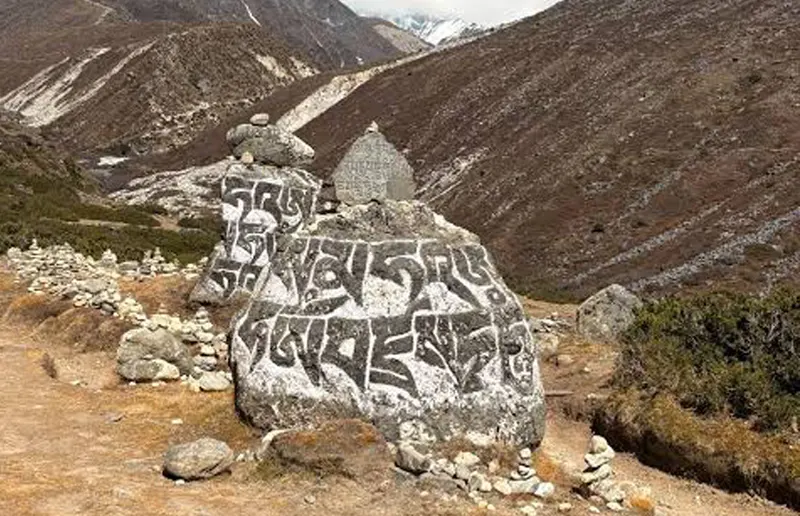 Tibetan Mani Stone
What Is a Mani Stone (Mani Do in Tibetan)?
A Mani stone is a stone carved with Buddhist mantras, prayers, or sacred symbols, commonly found across Tibet and the Himalayas. In Tibetan Buddhist tradition, these stones express devotion, compassion, and prayers for blessings and protection. More than ordinary carvings, they embody centuries of religious tradition and cultural heritage.
From Traditional Stone Cairns to Sacred Mani Stones
Stone piles once served practical purposes, such as marking routes and boundaries. Over time, some became sacred structures associated with Tibetan Buddhist traditions. Pilgrims and artisans began carving mantras and religious symbols into stones, turning simple rocks into sacred symbols of reverence. These carved stones became sacred objects that reflect Tibetan devotion and are believed to bring spiritual blessings and protection.
Forms of Mani Stones: Individual Pieces, Piles, and Walls
Tibetan Mani stones take several forms. Mani walls are long structures built from layers of carved stones, often lining pilgrimage routes. Mani stone piles and cairns are smaller collections of stones placed at sacred sites or mountain passes. Individual Mani stones may feature carved mantras, Buddhist figures, or auspicious symbols. While each form carries its own spiritual nuance, collectively they shape Tibet's sacred landscape.
The Spiritual Meaning of Om Mani Padme Hum on Mani Stones
Tibetan Mani stones bear Buddhist prayers, mantras, and sacred images that reflect core Tibetan Buddhist beliefs. The most common inscription is Om Mani Padme Hum, a six-syllable mantra associated with compassion and wisdom. Understanding its meaning helps explain the spiritual significance of Mani stones and the symbols carved into them.
1) Why Om Mani Padme Hum Is Carved on Mani Stones
Om Mani Padme Hum is the mantra of Avalokiteshvara, known as Chenrezig in Tibetan Buddhism. As the bodhisattva of compassion, Chenrezig represents the wish to relieve the suffering of all beings. Tibetans carve this mantra into stones as an act of devotion and a prayer for peace, compassion, and spiritual merit. These inscriptions preserve sacred teachings and allow prayers to remain part of the landscape for generations.
2) Traditional Association, Spiritual Significance
In Tibetan tradition, each of the six syllables directly targets one of the six realms of existence:
| Syllable | Realm of Existence | Purifies / Transforms | Enlightened Virtue |
|---|---|---|---|
| Om | God Realm | Pride & Ego | Generosity & Equanimity |
| Ma | Jealous God (Asura) Realm | Jealousy & Envy | Patience & Moral Ethics |
| Ni | Human Realm | Uncontrolled Desire & Passion | Discipline & Self-Awareness |
| Pad | Animal Realm | Ignorance & Prejudice | Wisdom & Perseverance |
| Me | Hungry Ghost Realm | Greed & Attachment | Renunciation & Meditation |
| Hum | Hell Realm | Hatred & Anger | Universal Compassion |
Interpretations can vary among Tibetan Buddhist traditions. Overall, the mantra expresses the path toward spiritual awakening and compassion for all sentient beings.
3) Other Sacred Symbols Found on Tibetan Mani Stones
Beyond the six-syllable mantra, Tibetan Mani stones may feature Buddhist deities, sacred images, and auspicious symbols. Each design conveys a different aspect of Buddhist belief.
The Eight Auspicious Symbols (Ashtamangala): These symbols include the Endless Knot, Lotus, Conch Shell, Dharma Whee, Parasol, Golden Fish, Treasure Vase, and Victory Bannerl. Together, they represent blessings, wisdom, and the Buddhist path.
Images of Buddhist Deities: Carvings of the Buddha, Avalokiteshvara, and other revered figures express piety and reflect Buddhist teachings.
The Eyes of the Buddha: These eyes symbolize awareness and wisdom. They are more commonly associated with stupas and Buddhist monuments, though similar imagery may appear in sacred art.
These symbols add layers of meaning to Tibetan Mani stones. Alongside carved mantras, they reflect the spiritual beliefs and artistic traditions of Tibetan communities.
Experiencing Mani Stone Landmarks on Your Tibet Tour
Mani stones are an important part of Tibet’s cultural and spiritual landscape. You can encounter them along mountain trails, near monasteries, and at sacred pilgrimage sites. Observing these stones and local religious practices offers a deeper understanding of Tibetan Buddhist traditions.
1) Where to Find Mani Stones Along Tibet’s Travel Routes
Throughout your itinerary across central and western Tibet, you will naturally come across Mani stone formations at key geographic and cultural stops:
High-Altitude Mountain Passes: Found at famous overland crossings like Gyatso La, Karo La, and Mira La, standing alongside fluttering prayer flags.
Monastery Circuits (Koras): Lined around iconic religious sites such as the Barkhor Street circuit in Lhasa, Tashilhunpo Monastery in Shigatse, and Ganden Monastery.
Sacred Lakes & Valleys: Scattered along the shores of Yamdrok Lake, Namtso, and Lake Mansarovar, as well as near Mount Everest Base Camp.
2) Understanding Local Pilgrimage Practices Around Mani Stones
Local pilgrims often walk clockwise around Mani walls and sacred stone piles while reciting prayers or turning prayer wheels. Observing these practices quietly helps you understand their religious significance. Follow local customs and avoid interrupting worshippers.
3) Exploring Mani Stone Sites on Private and Small-Group Tours
A private or small-group Tibet tour provides opportunities to discover Mani stones along cultural routes and pilgrimage trails. With a local guide, travelers can learn about the meaning of carved mantras, the role of Mani walls, and the customs associated with sacred sites. Tibet Horizon offers different tour options, allowing travelers to explore Tibetan culture while respecting local traditions.
Recommended Itineraries for a Tibet tour:
6-Day Central Tibet Culture Small Group Tour
8-Day Lhasa Shigatse Everest Base Camp Small Group Tour
9-Day Lhasa Shigatse Everest Base Camp Namtso Small Group Tour
15-Day Lhasa EBC to Mount Kailash and Lake Mansarovar Small Group Tour
 Mani Stone at Lake Mansarovar
Essential Do’s and Don’ts at Mani Stone Cairns
To ensure your actions remain respectful, keep these fundamental guidelines in mind:
| What to Do | What to Avoid |
|---|---|
| Do walk clockwise around Mani walls and sacred stone piles, following local customs. | Don't walk counterclockwise around sacred sites if local tradition calls for clockwise circumambulation. |
| Do remove hats and sunglasses when pausing to admire sacred carvings closely. | Don't step on, sit on, or climb over Mani stones or cairns. |
| Do maintain a quiet, respectful demeanor near pilgrims and sacred sites. | Don't shout, laugh loudly, or disturb people engaged in prayer. |
| Do ask permission before photographing local people or religious ceremonies. | Don't take close-up photos of people praying without their consent or ignore photography restrictions. |
| Do photograph Mani stones from a respectful distance and follow local rules. | Don't use flash where prohibited or block pilgrims' paths to take pictures. |
| Do keep personal belongings and rubbish away from sacred areas. | Don't take away, remove, or rearrange carved stones as souvenirs. |
| Do observe local customs and ask your guide before making offerings. | Don't touch or disturb fresh offerings like butter lamps or silk scarves (Khatas). |
Modern Cairn-Building Vs. Traditional Mani Stones
Modern cairn-building often involves stacking stones for decoration, personal expression, or marking hiking routes. Traditional Tibetan Mani stones, however, carry deep religious meaning. They are carved with Buddhist mantras, prayers, or sacred images as expressions of sacred art and faith. Unlike recreational stone stacking, Mani stones are part of Tibetan Buddhist traditions and should be treated with respect. Avoid building new stone piles or altering existing ones at sacred sites.
FAQs About Tibetan Mani Stone
1) Are Mani Stones exclusively Buddhist?
Mani stones are primarily associated with Tibetan Buddhism, but their cultural significance extends beyond
Buddhist religious practices. Some sacred stone sites also reflect older local customs and beliefs associated
with the Bon tradition. Together, these traditions form part of Tibet's rich cultural heritage.
2) Can I touch or rearrange Mani stones?
You can admire Mani stones up close, but avoid moving, removing, or rearranging them. These stones are sacred
objects, and changing their arrangement may disrespect local religious customs. If you wish to add a stone to a
pile, ask your local guide for advice first. Always respect nearby offerings and the practices of local
pilgrims.
3) When is the best time to see Mani stones in Tibet?
The best time to see Mani stones in Tibet is from May to October, when roads are generally more accessible and
outdoor sightseeing is easier. Summer brings greener landscapes, while September and October often offer clearer
skies. For a deeper cultural experience, visit during the Saga Dawa Festival, when many pilgrims gather to pray
and perform kora around sacred sites.
Conclusion
Tibetan Mani stones reflect the deep connection between Buddhism, local traditions, and daily life in Tibet. Their sacred mantras and symbols express prayers for compassion, wisdom, and peace. During your Tibet tour, visiting Mani walls and sacred stone sites offers a closer look at Tibetan beliefs and cultural heritage. Remember to respect local customs and preserve these meaningful landmarks for future generations.
2 years exp.| 5.0
 | Reviews
Tell me about your travel plan or contact me via inquiry@tibettourism.com
Related Tibet Travel Guide and Advice


Most Popular Tibet Tour Packages
-
![Lhasa Everest Base Camp Kathmandu Overland Small Group Tour]() Small Group Tour
7 Days Lhasa Everest Base Camp Kathmandu Overland Small Group Tour
Promo: Classic overland travel route from Lhasa to Kathmandu via Gyirong / Nyalam
Dates & Price
![rili]()
![xiala]()
-
![Lhasa Shigatse Mount Everest Small Group Tour]() Small Group Tour
8 Days Lhasa Shigatse Mount Everest Small Group Tour
Promo: Once-in-a-lifetime chance to face the tallest mountain in the world
Dates & Price
![rili]()
![xiala]()
-
![Kathmandu to Lhasa Overland Small Group Tour with EBC]() Small Group Tour
8 Days Kathmandu to Lhasa Overland Small Group Tour with EBC
Promo: Drive Across Himalaya Overland Tour with altitude rising slowly
Dates & Price
![rili]()
![xiala]()



Please share your contact information, so we can send you the answer directly by email.

