
 inquiry@tibettourism.com


.webp)


Tibetan Buddha: Meaning, Statues, Symbols & Buddhist Culture


.webp) Content
ContentTibetan Buddhism is deeply rooted in Tibet’s culture, traditions, and daily life, with Tibetan Buddha statues playing an important role in religious practice and artistic expression. From peaceful Buddhas to powerful deities, each figure carries unique meanings, symbols, and spiritual significance. Exploring these statues offers deep insight into Tibet's rich history, core beliefs, and vibrant heritage. In this guide, we break down the key types, profound symbolism, and cultural significance of iconic Tibetan deities.
The Core Meaning of the Tibetan Buddha
In Tibetan Buddhism, Buddha statues are not mere art—they embody enlightened wisdom, active compassion, and the ultimate path to liberation. To fully grasp their purpose, we must examine their historical development, spiritual philosophy, and cultural impact.
1) Historical Origin: How Buddhism Transformed Tibet
Buddhism spread to Tibet in several stages, particularly during the 7th and 8th centuries. It gradually influenced Tibetan religion, culture, art, and political life. During the 7th century, King Songtsen Gampo introduced Buddhism under the influence of his Chinese and Nepalese wives. The 8th century marked a pivotal turning point when King Trisong Detsen invited the Indian master Padmasambhava (Guru Rinpoche) and the scholar Shantarakshita to Tibet. Guru Rinpoche played an important role in the development of Tibetan Buddhism. He is also traditionally associated with the establishment of Samye, Tibet’s first Buddhist monastery.
2) The Philosophy of Enlightened Mind and Universal Compassion
At the heart of Tibetan Buddhist philosophy is the Bodhicitta—the altruistic resolve to achieve full enlightenment for the benefit of all sentient beings. Central to this path are two interdependent principles:
Great Compassion (Karuna): The active desire to relieve the suffering of every living being, exemplified by deities like Avalokiteshvara.
Wisdom (Prajna): The direct realization of Sunyata (emptiness), understanding that all phenomena lack inherent, independent existence.
In Tibetan Buddhism, wisdom and compassion are compared to the two wings of a bird. Both are essential for transcending the cycle of rebirth (samsara) and achieving true liberation.
3) Key Differences Between Tibetan and Theravada Buddhism
While both traditions trace their origins to the historical Buddha, their conceptualization of enlightenment differs significantly:
| Feature | Tibetan Buddhism (Vajrayana) | Theravada Buddhism |
|---|---|---|
| Man Tradition | Vajrayana within Mahayana Buddhism | Early Buddhist tradition |
| Primary Goal | Achieving Buddhahood and benefiting all sentient beings | Attaining liberation from suffering (Arhat) |
| Path & Practice | Mantras, visualization, meditation, and rituals | Meditation, ethical conduct, and mindfulness |
| Buddha Figures | Buddhas, bodhisattvas, and various deities | Shakyamuni Buddha and Buddhist arahants |
| Buddhist Philosophy | Emphasizes emptiness, Buddha-nature, wisdom, and compassion | Emphasizes the Four Noble Truths, dependent origination, and non-self |
| Artistic Style & Symbols | Elaborate statues, symbolic gestures, ornaments, and ritual objects | Often features simpler Buddha statues, symbolic gestures, and serene expressions |
| Feature | Tibetan Buddhism (Vajrayana) | Theravada Buddhism |
|---|---|---|
| Man Tradition | Vajrayana within Mahayana Buddhism | Early Buddhist tradition |
| Primary Goal | Achieving Buddhahood and benefiting all sentient beings | Attaining liberation from suffering (Arhat) |
| Path & Practice | Mantras, visualization, meditation, and rituals | Meditation, ethical conduct, and mindfulness |
| Buddha Figures | Buddhas, bodhisattvas, and various deities | Shakyamuni Buddha and Buddhist arahants |
| Buddhist Philosophy | Emphasizes emptiness, Buddha-nature, wisdom, and compassion | Emphasizes the Four Noble Truths, dependent origination, and non-self |
| Artistic Style & Symbols | Elaborate statues, symbolic gestures, ornaments, and ritual objects | Often features simpler Buddha statues, symbolic gestures, and serene expressions |
Understanding Iconic Tibetan Buddha Statues & Their Meanings
Tibetan Buddha statues are more than artistic decorations. They serve as sacred objects for meditation, prayer, and spiritual practice. Each statue serves as a visual map of enlightened qualities, embodying specific aspects of wisdom, compassion, and mental energy. Learning about these iconic Tibetan Buddha statues helps you understand their role in Buddhist culture and appreciate the stories behind their artistic details.
1) Shakyamuni Buddha: The Historical Buddha of Earthly Enlightenment
Shakyamuni Buddha is the historical Buddha and the central figure of Buddhist teachings. Born as Siddhartha Gautama, he attained enlightenment and taught the path to liberation from suffering.
In Tibetan Buddha statues, Shakyamuni Buddha is often shown sitting in a meditation posture. His right hand may touch the ground, representing the moment of enlightenment under the Bodhi tree. This gesture is known as the Bhumisparsha Mudra, or earth-touching gesture.
Meaning: Enlightenment, wisdom, and liberation.
Common Symbols: Meditation posture, monk's robes, and earth-touching gesture.
Role in Tibetan Buddhism: Represents the historical foundation of Buddhist teachings.
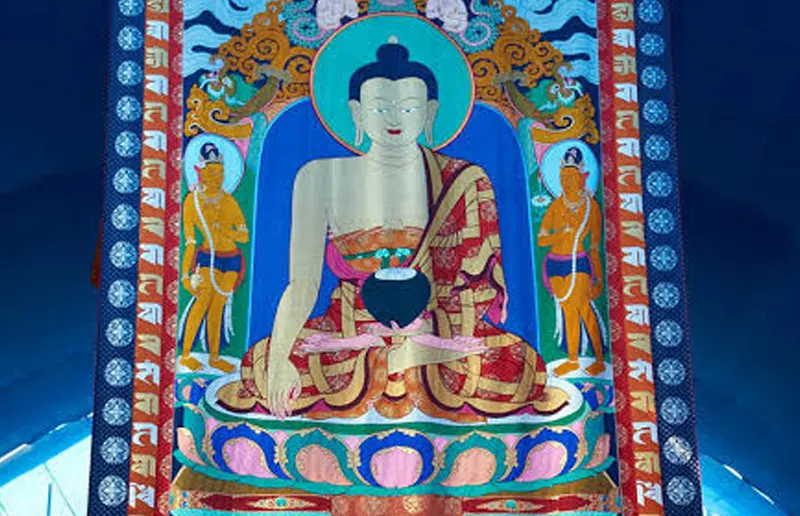 Shakyamuni Buddha
2) The Five Dhyani Buddhas: Celestial Energy and Transformations
The Five Dhyani Buddhas, also called the Five Wisdom Buddhas, represent different aspects of enlightened consciousness. Each Buddha is associated with a specific color, direction, wisdom, and transformation of negative emotions.
| Buddha | Main Meaning | Symbolic Color |
|---|---|---|
| Vairocana | Wisdom of the Dharma realm | White |
| Akshobhya | Mirror-like wisdom | Blue |
| Ratnasambhava | Wisdom of equality | Yellow |
| Amitabha | Discriminating wisdom | Red |
| Amoghasiddhi | All-accomplishing wisdom | Green |
| Buddha | Main Meaning | Symbolic Color |
|---|---|---|
| Vairocana | Wisdom of the Dharma realm | White |
| Akshobhya | Mirror-like wisdom | Blue |
| Ratnasambhava | Wisdom of equality | Yellow |
| Amitabha | Discriminating wisdom | Red |
| Amoghasiddhi | All-accomplishing wisdom | Green |
These Tibetan Buddha statues often appear in mandalas and temple paintings. Their symbols help practitioners understand the transformation of ordinary emotions into enlightened wisdom.
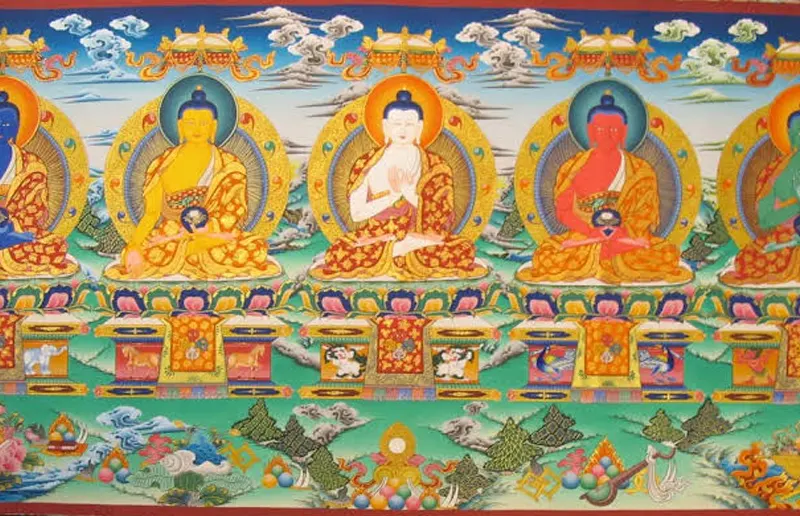 The Five Dhyani Buddhas
3) Medicine Buddha (Bhaisajyaguru): Healing Body, Mind, and Spirit
Medicine Buddha, known as Bhaisajyaguru, is often depicted with a lapis lazuli blue body, symbolizing healing and enlightened wisdom. His statues typically show him holding a medicine bowl filled with healing nectar. This distinctive appearance makes him a recognizable figure in Tibetan Buddhist art.
Meaning: Healing, compassion, and relief from suffering.
Common Symbols: Medicine bowl, blue body, and monastic robes.
Religious Role: Represents Buddhist healing teachings and compassionate care for sentient beings.
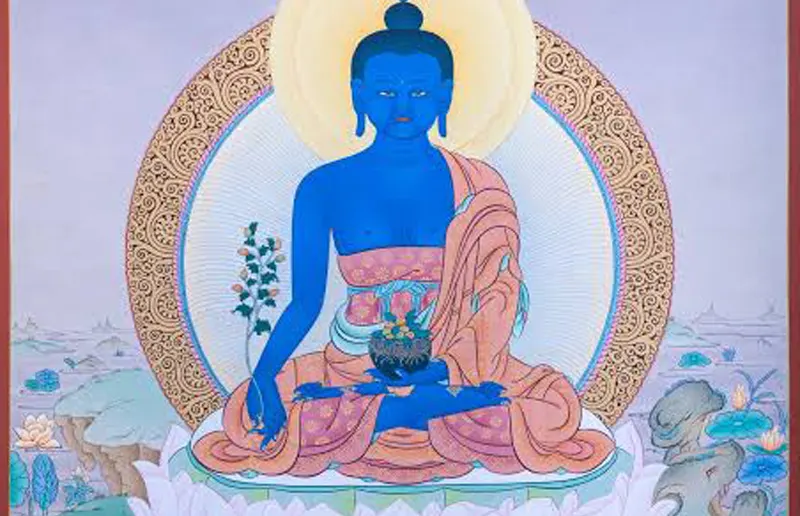 Medicine Buddha
4) Tara (Green & White): The Compassionate Mother of All Buddhas
Tara is a revered female figure in Tibetan Buddhism, associated with compassion, protection, and swift assistance.
Green Tara is associated with active compassion, protection, and overcoming obstacles. Her statue often shows her seated with one leg extended, symbolizing readiness to respond to those in need.
White Tara represents compassion, longevity, and healing. She is commonly depicted with seven eyes, symbolizing her awareness of suffering in the world.
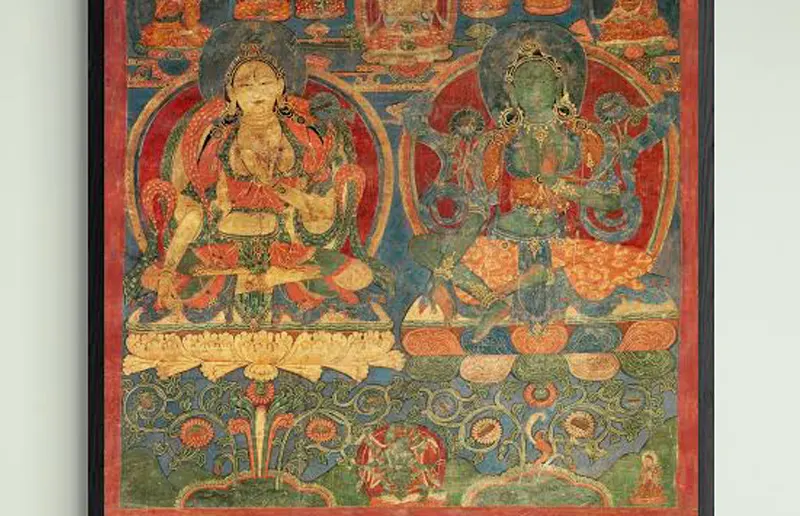 Tara (Green & White)
5) Wrathful Deities: Protective Energies in Tibetan Iconography
Wrathful deities are powerful figures in Tibetan Buddhist iconography. Their fierce expressions, flames, weapons, and dynamic postures symbolize the force of enlightened wisdom overcoming ignorance and harmful obstacles.
Although their appearance may seem frightening, they are not generally understood as evil beings. Their wrathful forms represent protective and transformative aspects of enlightened activity.
Meaning: Protection, overcoming obstacles, and transforming negative forces.
Common Symbols: Fierce expressions, flames, weapons, and dynamic postures.
Role in Tibetan Buddhism: Represents the power of wisdom and compassion to confront spiritual obstacles.
Figures such as Mahakala and Yamantaka are important examples of wrathful deities. Their symbolism varies across Tibetan Buddhist traditions, so their meanings should be understood within their specific religious contexts.
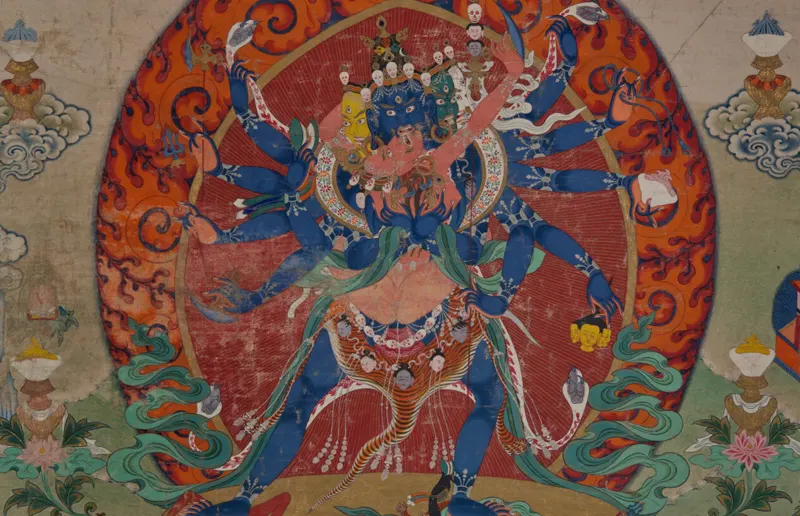 Wrathful Deities
Decoding Sacred Symbols in Tibetan Buddhist Art
Sacred symbols play an important role in Tibetan Buddhist art and culture. From the Eight Auspicious Symbols to lotus flowers and mandalas, each design carries unique religious meanings. Understanding these symbols helps you appreciate Tibetan Buddha statues, temple decorations, and traditional Buddhist artifacts during your Tibet tour.
1) The Eight Auspicious Symbols (Ashtamangala) and Their Meanings
The Eight Auspicious Symbols, known as Ashtamangala, are important in Tibetan Buddhism. They represent blessings, wisdom, protection, and spiritual growth. You can often find them on Tibetan Buddha statues, monastery walls, prayer flags, and religious objects.
2) Mudras Unveiled: Hand Gestures of Wisdom and Protection
Mudras are symbolic hand gestures found in Tibetan Buddha statues and Buddhist art. They communicate specific teachings, qualities, or moments in the Buddha's life. By observing a statue's hand position, you can better understand its religious meaning.
3) The Lotus Flower and Color Symbolism in Tibetan Artifacts
The lotus flower is a central symbol in Tibetan Buddhist art. It grows from muddy water but blooms above the surface, representing purity and spiritual awakening. This symbolism reflects the Buddhist idea of overcoming worldly suffering and developing wisdom.
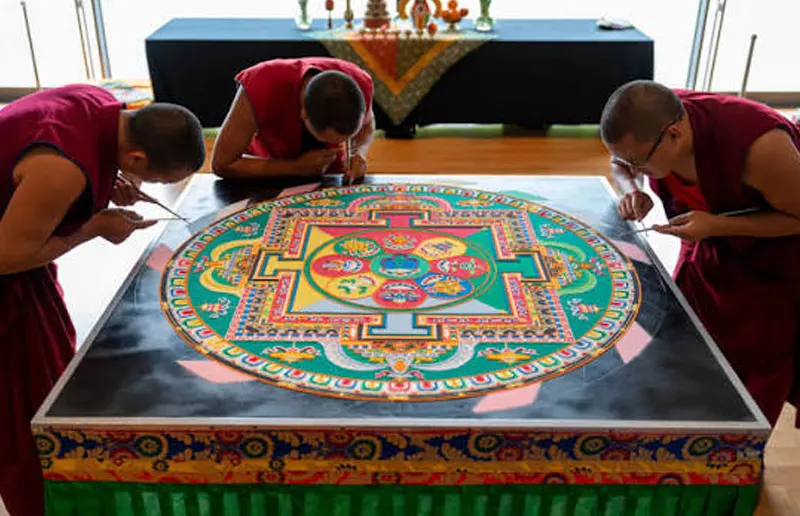
4) Tibetan Mandalas: Geometric Maps to Spiritual Awakening
Tibetan mandalas are sacred geometric designs used in Buddhist meditation, visualization, and ritual practices. They often represent a symbolic universe or the enlightened realm of a particular Buddha or deity.
For visitors on a Tibet tour, mandalas offer an opportunity to explore the connection between Buddhist philosophy, artistic expression, and religious practice. Viewing them respectfully helps you appreciate their deeper significance.
Tibetan Buddhist Culture, Rituals, and Daily Practice
Prayer wheels, prayer flags, and mantras are important parts of Tibetan Buddhist culture and daily practice. Prayer wheels contain sacred texts and are traditionally turned as an act of devotion. Prayer flags display Buddhist prayers and symbols, while mantras are recited to support meditation and spiritual practice. The Dalai Lama and other Buddhist lineage holders have played important roles in preserving and transmitting Tibetan Buddhist teachings. Different schools, including Nyingma, Kagyu, Sakya, and Gelug, maintain their own traditions and practices.
Tibetan monasteries serve as centers of religious study, meditation, and community life. Monks follow monastic discipline and participate in prayers, rituals, and Buddhist debates. Sacred festivals, such as Tibetan New Year (Losar) and Saga Dawa, bring together religious ceremonies, cultural traditions, and community gatherings.Tibetan Buddhist music, including chanting, ritual instruments, and ceremonial sounds, adds a distinctive spiritual atmosphere to monastery practices.
FAQs about Tibetan Buddha
1) Which Buddha is most popular in Tibetan Buddhism?
As the historical founder who first imparted the path to liberation, Shakyamuni Buddha remains one of the most
fundamental and universally revered figures in Tibetan Buddhism. Other important figures include Chenrezig
(Avalokiteshvara), Green Tara, and Medicine Buddha. Each Tibetan Buddha statue represents different qualities,
such as wisdom, compassion, and healing.
2) Why are Tibetan Buddha heads gilded?
Tibetan Buddha heads are sometimes gilded with gold to express reverence, purity, and the precious nature of
Buddhist teachings. Gold is traditionally associated with enlightenment and spiritual value. In Tibetan Buddhist
art, gilding can also highlight important features of a statue and enhance its religious and artistic
significance. Not all Tibetan Buddha statues are gilded, and practices vary between monasteries and traditions.
3) Why are Tibetan Buddhas fat?
Most Tibetan Buddha statues do not depict a heavy figure. The rounded, smiling image often dubbed the 'Fat
Buddha' is actually Budai (the Laughing Buddha), a 10th-century Chinese Chan monk often mistaken for Shakyamuni
Buddha. Tibetan Buddha statues generally follow different artistic traditions, with figures shown in various
body shapes and symbolic forms. Their appearance reflects religious iconography rather than ordinary body types.
4) What do Tibetan Buddhists believe?
Tibetan Buddhists follow the teachings of Buddhism, including the Four Noble Truths, karma, rebirth, and the
pursuit of enlightenment. Tibetan Buddhism combines Mahayana and Vajrayana traditions, emphasizing wisdom,
compassion, meditation, and spiritual practices such as mantra recitation and visualization. Tibetan Buddha
statues, prayer wheels, and mandalas help express these religious beliefs and practices.
5) How is Tibetan Buddhism different from Buddhism?
Tibetan Buddhism is a branch of Buddhism that incorporates Mahayana and Vajrayana teachings, including tantric
practices, visualization, and complex religious iconography. Other Buddhist traditions, such as Theravada
Buddhism, place different emphases on scriptures, meditation, and religious practices. Despite these
differences, Tibetan Buddhism shares core teachings with other Buddhist traditions, including the Four Noble
Truths and the goal of liberation from suffering.
Conclusion
Tibetan Buddha statues reflect the wisdom, compassion, and spiritual traditions of Tibetan Buddhism. Learning about their meanings, symbols, and cultural significance helps you appreciate Tibet's religious heritage. During your Tibet tour, explore ancient monasteries and sacred artwork to discover the rich culture behind these iconic Buddhist figures.
2 years exp.| 5.0
 | Reviews
Tell me about your travel plan or contact me via inquiry@tibettourism.com
Related Tibet Travel Guide and Advice


Most Popular Tibet Tour Packages
-
![Lhasa Everest Base Camp Kathmandu Overland Small Group Tour]() Small Group Tour
Small Group Tour7 Days Lhasa Everest Base Camp Kathmandu Overland Small Group Tour
Promo: Classic overland travel route from Lhasa to Kathmandu via Gyirong / Nyalam
Dates & Price
![rili]()
![xiala]()
-
![Lhasa Shigatse Mount Everest Small Group Tour]() Small Group Tour
Small Group Tour8 Days Lhasa Shigatse Mount Everest Small Group Tour
Promo: Once-in-a-lifetime chance to face the tallest mountain in the world
Dates & Price
![rili]()
![xiala]()
-
![Kathmandu to Lhasa Overland Small Group Tour with EBC]() Small Group Tour
Small Group Tour8 Days Kathmandu to Lhasa Overland Small Group Tour with EBC
Promo: Drive Across Himalaya Overland Tour with altitude rising slowly
Dates & Price
![rili]()
![xiala]()



.webp)


Please share your contact information, so we can send you the answer directly by email.

