
 inquiry@tibettourism.com


.webp)


Tibetan Yak Guide: Facts, Habitat, Diet & Survival


.webp) Content
ContentThe Tibetan yak is a remarkable animal. Weighing over 400 kilograms, it thrives in the thin air and harsh climate of the Tibetan Plateau. Its milk, meat, wool, and even dung provide vital resources—food, clothing, and fuel—for local communities. In Tibetan Buddhism, the yak is regarded as a sacred animal, holding deep cultural and spiritual significance. During your journey through Tibet, you will have plenty of opportunities to observe these strong, resilient, and highly adaptable plateau animals up close. Read this guide to learn how the Tibetan yak shapes local life, the economy, and culture. You will also find practical tips for unforgettable yak experiences during your Tibet tour.
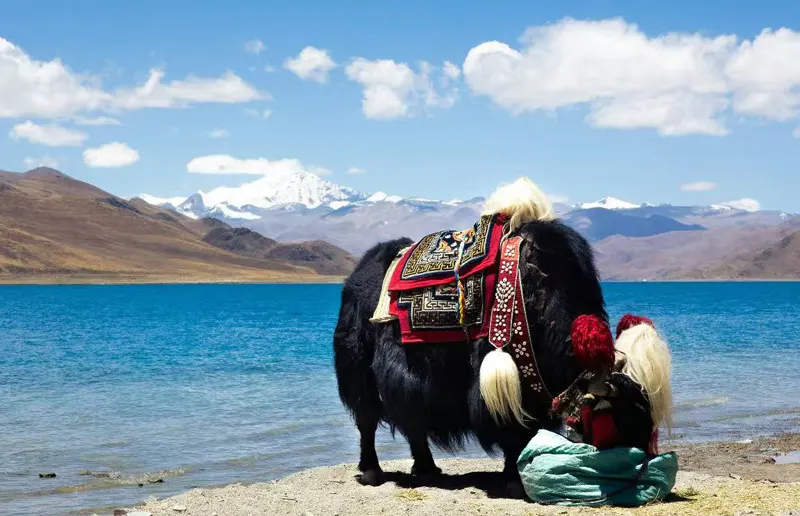 Tibetan Yak
Tibetan Yak Facts & Key Characteristics
The Tibetan yak is a large, hardy bovine native to the high-altitude regions of the Tibetan Plateau and Himalayas. It is well adapted to cold temperatures, low oxygen levels, and rugged mountain terrain.
Tibetan Yak Quick Facts
| Feature | Tibetan Yak Facts |
|---|---|
| Scientific name |
Wild yak: Bos mutus Domestic yak: Bos grunniens |
| Native region | Tibetan Plateau (Tibet Autonomous Region), Qinghai, Sichuan, and Gansu Provinces of China |
| Average lifespan | 15 to 25 years |
| Average weight | Males can exceed 400 kg and may reach over 1,000 kg |
| Average height | 1.3 to 1.5 meters |
| Coat Color | Black, brown |
| Diet | Grass, sedges, herbs, and other alpine plants |
| Main uses | Milk, butter, cheese, meat, hair, hides, fuel (yak dung), transport, ploughing fields |
Wild yak (Bos mutus) VS. Domestic yak (Bos grunniens):
Wild and domestic yaks differ mainly in size, body shape, and behavior. Wild yaks are usually larger, stronger,
and more muscular, with longer horns and a more robust body. Domestic yaks are generally smaller and have been
bred for milk, meat, wool, transportation, and other uses.
Tibetan Yak Physical Characteristics & Adaptations
The Tibetan yak has several unique adaptations that help it survive in the extreme environment of the Tibetan Plateau.
Shaggy Double Coat: A dense undercoat shielded by long guard hairs insulates yaks against sub-zero temperatures,
freezing winds, and snow.
High-Altitude Adaptations: Tibetan yaks have relatively large lungs and hearts, along with blood adaptations that
help transport oxygen efficiently in the thin air of high elevations. These traits allow them to thrive at
altitudes above 3,000 meters.
Large Hooves: Broad, strong hooves provide stability on rocky, steep, and snow-covered terrain. They help Tibetan
yaks move across rugged mountain landscapes and search for alpine vegetation.
Strong Body: A muscular body and powerful legs allow yaks to carry heavy loads and travel across difficult
high-altitude terrain.
Tibetan Yak Habitat & Geographic Distribution
The Tibetan yak is naturally adapted to some of the highest and harshest environments in Asia. Its main habitat includes the Tibetan Plateau, alpine grasslands, and remote mountain regions.
The Tibetan Plateau & Alpine Ecosystems
Yaks inhabit alpine grasslands and remote mountain areas between 3,000 and 6,000 meters above sea level. These high-altitude habitats experience severe cold, strong winds, and long winters.
Geographic Range & Where to Spot Yaks in Tibet
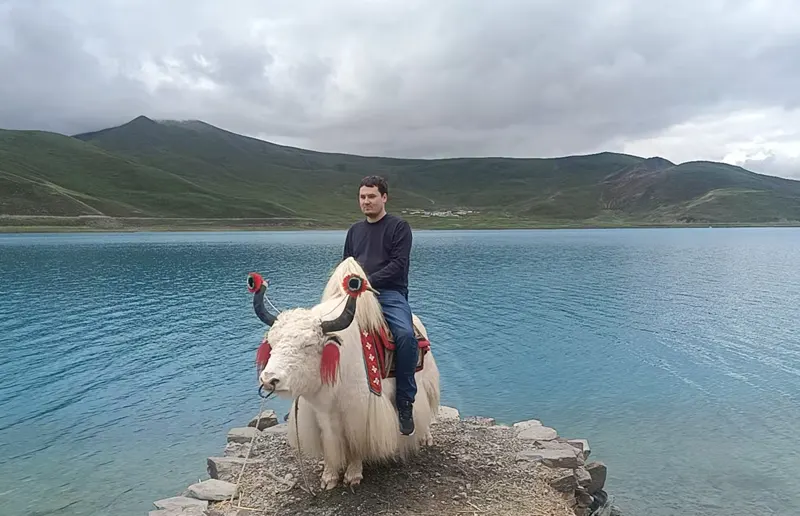
Domestic Tibetan yaks are commonly seen in pastoral areas along popular Tibet travel routes. On the way from Lhasa to Everest Base Camp, you may see herds of domestic yaks grazing in open grasslands. Around Yamdrok Lake and Namtso Lake, well-groomed domestic yaks are popular for photos. They offer travelers a memorable way to experience Tibetan pastoral culture and see these iconic animals up close.
In more remote areas, such as northern Qiangtang and the Nagqu grasslands, you may have a chance to spot wild yaks. Wild yaks are much larger and stronger than domestic yaks. They are also more aggressive and should be observed from a safe distance. Its remote habitat and protected status make wild yak sightings rare and special for wildlife enthusiasts.
Diet & Feeding Behavior of Tibetan Yaks
Tibetan yaks mainly feed on grass, sedges, herbs, mosses, and other alpine plants found across the Tibetan Plateau. They spend much of the day grazing and can find food even in cold, high-altitude environments where vegetation is sparse. In winter, their strong sense of smell and ability to dig through snow help them find dry grass and other available plants. This hardy diet allows the Tibetan yak to survive in harsh high-altitude habitats with limited food resources.
How Tibetan Yaks Shape Daily Life, Religion & the Local Economy
The Tibetan yak is more than a high-altitude animal. For centuries, yaks have supported daily life, Tibetan culture, religious traditions, and local economies across the Tibetan Plateau.
1) Tibetan Yaks in Daily Life
Tibetan yaks provide essential resources for people living in high-altitude areas. Yak milk is used to make butter, cheese, yogurt, and other traditional foods. Yak meat is an important source of protein, while yak wool and hair are used to make warm clothing, ropes, tents, and blankets. Dried yak dung is also widely used as fuel in areas where firewood is scarce.
2) Tibetan Yaks in Transportation & Farming
For many pastoral communities, domestic yaks are valuable working animals. They can carry heavy loads across steep mountain trails and rugged terrain. Tibetan yaks are also used to transport supplies during seasonal migrations. Their strength and endurance make them especially useful in remote areas of the Tibetan Plateau.
3) Tibetan Yaks in Tibetan Religion & Culture
Yaks hold an important place in Tibetan culture and religion. Their image appears in traditional art, stories, and local celebrations (like the Shoton Festival). Rare white yaks are revered as holy omens of peace, prosperity, and spiritual purity across Himalayan communities. Yak horns, hair, and other natural materials may also appear in traditional cultural and religious practices.
4) Tibetan Yaks & the Local Economy
The yak economy supports many Tibetan communities. Local families earn income from yak milk, meat, wool, hides, and other products. Yak-related handicrafts and cultural experiences also contribute to Tibet tourism. At popular scenic spots such as Yamdrok Lake, domestic yaks offer unique photo opportunities and provide additional income for local Tibetan herders.
Best Time for a Tibetan Yak Experience in Tibet
The best time for a Tibetan yak experience in Tibet is from May to October, when the weather is generally milder, and yaks are often seen grazing on alpine grasslands. During summer, the grasslands are lush and green, creating ideal scenery for watching yaks in their natural habitat. Early autumn also offers clear skies, pleasant temperatures, and fewer tourists, making it a great time to enjoy a peaceful yak experience.
Effective Tips for Staying Safe When Observing Wild Tibetan Yaks
Maintain a Safe Distance: Stay at least 100 meters (330 feet) from wild yaks (Bos mutus). They are much larger
and more unpredictable than domestic yaks.
Use Telephoto Lenses: Use a zoom lens or binoculars to observe and photograph wild yaks without approaching them.
Recognize Warning Signs: Watch for lowered heads, ground pawing, snorting, or tail shaking. If a wild yak shows
these signs, slowly move away.
Avoid Bulls & Mothers: Keep away from solitary bulls and never get between a mother yak and her calf.
Never Block Escape Routes: Leave wild yaks a clear path to escape. Never corner them near cliffs, rivers, or
vehicles.
Stay Inside Vehicles: In remote areas such as the Nagqu Grasslands and Changtang Nature Reserve, observe wild
yaks from inside your vehicle for better safety.
 Yamdrok Lake Tour
FAQs about Tibetan Yaks
Do I need to pay to take photos with Tibetan yaks at scenic spots?
Usually, taking photos with Tibetan yaks at popular scenic spots may require a small fee. For example, the cost
of taking a photo with yaks at Yamdrok Lake is generally between 20 and 50 RMB. Confirm and agree on the fee
before taking photos to avoid misunderstandings.
Can I ride a Tibetan yak for trekking?
Although yaks are strong, they are mainly used to carry luggage over long distances rather than to carry people.
On some routes, such as the Mount Kailash trekking route, yak transport services are available for travelers
with heavy luggage. The price for one yak handler and two yaks is approximately RMB 1,200 per day. This is a
unique way to experience the Tibetan Plateau and local pastoral culture.
Conclusion
The Tibetan yak is far more than a high-altitude survivor—it is an essential part of life on the Tibetan Plateau. Its unique adaptations help it withstand high altitudes, freezing temperatures, and rugged terrain. Yaks also play an important role in Tibetan daily life, culture, religion, and the local economy. Whether you see domestic yaks at scenic spots or wild yaks in remote areas, observing these remarkable animals can add a memorable experience to your Tibet tour.
10 years exp.| 5.0
 | Reviews
Tell me about your travel plan or contact me via inquiry@tibettourism.com
Related Tibet Travel Guide and Advice



Most Popular Tibet Tour Packages
-
![Lhasa Everest Base Camp Kathmandu Overland Small Group Tour]() Small Group Tour
Small Group Tour7 Days Lhasa Everest Base Camp Kathmandu Overland Small Group Tour
Promo: Classic overland travel route from Lhasa to Kathmandu via Gyirong / Nyalam
Dates & Price
![rili]()
![xiala]()
-
![Lhasa Shigatse Mount Everest Small Group Tour]() Small Group Tour
Small Group Tour8 Days Lhasa Shigatse Mount Everest Small Group Tour
Promo: Once-in-a-lifetime chance to face the tallest mountain in the world
Dates & Price
![rili]()
![xiala]()
-
![Kathmandu to Lhasa Overland Small Group Tour with EBC]() Small Group Tour
Small Group Tour8 Days Kathmandu to Lhasa Overland Small Group Tour with EBC
Promo: Drive Across Himalaya Overland Tour with altitude rising slowly
Dates & Price
![rili]()
![xiala]()



.webp)


Please share your contact information, so we can send you the answer directly by email.

