
 inquiry@tibettourism.com


.webp)


Where Are the Himalayas? Location, Countries, Map & How to Visit


.webp) Content
ContentThe Himalayas are a vast mountain range in South-Central Asia, stretching approximately 2,400 km (1,500 miles) across five countries: China, Nepal, India, Bhutan, and Pakistan. Home to Mount Everest and many sacred peaks, the Himalayas form a natural barrier and supply water to major Asian river systems. They are also rich in ancient cultures, religious traditions, and spectacular landscapes.
So, where are the Himalayas on the map, and how can you visit them? This guide explores their geographical location, the countries they cross, and the best travel routes to experience their towering peaks, remote valleys, and unique cultural heritage.
Where Are the Himalayas Located? (Geographical Overview)
The Himalayas are located in South-Central Asia, between the Tibetan Plateau to the north and the Indo-Gangetic Plain to the south. They extend from the Indus River valley in the west to the Yarlung Tsangpo (Brahmaputra) River bend in the east.
Key Geographical Statistics
| Attribute | Measurement / Detail |
|---|---|
| Eastern Boundary | Yarlung Tsangpo (Brahmaputra) River bend |
| Southern Boundary | Indo-Gangetic Plain |
| Western Boundary | Indus River valley |
| Northern Boundary | Tibetan Plateau |
| Countries Covered | China (Tibet), India, Nepal, Bhutan, and Pakistan |
| Total Length | Approximately 2,400 km (1,500 miles) |
| Range Width | Varies from 150 km to 400 km |
| Highest Peak | Mount Everest (8,848.86 m) |
| Attribute | Measurement / Detail |
|---|---|
| Eastern Boundary | Yarlung Tsangpo (Brahmaputra) River bend |
| Southern Boundary | Indo-Gangetic Plain |
| Western Boundary | Indus River valley |
| Northern Boundary | Tibetan Plateau |
| Countries Covered | China (Tibet), India, Nepal, Bhutan, and Pakistan |
| Total Length | Approximately 2,400 km (1,500 miles) |
| Range Width | Varies from 150 km to 400 km |
| Highest Peak | Mount Everest (8,848.86 m) |
What Countries Are in the Himalayas? (Country-by-Country Guide)
The Himalayas stretch across China (Tibet), Nepal, India, Bhutan, and Pakistan. Each country offers distinct mountain landscapes, famous peaks, and travel experiences. The table below summarizes the main Himalayan regions, notable peaks, and common access routes.
| Country | Key Himalayan Regions | Highest/Notable Peaks | Primary Visa/Access Route |
|---|---|---|---|
| China (Tibet) | Southern Tibet, including the Himalayas’ northern slopes | Mount Everest (North Face), Mount Kailash | Via the Chinese Mainland or Nepal; a Tibet Travel Permit and an organized tour are required |
| Nepal | Northern Nepal, along the southern slopes of the Himalayas | Mount Everest, Annapurna I, Manaslu | Via Kathmandu; Nepal entry visa requirements apply |
| India | Ladakh, Himachal Pradesh, Uttarakhand, Sikkim, and Arunachal Pradesh, as well as parts of Jammu and Kashmir | Kangchenjunga, Nanda Devi, Kamet | Via major Indian cities and regional airports; some border areas require special permits |
| Bhutan | Northern Bhutan along the Eastern Himalayas | Gangkhar Puensum, Jomolhari | Via Paro; entry arrangements and permits depend on the travel itinerary |
| Pakistan | Gilgit-Baltistan and the western Himalayan region | Nanga Parbat | Via Islamabad or other regional gateways; visa requirements apply |
| Country | Key Himalayan Regions | Highest/Notable Peaks | Primary Visa/Access Route |
|---|---|---|---|
| China (Tibet) | Southern Tibet, including the Himalayas’ northern slopes | Mount Everest (North Face), Mount Kailash | Via the Chinese Mainland or Nepal; a Tibet Travel Permit and an organized tour are required |
| Nepal | Northern Nepal, along the southern slopes of the Himalayas | Mount Everest, Annapurna I, Manaslu | Via Kathmandu; Nepal entry visa requirements apply |
| India | Ladakh, Himachal Pradesh, Uttarakhand, Sikkim, and Arunachal Pradesh, as well as parts of Jammu and Kashmir | Kangchenjunga, Nanda Devi, Kamet | Via major Indian cities and regional airports; some border areas require special permits |
| Bhutan | Northern Bhutan along the Eastern Himalayas | Gangkhar Puensum, Jomolhari | Via Paro; entry arrangements and permits depend on the travel itinerary |
| Pakistan | Gilgit-Baltistan and the western Himalayan region | Nanga Parbat | Via Islamabad or other regional gateways; visa requirements apply |
1) Where Are the Himalayas Located in China?
The Himalayas run along the southern edge of the Tibetan Plateau in southwestern China. The region offers views of Mount Everest from the north, access to Everest Base Camp, and sacred sites such as Mount Kailash. Foreign travelers generally need a Tibet Travel Permit (TTP) and must arrange their trip through a licensed local travel agency.
2) Where Are the Himalayas Located in Nepal?
The Himalayas extend across northern Nepal, forming much of the country's northern border with China. Nepal is home to Mount Everest, Annapurna I, and Manaslu, attracting trekkers and mountaineers from around the world. Kathmandu serves as the main gateway to many Himalayan destinations.
3) Where Are the Himalayas Located in Bhutan?
The Himalayas lie along northern Bhutan, where high peaks, remote valleys, and traditional villages define the landscape. Gangkhar Puensum is the country's highest mountain and is widely regarded as the world's highest unclimbed peak. Bhutan is known for scenic trekking routes and distinctive Buddhist culture.
4) Where Are the Himalayas Located in India?
The Himalayas stretch across northern India, covering regions such as Ladakh, Himachal Pradesh, Uttarakhand, Sikkim, and Arunachal Pradesh. They include famous peaks such as Kangchenjunga and Nanda Devi. Popular experiences include trekking, visiting mountain monasteries, and exploring Himalayan valleys.
5) Where Are the Himalayas Located in Pakistan?
The Himalayan range reaches northern Pakistan, particularly the region around Gilgit-Baltistan. Nanga Parbat is one of its most prominent peaks, rising to 8,126 m. This region attracts climbers and trekkers with its dramatic mountains and remote valleys.
Himalayan Mountain Regions Map Explained
The Himalayas form a vast mountain arc across South-Central Asia. They are commonly divided into three parallel belts: the Greater Himalayas, the Lesser Himalayas, and the Outer Himalayas. Each belt has distinct elevations, landscapes, and natural features. The map below can help you understand their locations and geographical differences.
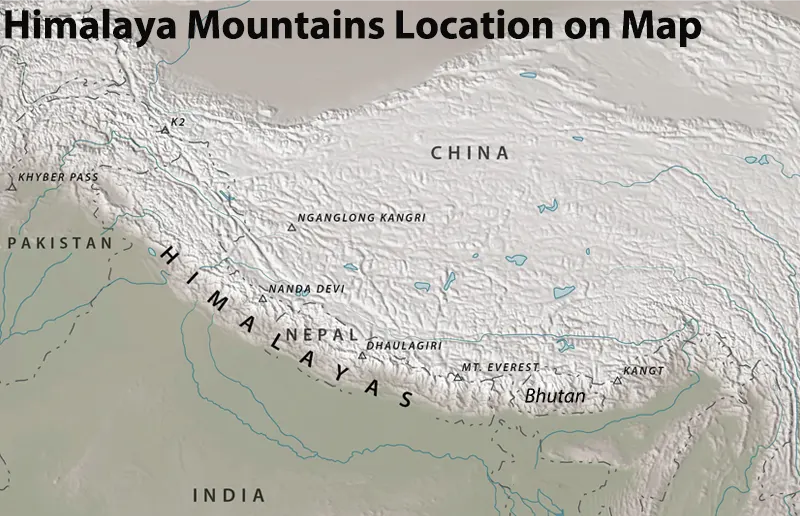 Himalaya Mountains Location Map
The Three Major Himalayan Belts
1) Greater Himalayas (Himadri)
The Greater Himalayas form the highest belt of the range. They contain Mount Everest and many other towering
peaks, along with extensive glaciers and snow-covered ridges. This region is ideal for mountaineering and
high-altitude adventures.
2) Lesser Himalayas (Himachal)
The Lesser Himalayas lie south of the Greater Himalayas. They feature forested slopes, deep valleys, and popular
hill destinations such as Shimla and Pokhara. The region also offers trekking routes, mountain villages, and
cultural attractions.
3) Outer Himalayas (Shiwalik Hills)
The Outer Himalayas form the southernmost belt. They consist mainly of lower hills and foothills bordering the
Indo-Gangetic Plain. Their gentler terrain supports forests, wildlife habitats, and settlements along the
Himalayan foothills.
Major Rivers Originating in the Himalayas
The Himalayas and the Tibetan Plateau supply water to several major Asian river systems. Important rivers include the Ganges, Indus, and Brahmaputra. The Yangtze and Mekong also originate on the Tibetan Plateau, north of the main Himalayan range. These rivers support agriculture, ecosystems, and millions of people across Asia.
How to Visit the Himalayas: Entry Gateways and Travel Logistics
The best way to visit the Himalayas depends on your destination, entry routes, and the permits required by each country.
Main Entry Gateways by Air
Kathmandu (KTM), Nepal: The main gateway for Himalayan trekking and overland trips to Tibet.
Lhasa (LXA), Tibet, China: A starting point for drives to Mount Everest North Base Camp and other Himalayan destinations.
New Delhi (DEL), Dehradun, and Leh, India: Key gateways to the Indian Himalayas, including Himachal Pradesh, Uttarakhand, and Ladakh.
Paro (PBH), Bhutan: Bhutan’s main international air gateway, offering access to mountain valleys and trekking routes.
Essential Travel Permits and Visas
Entry requirements vary by country, nationality, and itinerary. Check the latest regulations before departure.
Tibet, China: Foreign travelers generally need a Tibet Travel Permit (TTP) and an organized tour. Additional permits may be required for certain areas.
Nepal: Trekkers may need a Trekkers’ Information Management System (TIMS) card and national park or conservation area permits, depending on the route.
Bhutan: Most international visitors need a visa and must pay the applicable Sustainable Development Fee (SDF), subject to nationality-based exemptions.
India: Foreign visitors may need an Inner Line Permit (ILP) or other special permits for designated restricted areas. Requirements vary by region.
Plan your route and permits in advance, especially for remote border areas and high-altitude destinations.
Best Himalayan Travel Routes & Must-See Attractions
The Himalayas offer a mix of high-altitude adventures, sacred pilgrimage sites, cultural landmarks, and scenic road trips. The best route depends on your interests, travel time, and preferred country. Here are some of the top destinations and routes to consider.
1) Mount Everest Base Camps: Nepal vs. Tibet
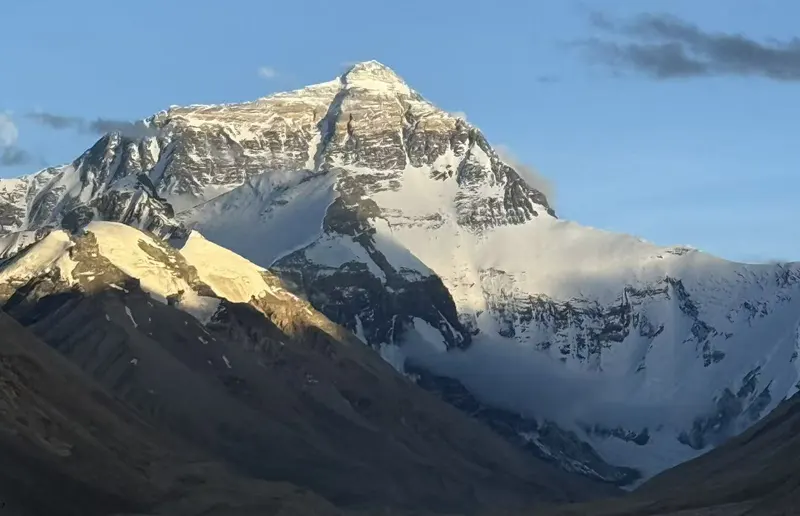
Mount Everest has two main tourist base camp areas. The South Base Camp in Nepal is popular for multi-day trekking through mountain villages and valleys. The North Base Camp in Tibet is accessible by road from Lhasa via Shigatse, offering views of Everest without a long trek.
2) Sacred Circuit: Mount Kailash and Lake Mansarovar
Mount Kailash and Lake Mansarovar are among the most sacred destinations in the Himalayas. Pilgrims travel to Mount Kailash for the traditional kora, a trek around the sacred mountain. Many itineraries also include Lake Mansarovar, known for its spiritual significance and striking high-altitude scenery.
3) Himalayas Journey: Tibet, Nepal, and Bhutan
Traveling between Tibet and Nepal offers a memorable way to explore both sides of the Himalayas. The scenic Friendship Highway connects Lhasa with the Gyirong border area near Nepal. Along the way, you can discover Tibetan towns, mountain passes, and spectacular views of the Himalayan peaks before continuing to Kathmandu.
7-Day Lhasa Everest Gyirong Overland to Kathmandu Small Group Tour: Explore Lhasa’s cultural landmarks, visit Everest North Base Camp, and travel through Gyirong to Nepal.
13-Day Tibet Nepal Bhutan Small Group Tour: After exploring ancient temples and historic squares in Nepal, you can fly from Kathmandu to Paro and visit Tiger’s Nest Monastery in Bhutan.
Note: Since Gyirong Port was damaged by a mudslide in August 2026, it is better to travel back to Lhasa and fly to Kathmandu, Nepal.
 Everest Base Camp Tour
Best Time to Visit the Himalayas
The best time to visit the Himalayas is generally from April to June and September to October, when many regions enjoy clearer skies and favorable trekking conditions. Spring brings blooming flowers and milder weather, while autumn offers crisp air and excellent mountain views. Summer is suitable for some high-altitude destinations but brings monsoon rains to Nepal, India, and Bhutan. Winter is ideal for exploring lower valleys and cultural sites, though snow may block high mountain passes. Check local weather and road conditions before planning your Himalayan trip.
Essential Travel Preparation & High-Altitude Safety
Proper preparation is essential for a safe Himalayan trip. To reduce the risk of acute mountain sickness (AMS), ascend gradually, allow time for acclimatization, stay hydrated, and eat regular meals. Plan access to emergency oxygen and medical assistance, especially at high altitudes. Pack layered clothing, sturdy trekking boots, UV-protection gear, high-SPF sunscreen, and a personal medical kit to handle changing weather and mountain conditions.
Conclusion
The Himalayas span five countries and offer breathtaking landscapes, sacred sites, and unforgettable adventures. Understanding where the Himalayas are located, the best travel routes, and local permit requirements will help you plan a smooth journey. Whether you visit Everest Base Camp, explore Tibet, or trek through Nepal, the Himalayas promise a remarkable travel experience.
2 years exp.| 5.0
 | Reviews
Tell me about your travel plan or contact me via inquiry@tibettourism.com
Related Tibet Travel Guide and Advice



Most Popular Tibet Tour Packages
-
![Lhasa Everest Base Camp Kathmandu Overland Small Group Tour]() Small Group Tour
Small Group Tour7 Days Lhasa Everest Base Camp Kathmandu Overland Small Group Tour
Promo: Classic overland travel route from Lhasa to Kathmandu via Gyirong / Nyalam
Dates & Price
![rili]()
![xiala]()
-
![Lhasa Shigatse Mount Everest Small Group Tour]() Small Group Tour
Small Group Tour8 Days Lhasa Shigatse Mount Everest Small Group Tour
Promo: Once-in-a-lifetime chance to face the tallest mountain in the world
Dates & Price
![rili]()
![xiala]()
-
![Kathmandu to Lhasa Overland Small Group Tour with EBC]() Small Group Tour
Small Group Tour8 Days Kathmandu to Lhasa Overland Small Group Tour with EBC
Promo: Drive Across Himalaya Overland Tour with altitude rising slowly
Dates & Price
![rili]()
![xiala]()


.webp)


Please share your contact information, so we can send you the answer directly by email.

