
 inquiry@tibettourism.com






Tibetan Monk Debate: Meaning, Rules, and Where to Witness It


 Content
Tibetan monk debate is one of the most fascinating traditions of Tibetan Buddhism. During a Tibet tour, you can watch monks discuss Buddhist philosophy in monastery courtyards, using energetic gestures, loud claps, and rapid-fire questions. But why do they debate, and what do these movements mean? This guide explains the purpose and rules of Tibetan monk debate and introduces the best places to observe it in Tibet.
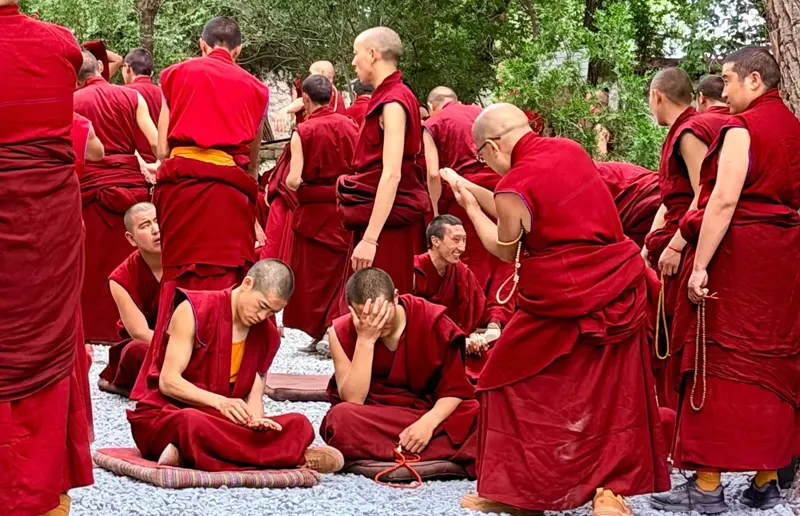 Tibetan Monk Debate
What Is a Tibetan Monk Debate?
Tibetan monk debate is a traditional method of Buddhist learning practiced in Tibetan Buddhist monasteries. Monks discuss and challenge ideas about Buddhist teachings, philosophy, and logic through structured questions and answers. One monk usually stands and asks questions, while another sits and responds.
The debate is known for its energetic style. The standing monk may clap loudly, stamp a foot, or make expressive hand gestures to emphasize a point or signal a question. The seated monk must respond clearly and logically. Although the exchange may look intense, it follows established rules and focuses on logical reasoning.
What Is the Meaning and Purpose of Tibetan Monk Debate?
Tibetan monk debate is an important part of monastic education. It helps monks develop logical reasoning, deepen their understanding of Buddhist teachings, and examine different interpretations of philosophical concepts.
1) Sharpening the Mind: Debate as an Intellectual Tool
Debate trains monks to think critically and respond quickly to challenging questions. By questioning one another’s arguments, they learn to recognize logical errors and build stronger conclusions. This practice also strengthens concentration, confidence, and the ability to explain complex concepts clearly.
2) Deepening Philosophical Understanding of Buddhist Texts
Buddhist scriptures often explore complex topics, such as the nature of reality, karma, and the causes of suffering. Rather than simply memorizing these teachings, monks use debate to examine their meaning and test different interpretations. This process helps them develop a deeper and more systematic understanding of Buddhist philosophy.
3) The Spiritual Goal: Dispelling Ignorance and Misconceptions
In Tibetan Buddhism, ignorance is considered a root cause of suffering. Through debate, monks examine assumptions and misconceptions to develop a clearer understanding of reality. This practice goes beyond intellectual training; its ultimate goal is to cultivate wisdom, overcome ignorance, and progress toward spiritual liberation.
How Does a Tibetan Monk Debate Work? (Rules & Gestures Explained)
Tibetan monk debate follows structured methods of reasoning, with distinct roles and expressive gestures.
1) Roles of the Debaters: The Questioner vs. The Defender
A traditional Tibetan monk debate usually involves two roles: the questioner and the defender.
The Questioner (Riklam Pa): Stands throughout the debate, firing rapid questions to challenge the opponent. Free to move and use physical gestures, the Questioner controls the tempo and tests the Defender's consistency.
The Defender (Tak Sal Pa): Usually sits and responds to the questions, examining the logic behind each claim. Depending on the debate format, responses may include accepting a proposition, asking for clarification, or challenging a logical connection.
2) Symbolic Physical Movements (Clapping, Stomping, and Rosary Swings)
The physical gestures of Tibetan monk debate make it especially striking to watch.
Loud Hand Clap: Emphasizes a key argument while symbolizing the union of wisdom and compassion. The sound is meant to awaken the Defender's mind and shatter ignorance.
Stomping the Feet: Some debaters use foot movements alongside clapping and hand gestures. Their meaning may depend on the debating tradition and context.
Swinging the Rosary (Mala): Some debaters handle or move their prayer beads during debate. If you include a symbolic explanation, verify it with a reliable source specific to the tradition being described.
3) Logical Structure: Dialectic Arguments and Pacing
Tibetan monk debate relies on logical reasoning rather than simple disagreement. The questioner presents a proposition or asks a challenging question, while the defender responds. The questioner then examines the answer, often using follow-up questions to reveal inconsistencies or test the logic behind the response.
The exchange can move quickly. The defender may need to accept a conclusion, explain a contradiction, or clarify an earlier statement. This process helps monks examine complex Buddhist concepts in a systematic way.
Where and When Can You Witness Tibetan Monk Debates?
Watching a Tibetan monk debate offers a fascinating glimpse into Tibetan Buddhist learning and monastic life. During a Tibet tour, you can visit several monasteries where monks practice this centuries-old tradition. However, debates do not take place at every monastery every day, so it is best to check local schedules and follow your guide’s advice before visiting.
Four Monasteries to Explore Tibetan Monk Debate
1) Sera Monastery
Located in Lhasa, Sera Monastery is one of the most famous places to watch Tibetan monks debate. Its debate courtyard is known for lively afternoon sessions from 3:00 PM to 5:00 PM (except Sundays), where monks challenge one another with energetic claps and expressive gestures. If you visit Sera Monastery in the afternoon, be sure to take precautions against the sun.
2) Drepung Monastery
Drepung Monastery, on the outskirts of Lhasa, is another important center of Tibetan Buddhist learning. Monks study Buddhist philosophy and logic here, although public debate sessions may not be available every day. Check with the monastery or your local guide before planning your visit.
3) Ganden Monastery
Set on a hillside northeast of Lhasa, Ganden Monastery is one of the major Gelug school monasteries in Tibet. It offers insight into monastic education and Buddhist philosophy. However, regular public debate sessions are not guaranteed, so confirm availability in advance.
4) Tashilhunpo Monastery
Located in Shigatse, Tashilhunpo Monastery is an important center of Buddhist learning, offering insight into monastic study and philosophy. Public debate sessions are not guaranteed.
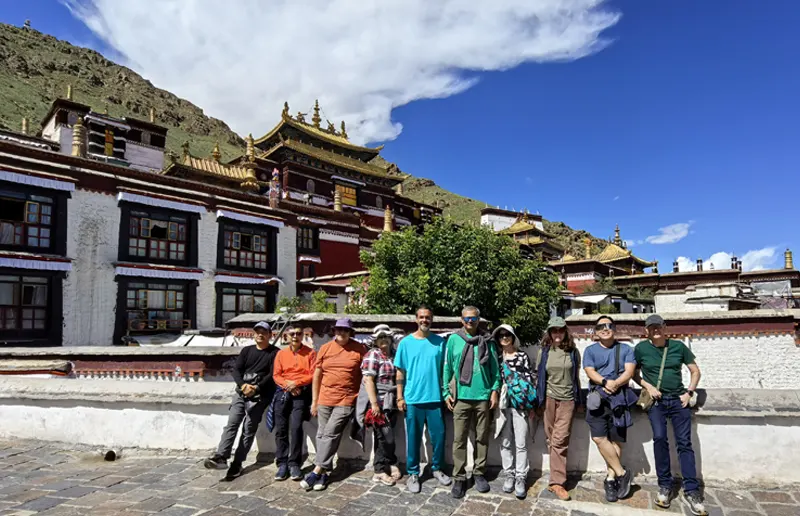 Tibet Tour
Best Time to Visit and Visitor Etiquette
Best time to visit: Sera Monastery is a good place to start if you hope to watch Tibetan monk debates. Sessions are often held in the afternoon, but schedules can change. Schedules can change due to religious events, monastic activities, or holidays. Arrive early and confirm the day’s schedule before visiting.
Dress code: Wear modest, comfortable clothing that covers your shoulders and knees. Choose shoes suitable for walking around monastery grounds, and bring sun protection for outdoor courtyards.
Visitor etiquette: Remain quiet, keep a respectful distance from the monks, and avoid interrupting the debate. Ask permission before taking close-up photographs, and follow posted photography restrictions. Do not touch religious objects or enter restricted areas. Observe the debate respectfully, even when the clapping and gestures become energetic.
FAQs about Tibetan Monk Debate
1) Why do Tibetan monks clap and shout during debates?
Tibetan monks clap and use expressive gestures to emphasize questions, challenge arguments, and maintain the
rhythm of a debate. These actions are part of a structured method of reasoning and do not necessarily indicate
anger.
2) Are Tibetan monk debates aggressive or violent?
No. Despite the high energy, intense gestures, and loud exchanges, they are structured academic exercises rather
than physical confrontations. What appears to be aggression is actually a theatrical, highly disciplined display
of devotion to logic and truth. The goal is to deepen their understanding of Buddhist philosophy.
3) Can I ask questions or participate in Tibetan monk debates?
Tourists are generally welcome to observe public debate sessions, but they should not interrupt the monks or join
the debate without an invitation. These discussions follow established rules and require knowledge of Buddhist
philosophy and logic. If you have questions, wait until the session ends and ask your local guide or a monastery
representative.
4) Do Tibetan Buddhist nuns also practice debate?
Yes. Debate is also part of Buddhist education for nuns in some Tibetan Buddhist traditions and institutions. It
helps them develop logical reasoning and deepen their understanding of Buddhist teachings. However, debating
practices and opportunities to observe them vary by institution, so you should check local arrangements in
advance.
5) What other Buddhist cultural experiences can you enjoy at monasteries in Tibet?
Beyond watching Tibetan monk debates, you can explore monastery halls, admire Buddhist statues and murals,
observe prayer rituals, and learn about Tibetan Buddhist teachings. You may also see pilgrims offering butter
lamps, turning prayer wheels, or performing kora around sacred sites.
Conclusion
Tibetan monk debate is more than a lively exchange of questions and answers. It is an important Buddhist tradition that combines logical reasoning, philosophical study, and spiritual practice. During your Tibet tour, visiting Sera Monastery or other monasteries can offer a deeper understanding of this unique tradition. Observe respectfully, and you will gain a greater appreciation of Tibetan culture and people.
2 years exp.| 5.0
 | Reviews
Tell me about your travel plan or contact me via inquiry@tibettourism.com
Related Tibet Travel Guide and Advice
Most Popular Tibet Tour Packages
-
![Holy Lhasa City Small Group Tour]() Small Group Tour
4 Days Holy Lhasa City Small Group Tour
Promo: Explore the Architecture & Landscape of Lhasa
Dates & Price
![rili]()
![xiala]()
-
![Lhasa Shigatse Mount Everest Small Group Tour]() Small Group Tour
8 Days Lhasa Shigatse Mount Everest Small Group Tour
Promo: Once-in-a-lifetime chance to face the tallest mountain in the world
Dates & Price
![rili]()
![xiala]()
-
![Lhasa to Everest Kailash and Mansarovar Small Group Tour]() Small Group Tour
15 Days Tibet Mount Kailash and Lake Mansarovar Small Group Tour
Promo: Western Tibet tour around Mount Kailash
Dates & Price
![rili]()
![xiala]()


Please share your contact information, so we can send you the answer directly by email.

