
 inquiry@tibettourism.com






Tibet Mountains: Highest Peaks, Famous Ranges & Travel Guide


 Content
Tibet is home to towering peaks, extensive glaciers, and diverse mountain landscapes across the Tibetan Plateau. From Mount Everest and the sacred Mount Kailash to the remote ranges of eastern Tibet, its mountains offer opportunities for sightseeing, cultural exploration, and high-altitude adventures. This guide introduces Tibetan mountain ranges and famous peaks, along with practical tips on the best time to visit, travel permits, and altitude preparation.
Top Mountain Ranges in Tibet
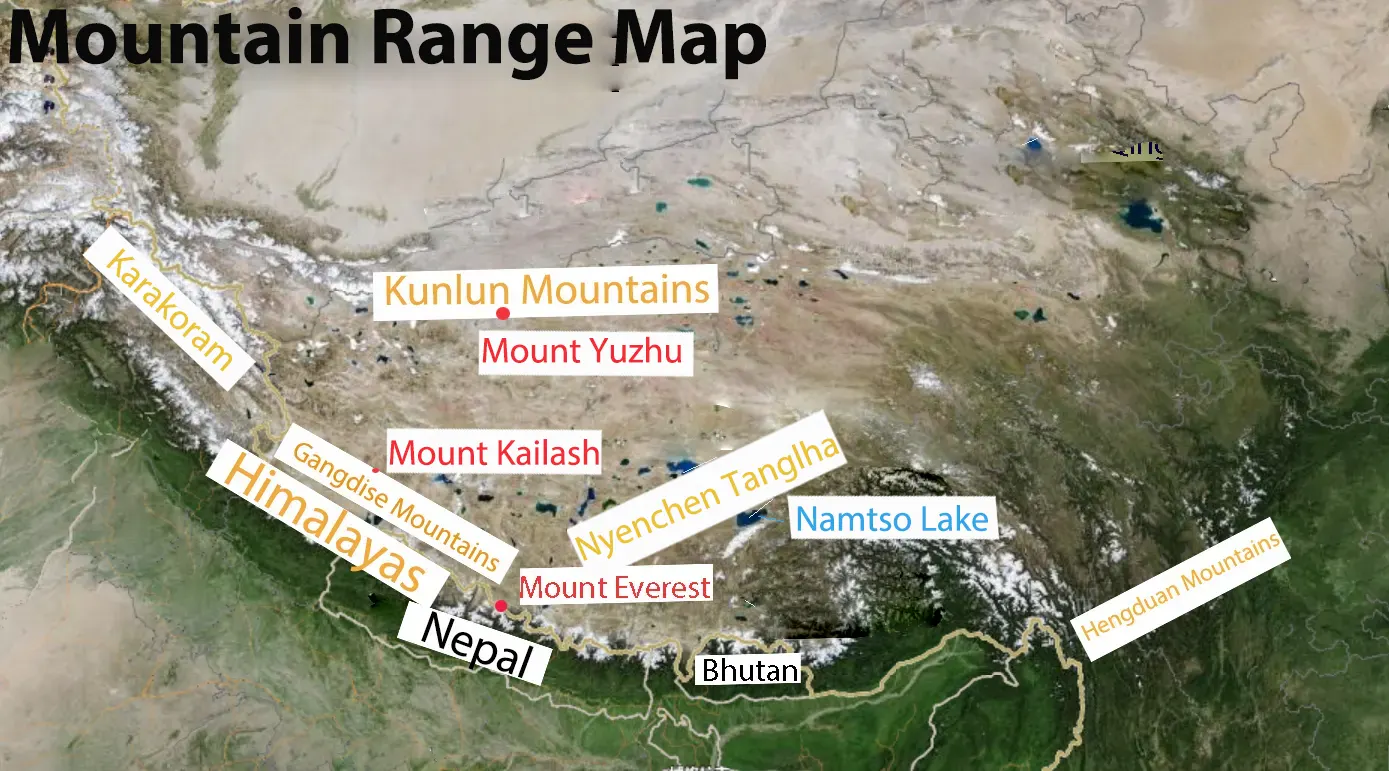
The Tibetan Plateau contains several major mountain ranges, each with distinct terrain, ecosystems, and geographic features. The following sections introduce six notable ranges and their key landmarks.
 Mountain Range Map
1) The Himalayas: The World's Highest Mountain Range
The Himalayas extend along the southern edge of the Tibetan Plateau and include some of the world's highest peaks. They include Mount Everest, the world's highest peak at 8,848.86 meters. The range is home to Everest Base Camp in Tibet and offers views of glaciers, high mountain passes, and towering Himalayan peaks.
Top Highlights: Mount Everest, Lhotse, Makalu, and Cho Oyu.
2) Gangdise Mountains: The Spiritual Heart of Tibet
The Gangdise Mountains run across southwestern Tibet, separating the northern Tibetan Plateau from the Yarlung Tsangpo River valley. Mount Kailash, a sacred peak revered by Buddhists, Hindus, Jains, and followers of Bon, is one of the range's most famous landmarks. The area attracts pilgrims and travelers interested in spiritual culture and high-altitude adventures.
Top Highlights: Mount Kailash, Lake Mansarovar, and high-altitude landscapes.
3) Nyenchen Tanglha Mountains: Alpine Peaks & Sacred Lakes
The Nyenchen Tanglha Mountains stretch across central Tibet, north of the Yarlung Tsangpo River. Their highest peak rises above 7,000 meters. The range features glaciers, alpine grasslands, and dramatic views near Namtso Lake, making it a highlight of many central Tibet tours.
Top Highlights: Nyenchen Tanglha Peak, Namtso Lake, snow-capped mountain views, and high-altitude grasslands.
4) Kunlun Mountains: Asia's Ancient Backbone
The Kunlun Mountains extend along the northern edge of the Tibetan Plateau. Their rugged terrain includes high peaks, glaciers, and vast, remote landscapes. The range is especially notable for its geological significance and its role in separating the plateau from the Tarim Basin.
Top Highlights: Mount Yuzhu (Yuzhu Feng) and the dramatic high-altitude mountain passes crossed by the Qinghai-Tibet Railway.
5) Karakoram Range: Ice Giants & Extreme Peaks
The Karakoram Range lies west of the main Himalayan range. It is known for its high peaks, extensive glaciers, and demanding mountaineering routes. K2, its highest peak, reaches 8,611 meters.
Top Highlights: K2, Gasherbrum I and II, Broad Peak, Siachen and Baltoro glaciers, and Karakoram Pass.
6) Hengduan Mountains: Eastern Tibet’s Alpine Wilderness
The Hengduan Mountains lie in the eastern region of the Tibetan Plateau, spanning parts of Tibet, Sichuan, and Yunnan. Deep river valleys divide the range into parallel mountain chains. The area is known for its rich biodiversity, forested slopes, and dramatic changes in elevation.
Top Highlights: Mount Namcha Barwa and the colossal Yarlung Tsangpo Grand Canyon.
The Most Famous Mountains in Tibet
Tibet is home to iconic peaks known for their altitude, religious significance, and distinctive geography. The following mountains stand out for their natural features, cultural importance, and opportunities for sightseeing or pilgrimage.
| Mountain Name | Elevation | Location | Key Features & Highlights |
|---|---|---|---|
| Mount Everest | 8,848.86 m | Shigatse / Tingri County (Sino-Nepal Border) | World's highest peak; famous north-face views |
| Mount Cho Oyu | 8,188 m | Shigatse / Tingri County (Sino-Nepal Border) | One of the world's 14 peaks above 8,000 m |
| Mount Shishapangma | 8,027 m | Shigatse / Nyalam County (Central Himalayas) | The only 8,000-meter peak entirely within China |
| Mount Kailash | 6,638 m | Ngari / Burang County (Western Tibet) | Sacred to Tibetan Buddhists, Hindus, Jains, and Bon followers |
| Mount Namcha Barwa | 7,782 m | Nyingchi / Mainling City (Eastern Tibet) | Known as the "Shy Peak"; overlooks the Yarlung Tsangpo Grand Canyon |
1) Mount Everest (8,848.86 m): The Crown of the Earth
Mount Everest rises to 8,848.86 meters above sea level and is the world's highest mountain. Its north face can be viewed from Everest Base Camp in Tibet. The overland journey from Lhasa passes high mountain viewpoints, including Gyatso La and Gawu La, and offers opportunities to visit historic monasteries.
Why Visit: See Everest's north face and explore the landscapes around the world's highest mountain.
Best Viewpoints: Gyatso La Pass, Gawu La Pass, and Rongbuk Monastery.
Recommended Travel Package:
8-Day Lhasa Shigatse Everest Base Camp Small Group Tour
2) Mount Shishapangma (8,027 m) and Cho Oyu (8,188 m): Two Himalayan Peaks Above 8,000 m
Mount Shishapangma and Cho Oyu are two of the world's fourteen mountains above 8,000 meters. Shishapangma is the only 8,000-meter peak located entirely within China. Cho Oyu stands near the China–Nepal border and is known for its glaciers and striking high-altitude scenery.
Why Visit: Learn about two of the world's highest peaks and their mountaineering significance.
Top Highlights: Shishapangma's majestic summit, Cho Oyu's glacier-covered slopes, and views of the surrounding
high mountain region.
Recommended Travel Package:
7-Day Lhasa Everest Gyirong Overland to Kathmandu Small Group Tour
3) Mount Kailash (6,638 m): The Sacred Peak of Tibet
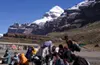
Mount Kailash is one of Tibet's most sacred mountains. It holds deep spiritual significance for Tibetan Buddhists, Hindus, Jains, and followers of Bon. Pilgrims travel from different countries to complete the traditional kora, a circuit around the mountain.
Why Visit: Experience the spiritual traditions, dramatic landscapes, and pilgrimage culture surrounding this
sacred peak.
Trekking Highlight: The approximately 54 km Kailash Kora is a multi-day pilgrimage trek that crosses Dolma La
Pass at around 5,630 m.
Recommended Travel Package:
15-Day Lhasa EBC to Mount Kailash and Lake Mansarovar Small Group Tour
4) Namcha Barwa (7,782 m): The Shy Peak of Eastern Tibet
Namcha Barwa rises above the Yarlung Tsangpo Grand Canyon in Nyingchi, eastern Tibet. Often called the Shy Peak, it is frequently hidden by clouds. In spring, peach blossoms add color to the surrounding valleys, creating a striking contrast with the snow-covered summit.
Why Visit: See one of eastern Tibet's most distinctive peaks and explore the surrounding canyon landscapes.
Best Viewpoints: Yarlung Tsangpo Grand Canyon viewing platforms and Songtsen Village, especially breathtaking
during the spring peach blossom season.
Recommended Travel Package:
10-Day Nyingchi Lhasa Shigatse Everest Namtso Group Tour
Tibet Mountain Travel Guide: Best Time, Permits & Altitude Tips
Planning a trip to Tibet’s mountains requires careful preparation. Choose the right season, arrange the necessary travel permits, and allow time to adjust to the high altitude. These practical tips will help you enjoy Tibet’s mountain scenery safely and comfortably.
1) Best Time to Visit Tibetan Mountains
The best time to visit Tibet’s mountains is generally from April to May and September to October. These months often bring clearer skies, less precipitation, and better mountain views. Summer offers greener landscapes, but the monsoon season can bring clouds, rain, and reduced visibility, especially around the Himalayas. Winter has fewer visitors and crisp views on clear days, but temperatures are much lower.
2) What Permits Do You Need to Visit Mountains in Tibet?
Foreign travelers generally need a Tibet Travel Permit (TTP) to enter Tibet. Additional permits depend on the destination. Visits to certain areas, including Mount Kailash and Lake Mansarovar, may require an Aliens' Travel Permit and a Military Area Entry Permit. A licensed Tibet travel agency (like Tibet Horizon) can arrange the required documents.
Climbing vs. Sightseeing: Visiting mountain viewpoints and base camps is different from attempting a summit climb. Mountaineering expeditions require additional approvals, specialized equipment, and qualified support. Requirements vary by mountain and current regulations.
3) How to Prevent Altitude Sickness When Visiting the Tibetan Mountains?
Tibet’s high elevation can cause acute mountain sickness (AMS), even in healthy travelers. Spend the first two to three days in Lhasa to acclimatize before traveling to higher elevations. Increase altitude gradually, drink enough water, avoid strenuous activity during the first few days, and get adequate rest. If symptoms worsen, stop ascending and seek medical attention.
4) What to Pack for a Tibet Mountain Tour?
Warm clothing: Bring a down jacket, thermal layers, gloves, and a warm hat.
Sun protection: Pack sunscreen, UV-protective sunglasses, and a wide-brimmed hat.
Comfortable footwear: Choose sturdy walking shoes or hiking boots suited to your itinerary.
Water and essentials: Carry a reusable water bottle, personal medication, and any prescribed altitude-related
medication.
Proper preparation helps you handle changing weather and high-altitude conditions while enjoying Tibet’s spectacular mountain landscapes.
 Mount Kailash
FAQs about Tibetan Mountains
1) How do I get to Everest Base Camp in Tibet?
You can travel overland from Lhasa to Tibet’s Everest Base Camp via Shigatse and Tingri. You can also reach the
base camp from Kathmandu. If you enjoy hiking, consider a trek from Old Tingri to Everest Base Camp. Each journey usually takes several days and offers views of the Himalayas, high mountain passes, and traditional
Tibetan towns. However, foreign travelers must book an organized Tibet tour through a licensed travel agency and
obtain the Tibet Travel Permit.
2) Can I climb Mount Everest from the Tibetan side?
Yes, Mount Everest can be climbed from the Tibetan side, but the expedition requires technical mountaineering
skills, proper equipment, experienced guides, and special climbing permits. This is very different from visiting
Everest Base Camp, where travelers can enjoy views of the north face without climbing the mountain. Climbing
access is subject to current regulations and approvals.
3) Can I climb Mount Kailash?
No, climbing Mount Kailash is prohibited because it is a sacred mountain. However, you can complete the
traditional 54 km Kailash Kora. The trek usually takes three days and crosses the high Dolma La Pass, so good
preparation for altitude is essential.
4) What is the easiest mountain to visit in Tibet for beginners?
For beginners, the easiest way to enjoy Tibet's mountain scenery is usually to visit accessible viewpoints by
road rather than attempt a high-altitude hike. Areas around Lhasa and Yamdrok Lake offer chances to enjoy
mountain views without committing to a strenuous trek. Allow time to acclimatize in Lhasa before traveling to
higher elevations, and choose stops according to your fitness and comfort at altitude.
Conclusion
From the Himalayas and Mount Everest to the sacred Mount Kailash and the remote ranges of the Tibetan Plateau, Tibet offers a wide variety of mountain experiences. Whether you are interested in sightseeing, geography, or pilgrimage, understanding each destination's location, accessibility, and altitude can help you choose the right route. Plan your Tibet trip around seasonal conditions, permit requirements, and adequate acclimatization for a more rewarding mountain journey.
10 years exp.| 5.0
 | Reviews
Tell me about your travel plan or contact me via inquiry@tibettourism.com
Related Tibet Travel Guide and Advice


Most Popular Tibet Tour Packages
-
![Lhasa Everest Base Camp Kathmandu Overland Small Group Tour]() Small Group Tour
7 Days Lhasa Everest Base Camp Kathmandu Overland Small Group Tour
Promo: Classic overland travel route from Lhasa to Kathmandu via Gyirong / Nyalam
Dates & Price
![rili]()
![xiala]()
-
![Lhasa Shigatse Mount Everest Small Group Tour]() Small Group Tour
8 Days Lhasa Shigatse Mount Everest Small Group Tour
Promo: Once-in-a-lifetime chance to face the tallest mountain in the world
Dates & Price
![rili]()
![xiala]()
-
![Kathmandu to Lhasa Overland Small Group Tour with EBC]() Small Group Tour
8 Days Kathmandu to Lhasa Overland Small Group Tour with EBC
Promo: Drive Across Himalaya Overland Tour with altitude rising slowly
Dates & Price
![rili]()
![xiala]()


Please share your contact information, so we can send you the answer directly by email.

