
 inquiry@tibettourism.com








Yarlung Tsangpo River: Location, Map, Facts & Grand Canyon


 Content
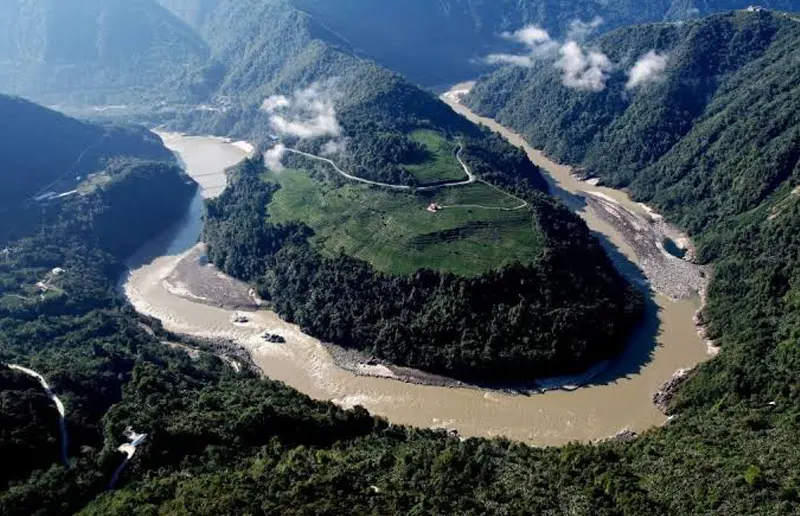
The Yarlung Tsangpo, Tibet’s longest river and one of the highest on Earth, flows eastward across southern Tibet before entering India as the Brahmaputra. Its basin features fertile valleys, dramatic gorges, and the world-renowned Yarlung Tsangpo Grand Canyon.
In this guide, we will explore what makes the Yarlung Tsangpo River unique, as well as the best ways to experience it during your trip to Tibet.
 Yarlung Tsangpo River
Facts about the Yarlung Tsangpo River:
Length: About 2,057 km within Tibet; about 2,900 km for the full river system
Source: Angsi Glacier in western Tibet
Course: Flows eastward through Ngari, Shigatse, Lhoka (Shannan), and Nyingchi
Major Tributary: Lhasa River, which joins the Yarlung Tsangpo near Qüxü County
End: Eventually flows into the Bay of Bengal through India and Bangladesh
Source Elevation: About 5,200 meters above sea level
Importance: Supports agriculture, local communities, and ecosystems across southern Tibet
Names Along Its Course: Yarlung Tsangpo in Tibet, Siang/Dihang in Arunachal Pradesh, Brahmaputra in Assam, and
Jamuna in Bangladesh
Yarlung Tsangpo River Location, Map & Geography
The Yarlung Tsangpo River crosses southern Tibet from west to east before entering India. Its course includes high mountain valleys, major tributaries, and deep gorges.
1) Where Is the Yarlung Tsangpo River Located?
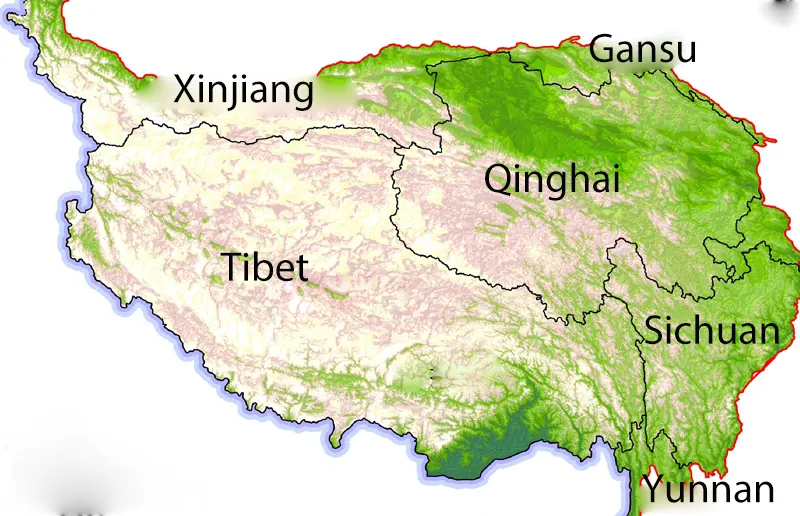
Situated in the Tibet Autonomous Region of southwestern China, the Yarlung Tsangpo flows from west to east between the Gangdise Mountains to the north and the Himalayas to the south. Its course traverses Ngari, Shigatse, Lhoka (Shannan), and Nyingchi.
Two well-known areas along the river are the Yarlung Valley in Lhoka and the Yarlung Tsangpo Grand Canyon in Nyingchi. Both offer different views of Tibet's landscapes and cultural heritage.
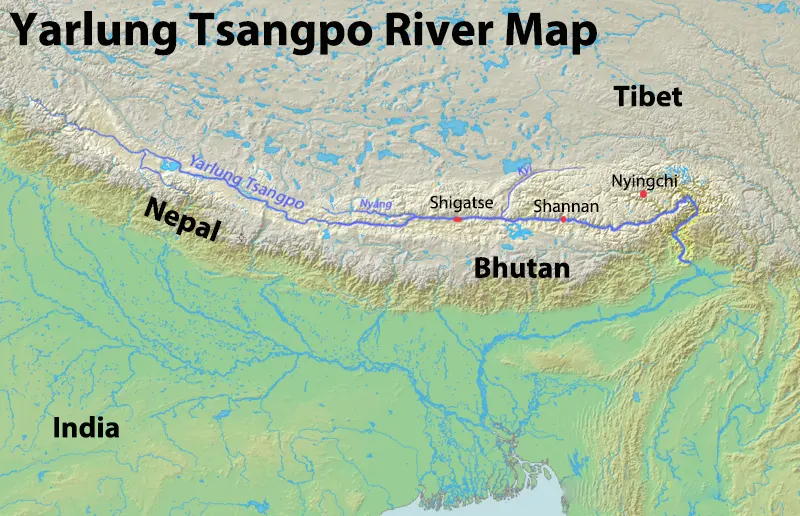 Yarlung Tsangpo River Map
2) Where Does the Yarlung Tsangpo River Start and End?
Start: The Yarlung Tsangpo River originates from the Angsi Glacier in Burang County, Ngari Prefecture, western Tibet, near Mount Kailash.
End: After flowing through India and Bangladesh, its waters reach the Bay of Bengal through the Ganges–Brahmaputra Delta.
3) How Does the Yarlung Tsangpo Become the Brahmaputra and Jamuna Rivers?
The Yarlung Tsangpo is part of a major transboundary river system in Asia. It takes different names as it flows through different regions:
Tibet, China: Yarlung Tsangpo (Yarlung Zangbo)
Arunachal Pradesh, India: Siang or Dihang
Assam, India: Brahmaputra
Bangladesh: Jamuna
4) Length, Elevation, and Major Tributaries
The river flows from the highlands of western Tibet toward the lower valleys of southeastern Tibet. Its elevation gradually decreases along the way, creating a wide range of landscapes.
Several tributaries join the Yarlung Tsangpo along its course, including:
Lhasa River (Kyi Chu): Flows through Lhasa and joins the Yarlung Tsangpo near Qüxü County.
Nyang Qu River: An important tributary in the Shigatse region.
Nyang River: Flows through Nyingchi and joins the Yarlung Tsangpo.
Yarlung Tsangpo Grand Canyon: The World's Deepest Canyon
Located in southeastern Tibet, the Yarlung Tsangpo Grand Canyon is famous for its great depth, dramatic river bend, and diverse ecosystems. Here are its main geographical features and highlights.
1) How Long and Deep Is the Yarlung Tsangpo Grand Canyon?
The Yarlung Tsangpo Grand Canyon is about 504.6 kilometers long and reaches a maximum depth of approximately 6,009 meters. It is widely recognized as the world's deepest canyon.
The canyon winds between Mount Namcha Barwa (7,782 meters) and Mount Gyala Peri (7,294 meters). Their snow-covered peaks rise above the deep valley, while forested slopes and waterfalls add to the area's natural beauty.
2) Yarlung Tsangpo Grand Canyon vs. Grand Canyon: Which Is Bigger and Deeper?
The Yarlung Tsangpo Grand Canyon in Tibet and the Grand Canyon in Arizona, USA, are two of the world's most famous natural wonders. However, they differ greatly in depth, length, and landscape.
| Feature | Yarlung Tsangpo Grand Canyon | Grand Canyon, USA |
|---|---|---|
| Location | Tibet, China | Arizona, USA |
| Length | About 504 km | About 446 km |
| Maximum depth | About 6,009 m | About 1,857 m |
| Average depth | About 2,268 m | About 1,600 m |
| Main river | Yarlung Tsangpo River | Colorado River |
Both canyons offer impressive scenery, but the Yarlung Tsangpo Grand Canyon is much deeper and lies in a remote Himalayan region.
3) The Great Bend: How the River Turns Around Mount Namcha Barwa
At the Great Bend, the river executes a dramatic U-turn around Mount Namcha Barwa (7,782 m). As the peak is frequently shrouded in clouds, catching a clear view is a rare treat, making this spot a focal point for photographers and nature enthusiasts in Nyingchi.
4) Unique Climate, Landscapes, and Biodiversity of the Grand Canyon
The canyon channels moisture from the Indian Ocean monsoon into southeastern Tibet. Its large elevation differences create several climate zones, from cold alpine areas near the peaks to warm, humid valleys with subtropical vegetation.
The region is home to wildlife such as takins, red pandas, macaques, and various bird species. Its forests also support many rare Himalayan plants and animals.
Cultural & Historical Significance of the Yarlung Tsangpo River
The Yarlung Tsangpo River valley played an important role in the development of Tibetan civilization. Its fertile land supported early settlements, while nearby palaces, monasteries, and royal tombs preserve the region's history.
1) Yarlung Valley: The Cradle of Tibetan Civilization
Located in Lhoka (Shannan), the Yarlung Valley is traditionally regarded as the birthplace of Tibetan civilization. It is associated with early farming, the first Tibetan royal palace, and the rise of the Tubo Kingdom. Nearby, the Tombs of the Tibetan Kings in Chongye offer insight into Tibet's early royal history.
2) The River's Role in Tibetan Culture and Traditional Life
The Yarlung Tsangpo River has long supported communities across southern Tibet. Its water and fertile riverbanks provide resources for farming, livestock raising, and daily life, with barley and wheat among the main crops.
The river also appears in local stories, songs, and traditions. Along its banks, villages and farmland reflect the close relationship between Tibetan communities and the river.
3) Ancient Kingdoms, Monasteries, and Historical Sites Along the River
The Yarlung Tsangpo River valley is home to several important historical and religious sites, including:
Yumbulagang Palace: Located near Tsedang, this hilltop palace is traditionally regarded as Tibet's first palace.
It offers panoramic views of the surrounding Yarlung Valley.
Tradruk Monastery: One of Tibet's oldest Buddhist monasteries, it is known for its ancient history and
traditional architecture.
Samye Monastery: Located in the Yarlung Tsangpo valley, Samye is widely recognized as Tibet's first Buddhist
monastery. Its unique architectural layout makes it an important destination for understanding Tibetan Buddhism.
Tashilhunpo Monastery: Located in Shigatse, this monastery is the traditional seat of the Panchen Lamas.
Tombs of the Tibetan Kings: Located in Chongye Valley, these ancient royal tombs are associated with the early
Tibetan kings and the history of the Tibetan Empire.
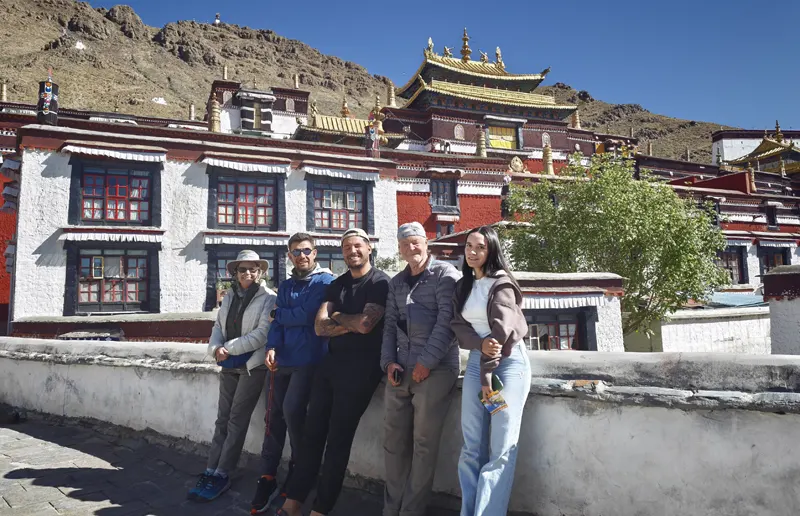 Tashilhunpo Monastery
How to Visit the Yarlung Tsangpo River in Tibet
You can explore different sections of the Yarlung Tsangpo River from Lhasa. Tsedang offers access to the historic Yarlung Valley, while Nyingchi is known for its river scenery and forested landscapes.
1) Lhasa to Tsedang: Exploring the Yarlung Valley
Located about 190 km (3–4 hours by car) from Lhasa, Tsedang in Lhoka is the principal gateway to the Yarlung Valley. The drive parallels the Yarlung Tsangpo River through picturesque valleys and traditional Tibetan villages, leading to historical landmarks that reveal the dawn of Tibetan civilization.
2) Lhasa to Nyingchi: Travel by Road or Train
Nyingchi is one of the best destinations for experiencing the natural beauty of the Yarlung Tsangpo River. From Lhasa, you can travel to Nyingchi by road or train.
By Train: Take the Lhasa–Nyingchi train for a scenic journey through valleys, mountains, and river landscapes.
| Train No. | Departure | Arrival | Time | Duration | Fare |
|---|---|---|---|---|---|
| K6831 | Lhasa | Nyingchi | 16:45-22:16 | 5h 31m |
Soft sleeper: $37 Hard sleeper: $24 Hard seat: $10 |
| C882 | Nyingchi | Lhasa | 12:24-16:32 | 4h 8m |
Soft sleeper: $68 Hard sleeper: $31 Hard seat: $20 |
| K6832 | Nyingchi | Lhasa | 09:50-15:20 | 5h 30m |
Soft sleeper: $37 Hard sleeper: $24 Hard seat: $10 |
By Road: You can also drive from Lhasa to Nyingchi via the Lhasa–Nyingchi Highway. The journey usually takes around 4–5 hours. Depending on your itinerary, you can stop at Basumtso Lake or visit the peach blossom valleys in spring.
Recommended Lhasa - Nyingchi Overland Route:
8-Day Nyingchi Bomi Lhasa Shigatse Peach Blossom Festival Group Tour
10-Day Nyingchi Lhasa Shigatse Everest Namtso Group Tour
3) Enjoy Meditation and Quiet Moments by the Yarlung Tsangpo River
If you're interested in Tibetan meditation, the banks of the Yarlung Tsangpo River are the perfect spot for it. Away from the noisy towns and crowded spots, you can just sit back, watch the river flow, and soak in the natural beauty. Click here for 8-day Tibetan Meditation Lhasa tour.
FAQs about Yarlung Tsangpo River
1) When is the best time to visit the Yarlung Tsangpo River?
The best time to visit the Yarlung Tsangpo River is generally from April to October. March to early April is
ideal for seeing Nyingchi's peach blossoms. April to May and September to October offer comfortable weather for sightseeing. July and August are warmer and greener but receive more rainfall.
2) Can I visit the Yarlung Tsangpo Grand Canyon?
No. The Yarlung Tsangpo Grand Canyon is currently off-limits to foreign travelers (restricted to Chinese
citizens). Nearby border areas, such as Medog (Motuo) County and Nanyi Valley, are similarly restricted.
3) Do I need a Tibet Travel Permit to visit the Yarlung Tsangpo River?
Yes, foreign tourists need a Tibet Travel Permit (TTP) to visit the Yarlung Tsangpo River in Tibet. You must
arrange your trip through a licensed Tibet travel agency (like Tibet Horizon), which handles the permit
application. A valid Chinese Visa or visa-free entry does not replace the Tibet Travel Permit.
4) Can I get altitude sickness when visiting the Yarlung Tsangpo River?
Yes. Some sections of the Yarlung Tsangpo River are at high elevations, so altitude sickness is possible. The
risk depends on your destination and how well you acclimatize. Allow time to adjust to the altitude and avoid
strenuous activity during your first few days in Tibet.
Conclusion
The Yarlung Tsangpo River offers a glimpse into Tibet's diverse landscapes, history, and culture. From the historic Yarlung Valley to the scenic river valleys of Nyingchi, it is well worth exploring during your Tibet tour.
10 years exp.| 5.0
 | Reviews
Tell me about your travel plan or contact me via inquiry@tibettourism.com
Related Tibet Travel Guide and Advice
Most Popular Tibet Tour Packages
-
![Lhasa Shigatse Mount Everest Small Group Tour]() Small Group Tour
8 Days Lhasa Shigatse Mount Everest Small Group Tour
Promo: Once-in-a-lifetime chance to face the tallest mountain in the world
Dates & Price
![rili]()
![xiala]()
-
![Kathmandu to Lhasa Overland Small Group Tour with EBC]() Small Group Tour
8 Days Kathmandu to Lhasa Overland Small Group Tour with EBC
Promo: Drive Across Himalaya Overland Tour with altitude rising slowly
Dates & Price
![rili]()
![xiala]()
-
![Lhasa Everest Kailash Mansarovar Zhangmu Kathmandu Small Group Tour]() Small Group Tour
12 Days Lhasa Everest Kailash Mansarovar Zhangmu Kathmandu Small Group Tour
Promo: Uncover the spiritual and natural secrets hidden within Tibet
Dates & Price
![rili]()
![xiala]()




Please share your contact information, so we can send you the answer directly by email.

