
 inquiry@tibettourism.com


.webp)


2026 Kailash Mansarovar Yatra from India FAQ: Complete Guide for Indian Pilgrims
Embarking on the sacred journey from India to Kailash Parvat requires meticulous planning, particularly regarding visas and permits, route selection, packing essentials, and facts about Kailash Parvat. We have collected the most frequently asked questions from pilgrims and tourists. Read on to find useful information that will help you plan a wonderful Kailash Mansarovar Yatra from India.
Facts about Kailash Parvat
Kailash Parvat, also known as Mount Kailash, is located in the Ngari Prefecture of the Tibet Autonomous Region, China. It's situated in the Gangdise Mountains (Kailash Range) of the Transhimalaya. The mountain is near the borders of India and Nepal, but it lies entirely within China.
No, Mount Kailash belongs to China, specifically the Tibet Autonomous Region. It is located in western Tibet, which has been under Chinese authority for many centuries. Historical evidence indicates that Kailash Parvat has never been a part of India. There are no records or evidence to suggest that Mount Kailash was ever under Indian control.
The peak of Mount Kailash is located at an elevation of 6,638 m (21,778 ft), near the western trijunction between China, Nepal, and India. Mount Kailash is located close to Mansarovar and Rakshastal lakes. The sources of four rivers: Indus, Sutlej, Brahmaputra, and Ghaghara lie in the vicinity of the region.
The Kailash Outer Parikrama is typically a 3-day kora around Kailash Parvat, covering a total distance of 54 kilometers, of which 43 kilometers are covered on foot. The journey begins with a drive and trek from Darchen to Dirapuk Monastery on the first day, covering 7 kilometers by drive and 13 kilometers on foot. On the second day, you’ll trek from Dirapuk Monastery to Zutulpuk Monastery, spanning 24 kilometers. The final day involves a shorter trek of 6 kilometers from Zutulpuk Monastery to the eco-bus spot and a drive of 4 kilometers back to Darchen.
The Kailash Inner Parikrama, typically a 1-day kora around Nandi Parvat (Mt. Yinjientuo), is only 34 kilometers long, but it's quite challenging. You'll depart from Darchen early in the morning, passing Selung Monastery and reaching the Thirteen Golden Pagodas, the closest point to Mount Kailash. Finally, you'll return to Darchen via Selung Monastery, and Gyangdrak Monastery.
No, they are related but not the same. Kailash Charan Sparsh usually refers to a short trek from Dirapuk Monastery to western slope of Kailash Parvat, where pilgrims walk until they are close enough to symbolically touch Kailash Parvat.
Kailash Inner Kora is a much longer, more difficult, and restricted trekking route. This is a one-day parikrama around Nandi Parvat, encompassing various spiritually significant sites and challenging terrains. It is considered a more advanced yatra, requiring both spiritual and physical preparation.
Toilets during the Kailash Parikrama are generally fundamental and may be limited. While some hotels and guesthouses along the route offer common or even attached washrooms, the parikrama itself often involves using makeshift or open-air toilets. Expect squat toilets or rely solely on the natural environment, especially during the trek itself. It's recommended to bring your toilet paper and wet wipes as these are often not provided.
Mount Kailash is revered as sacred by Hindus, Buddhists, Jains, and the Bon religion due to its association with deities and spiritual significance within their respective belief systems. For Hindus, it's the abode of Lord Shiva. Buddhists believe it represents Mount Meru, the center of the cosmos, and is home to Buddha Demchok. Jains consider it Ashtapada, where the first Tirthankara attained liberation. The Bon religion regards it as the center of the universe and the seat of a Sky Goddess.
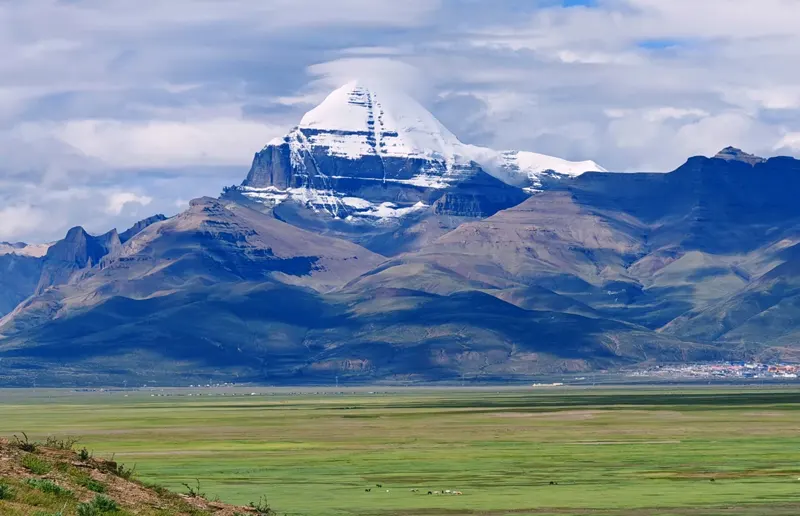 Kailash Parvat
Kailash Parvat has never been climbed due to a combination of religious significance and natural factors. Religiously, Mount Kailash is revered as sacred by several religions, including Hinduism, Buddhism, Jainism, and the Bon religion. It is considered the center of the universe and any attempt to climb it is seen as a desecration. In terms of natural factors, Mount Kailash presents formidable physical challenges with steep slopes and rugged terrain that pose significant risks to climbers. Additionally, the region experiences extreme weather conditions, including freezing temperatures and unpredictable storms, preventing people from climbing.
Scientists have conducted various studies around Mount Kailash, uncovering several interesting findings, including both religious and mysterious beliefs and scientific findings.
Mount Kailash is considered by many, including Hindus and non-Hindus, to be the Axis Mundi, where heaven meets earth. Seen from NASA’s satellite image, the shaded side of Mount Kailash looks like the face of Lord Shiva. Some theories suggest that Mount Kailash has the shape of a pyramid and may be a man-made structure, possibly built by an advanced civilization. There are also beliefs that the Kailash range acts as an energy vortex, affecting physical processes such as hair and nail growth, suggesting a faster rate of growth equivalent to two weeks in just 12 hours.
Moreover, some scientists have explored its environmental significance. Studies have documented the spatial distribution and shrinkage of glaciers, indicating significant changes in the region’s glacial cover. These scientific findings and explorations contribute to our understanding of Mount Kailash.
Mount Kailash is a major watershed in Asia, with several important rivers originating from its glaciers. The main rivers include the Sutlej River, the Indus River, the Yarlung Tsangpo (Brahmaputra), the Karnali River. These rivers provide vital freshwater to millions of people in Tibet, India, Nepal, and Bangladesh.
No, Mount Kailash and Mount Everest are not the same. Mount Everest, located on the border of Nepal and Tibet, is the world’s highest peak at 8,848 meters and is famous for mountaineering. Mount Kailash, in Tibet’s Ngari region, is about 6,638 meters high and is revered as a sacred mountain in Hinduism, Buddhism, Jainism, and Bon, where climbing is forbidden.
There are five Kailash peaks, collectively known as the Panch Kailash in Hinduism. The 5 kailash name are Mount Kailash (in Tibet, the most revered one), Adi Kailash, Kinnaur Kailash, Shrikhand Mahadev Kailash, and Manimahesh Kailash.
Yes, Kailash Parvat is visible from India at a few sites, including Old Lipulekh Peak in the Pithoragarh district of Uttarakhand state. From there, Mount Kailash can be seen inside India territory, allowing Indian pilgrims to catch a glimpse of the revered mountain.
China Visa and Tibet Travel Permit for Kailash Mansarovar Yatra from India
Yes! Kailash Mansarovar Yatra is open to Indian citizens. Eligible Indian passport holders can join a Kailash Mansarovar Yatra from India, arranged by the Foreign Affairs Office of the TAR and the Tibet-India Pilgrim Reception Center. As a partner with Pilgrim Center, Tibet Horizon can make your Kailash Yatra come true.
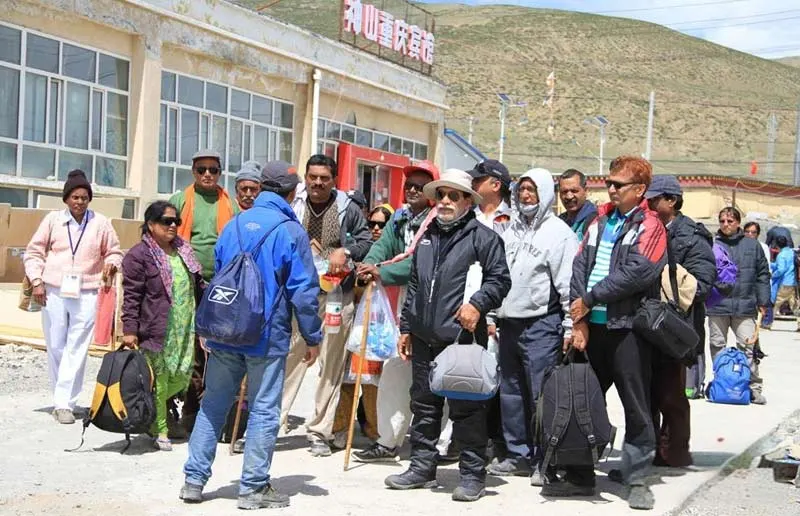 Indian pilgrims ready to do Kailash Mansarovar Yatra
Embarking on a Kailash Mansarovar Yatra from India poses different permit and visa requirements for various traveler groups.
For Indian nationals with Indian passports, a specific set of procedures must be followed. The verification and issuance of permits for visits to Kailash Parvat can only be arranged by several authorities, including the Foreign Affairs Office of the Tibet Autonomous Region, the Tibet Military Region, the Armed Police Tibet Frontier Corps, and tshe Department of Public Security of the Tibet Autonomous Region. The Foreign Affairs Office of the Tibet Autonomous Region and the Tibet-India Pilgrim Reception Center are the sole organizations authorized to plan and manage the Kailash pilgrimage for Indian pilgrims, including itinerary, accommodation, and transportation. As a partner of the Pilgrim Center, Tibet Horizon organize your Kailash Mansarovar Yatra from India, ensuring a meaningful journey to this sacred site.
For non-Indian passport holders, securing the necessary visas and permits is a crucial step. A Chinese Visa is mandatory for those departing from India to visit Mount Kailash and Lake Mansarovar in Tibet. All foreign travelers, regardless of nationality, must also secure a Tibet Travel Permit for entry into Tibet and access to Mount Kailash region. For visits outside Lhasa, including to Mount Kailash and Lake Mansarovar, an Aliens’ Travel Permit is obligatory. Additionally, as Mount Kailash is located in Ngari Prefecture, which is near military-sensitive zones, a Military Area Entry Permit is required.
To obtain the Chinese Visa for your Kailash Mansarovar Yatra from India via Chinese Mainland, start by identifying the type of visa required based on your travel purpose. Next, gather the necessary documents, which typically include a completed visa application form, a passport with at least six months of remaining validity, a recent colored photograph, and any additional documents required for the specific visa category. Then, personally submit your application to the Visa Office at the Chinese embassy or consulate, where your fingerprints will be taken. Finally, pay the visa fee at the Visa Office and collect your visa.
If you travel to Kailash Parvat via Kathmandu, you’ll need to get a Chinese Group Visa for your journey. Ensure your passport has at least six months of validity remaining from the entry date and avoid applying for a Chinese Visa initially, as it will be expired when applying for a Chinese Group Visa. Submit copies or photos of your valid passport to the agency, which will then apply for an invitation letter and Tibet Travel Permit on your behalf. In India, the guide will assist you in filling out the Visa Application Form, providing your original passport, passport-sized photos, and visa fee and accompany you to the Chinese Embassy in New Delhi for an interview and fingerprint record. Generally, you can expect to receive your Chinese Group Visa and original passport on the afternoon of the fourth working day after submission. Once you have your visa, you and your group will travel to Kailash Parvat.
To get your Tibet Travel Permit, you need to provide copies or photos of your valid passport and visa to the agency. The agency will submit the application. After processing your permit, the agency will provide you with a color copy or deliver it to your address in the Chinese Mainland. With the Tibet Travel Permit, you can travel to Tibet. Meanwhile, with your copies or photos of your valid passport and visa to the agency, the agency will submit the application for Military Area Entry Permit. After you have entered Tibet, your tour guide will collect the original copy of your Tibet Travel Permit and your passport to apply for the Aliens’ Travel Permit on your behalf.
Kailash Mansarovar Yatra Route from India: How to Go Kailash Mansarovar?
You can go to Kailash from India via Chinese Mainland. Connecting flights are available from India to Shanghai and Beijing. From these cities, you can either fly or take the Tibet train to Lhasa. The flight trip is swift, landing you in the City of Sunlight within just a few hours, while the train tour offers a once-in-a-lifetime chance to experience a ride on the “Sky Railway”. After reaching Lhasa, you can then travel to Mount Kailash by road or air.
You can go to Kailash from India via Lhasa, although there is no direct flight from India to Lhasa. You can fly from India to major Chinese cities or Kathmandu and then to Lhasa. From Lhasa, you have two options to reach Mount Kailash: traveling overland or flying to Ngari. The overland journey from Lhasa to Kailash Parvat is the most popular route, taking you through some of Tibet’s landmarks. This route heads southwest to Shigatse, passing by Tashilhunpo Monastery. Continue westwards, you’ll drive to Darchen passing Saga.
Alternatively, you can fly from Lhasa to Ngari Gunsa Airport . The flight takes around two hours, and from Shiquanhe, it is a 200-kilometer drive to Mount Kailash, which is normally done in just one day of driving. Another option is to fly directly from Lhasa to Purang Airport , which is the closest airport to Kailash Parvat. From Purang Airport, it takes about one hour to drive to Lake Mansarovar. After a short hike around the holy lake, you can continue to Darchen, the starting point for your Kailash Yatra.
It’s very convenient for you to go to Kailash from India via Kathmandu. Direct flights from New Delhi to Kathmandu are available and from Kathmandu, there are two primary methods of reaching Kailash Parvat: overland travel via Gyirong Port or via Purang Port. You can travel from Kathmandu to Rasuwa Gadhi near the China-Nepal border, and then enter Tibet via Gyirong Port. After crossing the border, you will continue on to Darchen, the starting point for the Kailash Yatra. Alternatively, you can fly from Kathmandu to Nepalgunj, then to Simikot, and finally taking a helicopter to Hilsa near the China-Nepal Border. From Hilsa, you will cross the border and drive to Purang, also known as Taklakot. Then drive from Purang to Darchen to begin Kailash Parikrama. This tour is also a popular and efficient way to reach Mount Kailash, especially for those who prefer to shorten travel time.
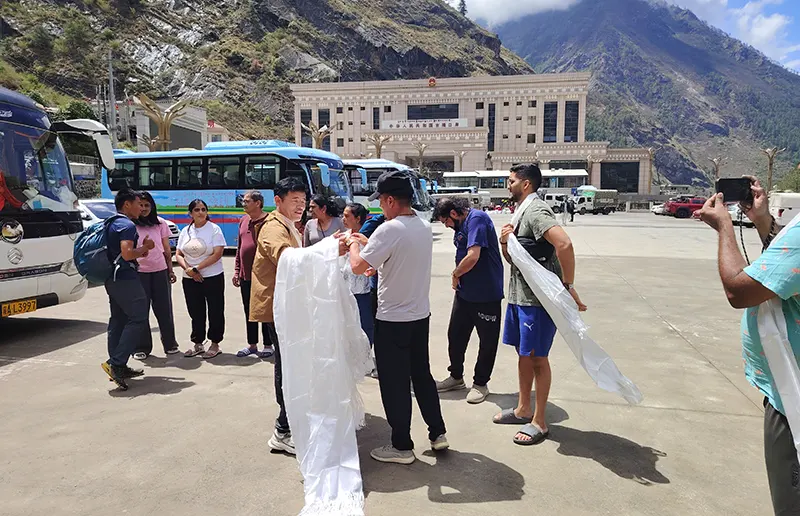 Indian Pilgrims go to Mount Kailash via Gyirong Port
When choosing your route to Kailash Mansarovar from India, there are several specific considerations to keep in mind:
Budget: The Kailash Mansarovar Yatra package cost can vary significantly based on your mode of transportation and itinerary. For example, if you travel to Kailash via Lhasa, which may include additional visits to other sites, will naturally be more expensive.
Schedule: If you’re short on time, consider taking a flight tour to Mount Kailash via Chinese Mainland. If you choose to enter Tibet from Kathmandu, you’ll need additional time to process your Chinese Group Visa in India. It may take around 4 working days.
Weather: Overland trip via Gyirong Port may be affected by weather conditions, especially during the monsoon season. Rainfall can make the road condition worse.
In summary, selecting your route to Mount Kailash from India involves balancing your budget, time constraints, and weather conditions, while also considering your preferences.
No, helicopters and planes cannot fly over Mount Kailash. Mount Kailash region experiences high winds and unpredictable weather conditions, making it dangerous to fly over the mountains. Moreover, the rugged terrain makes planes difficult to take off or land in. Although it is not possible to fly over Mount Kailash from India, you can take a helicopter tour in Nepal from Simikot to Hilsa, which is near the border with Tibet. From there, you can continue your journey to Mount Kailash by land.
No, international travelers, including Indian nationals, are not allowed to travel independently to Mount Kailash. According to the regulations, foreign tourists are required to join an organized tour group with a registered tour operator that specializes in Kailash Mansarovar Yatra like us Tibet Horizon. Independent travel to Tibet and Ngari Prefecture, where Mount Kailash is located, is not permitted for foreign visitors. Only local authorized tour agencies in Tibet can apply for the necessary permits, including the Tibet Travel Permit, Aliens’ Travel Permit, and Military Area Entry Permit on their clients’ behalf.
Best Time to Go to Kailash Mansarovar from India: Kailash Parvat Temperature and Travel Length
Kailash Parvat is located in western Tibet, featuring a high altitude and a four-season monsoon climate that receives less precipitation due to the Himalayas’ rain-shadow effect. To enhance your Kailash Yatra experience, the recommended period for undertaking a Kailash Mansarovar Yatra from India is typically between April and October, when the weather is generally more comfortable and stable, making it suitable for enjoying the Himalaya landscapes and undertaking the revered Kailash Kora. The Saga Dawa Festival , falling on the 15th day of the fourth month in the Tibetan Lunar Calendar, is a time of significant religious observance. Additionally, the full moon is deemed especially propitious, as it is believed to amplify the spiritual merits of the pilgrimage. During these times, devotees gather at Mount Kailash to commence their parikrama. For those aiming for a special experience, timing your travel to coincide with these spiritual events can enrich your India to Kailash journey with deeper significance.
The duration for Kailash Mansarovar Yatra from India can vary depending on the specific itinerary and travel arrangements. The travel mode and attractions you choose all influence your travel duration. At Tibet Horizon, we’ve planned some classic itineraries, including the 7 Days Indians to Kailash Mansarovar Yatra via Purang Port, which might be considered a shorter trip compared to other longer tours. Additionally, there are longer tours if you include other sites in your itinerary. Therefore, the number of days needed for Kailash Mansarvar Yatra can range from as short as 7-12 days, depending on your preferences. You can consult us about your desired transportation mode and travel places, and our experienced team will help you figure out an ideal route from India to Kailash Parvat.
Kailash Mansarovar Yatra Cost from India: Hotel, Food, and Package Price
Embarking on a Kailash Mansarovar Yatra from India presents a variety of accommodation options, ranging from luxurious hotels to modest guesthouses, depending on the specific locations for overnight stays. In urban areas such as Kathmandu, Lhasa, Shigatse, Darchen, Shanghai, and Beijing, travelers can select from a spectrum of lodgings, including high-end hotels like the Hyatt Regency Kathmandu and the St. Regis Lhasa Resort, as well as more economical choices offering basic amenities. However, in more isolated areas, particularly throughout the duration of Kailash Parikrama, the range of options is limited to guesthouses and camping facilities. Typically, you will stay overnight at guestrooms in Dirapuk and Dzultripuk Monasteries.
 Accommodation and hotels during Kailash Mansarovar Yatra
When embarking on a Kailash Mansarovar Yatra from India, you can expect a rich tapestry of culinary experiences, encompassing a blend of Indian and Nepalese delicacies, authentic Tibetan dishes, Sichuan flavors, and basic Western-style food. Throughout the journey, a variety of dining experiences await, ranging from local teahouses to restaurants that serve an array of cuisines. You can try traditional Tibetan treats like butter tea and momos, as well as more elaborate meals such as stone pot chicken. During the sacred Mount Kailash Parikrama, dining options become more limited. Teahouses and supply stations mainly offer simple dishes like Tibetan noodles and tsampa. To maintain energy throughout the trek, it’s wise to pack snacks like bread, instant noodles, and fresh fruit when it’s available. For a more comfortable journey, engaging the services of a private chef to craft hot, home-cooked meals can significantly enhance the Kailash Yatra experience.
The Kailash Mansarovar Yatra cost from India can vary significantly, with prices influenced by transportation modes, accommodation standards, and trip duration. Travelers need to pay for visa and permit fees, with Tibet permits application fees typically included in the tour package price. Transportation costs vary; a helicopter ride to Mount Kailash is the most expensive option, costing around USD 2000, while flights and road travel are less costly. Accommodation ranges from luxury hotels that may exceed USD 60 per night to guesthouses during the Kailash Parikrama that charge about USD 15 to 20 per person per night. Food and beverage expenses can range from USD 10 to USD 50 per day, depending on your choices. Personal expenditures, such as buying souvenirs, will also add to the total cost. The amounts are up to your duration and itinerary. If you extend your trip to other regions or spend more days staying there, you can expect a higher Kailash Mansarovar Yatra cost.
In summary, the comprehensive cost of traveling from India to Kailash Parvat can range widely. For a budget-friendly option, consider joining a small group tour, which can reduce costs as expenses like guides, drivers, vehicles, and hotels are shared among group members. At Tibet Horizon, a small group tour from India to Kailash Parvat starts at just USD 1988, including necessary permits, attractions, accommodations, and transportation. It’s important to budget accordingly and consider all potential costs when planning your Kailash Yatra from India.
Kailash Mansarovar Yatra Age Limit, Health Requirement, and Altitude Sickness
There’s no rigid age limit on travelers doing Kailash Mansarovar Yatra from India, as long as they have a moderate level of physical fitness. In our years of experience in organizing Tibet tour, we have led travelers ranging from small kids of only months old to those in their 60s to the sacred sites of Mount Kailash and Lake Mansarovar. Nevertheless, a certain level of physical endurance is required as Kailash Yatra involves a trek experience around the holy mountain. The yatra from India to Kailash may be challenging, particularly due to the high-altitude environment and rugged mountain terrain. Therefore, it’s suggested that all travelers estimate their physical conditions before taking the Kailash Yatra from India.
There are no strict health requirements for traveling to Mount Kailash from India, but it is highly recommended that travelers possess a moderate level of physical fitness to cope with the journey. Although the pilgrimage is open to individuals, having a good health condition, especially cardiovascular health, is crucial due to the challenges of the high-altitude trek. It’s advisable to consult with a doctor before embarking on the trip, undergo necessary medical examinations, and ensure that you are well-prepared for the physical demands of the Kailash Yatra.
Preparing for Kailash Mansarovar Yatra from India involves both physical and mental readiness. Engaging in physical exercises is highly recommended to acclimate your body to the physically demanding trek experience you will encounter. Physically, it’s crucial to be in good health before embarking on the Kailash Yatra. Regular exercise, such as walking, running, and yoga, can help prepare your body for the trek at high elevations. Mental readiness is just as important as physical preparation. Stay positive and focused, and do not worry too much about the challenges you may face.
The Kailash Mansarovar Yatra can be safe with proper preparation and precautions, but it does carry risks such as altitude sickness, unpredictable weather, and challenging terrain, as the journey crosses passes above 5,000 meters. With proper medical checks and physical training before departure, choosing a reputable travel agency, and allowing time for acclimatization, you can complete the pilgrimage smoothly and safely.
To effectively manage the risks of altitude sickness during Kailash Mansarovar Yatra from India, it’s crucial to follow a gradual ascent to allow your body to acclimatize. Stay well-hydrated by consuming enough water daily and maintain a balanced diet rich in carbohydrates. Avoid strenuous activities during the initial days at higher altitudes and ensure adequate rest. Experiencing mild symptoms of altitude sickness is common. You can consider taking medication to alleviate the symptoms and always be prepared to descend to a lower altitude if symptoms worsen. Please inform your guide and driver if symptoms persist. We equip our vehicles with oxygen cylinders for oxygen inhalation and can transport you to hospitals if necessary.
How to Prepare for Kailash Mansarovar Yatra: Packing List, Currency, Dos and Don'ts
For a Kailash Mansarovar Yatra from India, it’s essential to pack appropriately in light of the high-altitude environment and trek at the mountain. Include warm, layered clothing such as down jackets and thermal wear, as temperatures can drop significantly, even in summer. Comfortable hiking shoes or boots are a must for the trekking portions of the journey. A trekking pole may also help provide stability. Don’t forget sunglasses, sunscreen, and lip balm to protect against the harsh sun at high altitudes. A thermos for hot beverages is useful for staying warm and hydrated. Personal hygiene items like wet wipes, toilet paper, and small soap are also necessary. Consider packing high-energy snacks like energy bars and dried fruit to replenish your energy during the trek. Finally, essential medications for altitude sickness, headache relief, and any personal prescriptions should be included. It’s recommended to pack light but make sure to include all the essentials in your luggage.
 Luggage for Mount Kailash Yatra
During your Kailash Mansarovar Yatra from India, you should prepare Chinese Yuan (CNY). In Tibet, the official currency is the Chinese Yuan, so you will need CNY for transactions there. However, if you stop in Kathmandu to process the Chinese Group Visa, you will need Nepalese Rupee (NPR) for any expenses incurred in Nepal. It's advisable to exchange your currency into NPR upon arrival in Kathmandu, as it is the local currency and will be necessary for purchases and services while you are there. It’s advisable to prepare cash in both currencies in advance as international debit cards and credit cards are not accepted in some remote regions along the Kailash Yatra route. You can exchange your currency at various money exchange shops in Kathmandu, Lhasa, or the exchange centers at the Nepal-Tibet border.
Preparing for the Kailash Yatra from India requires consideration of both cultural and religious aspects to ensure the pilgrimage is both respectful and meaningful. Recognize that Kailash Parvat is a sacred site for multiple religions, including Hinduism, Buddhism, Jainism, and Bon. As you journey through regions revered by various religious groups, it’s crucial to educate yourself and your companions about the spiritual significance and the religious rituals associated with the Kailash Yatra. During your yatra from India to Kailash, you may witness pilgrims performing rituals at Lake Mansarovar and Mount Kailash. When interacting with them, always show respect. Ask for permission if you want to take photos with them and follow local etiquette, such as removing shoes before entering temples. By making cultural and religious preparations, you can enhance your experience, foster positive relationships with the visited communities, and deepen your spiritual connection to the sacred sites of the Kailash Yatra.
Conclusion
Kailash Mansarovar Yatra from India is a profound spiritual expedition that demands thorough preparation. Navigating the visa and permit process, choosing between overland adventures or aerial routes, and preparing for the physical demands of high-altitude travel are essential steps. With this meticulously crafted guide, we hope to equip you with the necessary knowledge to plan your India to Kailash Yatra. If you have further questions, feel free to contact us. Our dedicated and experienced guides are here to address your inquiries.
Kailash Mansarovar Yatra Guide for Indians
-

India to Kailash: How to Plan a Kailash Mansarovar Yatra from India in 2026
-

How to Do Kailash Mansarovar Yatra? Top 4 Kailash Parikrama Routes for Indians
-

Can Indian Go to Kailash Parvat? A Must-read for Indian Pilgrims
-

How Many Routes for Kailash Mansarovar Yatra? Top 9 Kailash Mansarovar Yatra Routes from India
-

Kailash Mansarovar Yatra by Helicopter: 9-Day Kailash Mansarovar Yatra by Helicopter from Lucknow, India
-

2026 Kailash Mansarovar Yatra Packages from India: Top 5 Kailash Yatra for Indians
-

Mount Kailash Climb: Can We Climb Mount Kailash
-

Delhi to Kailash Mansarovar: How to Plan a Kailash Mansarovar Yatra from Delhi, India
-

Kailash Parbat Mumbai: How to Plan a Kailash Mansarovar Yatra from Mumbai, India
-

Kailash Parbat Bangalore: How to Plan a Kailash Mansarovar Yatra from Bangalore, India
-

Kailash Parbat Hyderabad: How to Plan a Kailash Mansarovar Yatra from Hyderabad, India
-

Kolkata to Kailash Mansarovar: How to Plan a Kailash Mansarovar Yatra from Kolkata, India
-

Kailash Parbat Chennai: How to Plan a Kailash Mansarovar Yatra from Chennai, India