
 inquiry@tibettourism.com


.webp)


Mount Kailash Climb: Can We Climb Mount Kailash


.webp) Content
ContentRising to an elevation of 6,638 meters (21,778 feet), Kailash Parvat is uniquely shaped and stands isolated from other Himalayan peaks. This sacred mountain holds immense importance for several religions: Hindus consider it the abode of Lord Shiva, Buddhists see it as the home of Demchok, Jains revere it as the site where their first Tirthankara attained liberation, and Bon followers regard it as the spiritual centre of the universe.
Given its profound religious significance, a pressing question arises: who climbed Kailash Parvat, or why is Mount Kailash unclimbable? The answer lies in both the cultural reverence and official restrictions that surround this sacred peak.
.webp "The Mount Kailash") The Mount Kailash
The Mount Kailash1. Where is Kailash Parvat?
Kailash Parvat is located in the remote western part of the Tibet Autonomous Region in China, close to Mansarovar and Rakshastal lakes. The sources of four rivers: Indus, Sutlej, Brahmaputra, and Karnali lie in the vicinity of the region. This isolated peak in the Gangdise Mountain range, part of the Transhimalaya, stands apart due to its unique geography and profound spiritual significance.
Despite its seclusion, Kailash Parvat can be accessed through various routes. From Kathmandu, Nepal, travellers can travel overland via Gyirong port, take a helicopter to the Hilsa Tibetan border-Purang Port, or fly to Lhasa and then go to Kailash by road or flight. From India, a popular and convenient option is the helicopter pilgrimage from Lucknow. Additionally, from Lhasa, the journey involves a two-day drive or two-hour flight to reach the Kailash region. These travel routes, though varied, highlight the dedication of pilgrims and adventurers drawn to this sacred and majestic mountain.
2. Why is Mount Kailash sacred? What is the Mount Kailash mystery?
Mount Kailash is a mystical and fascinating place that goes beyond just being a mountain. It's important in many religions, and people see it in different ways.
In the Buddhist lore, it is revered as Mount Meru, home to Cakrasaṃvara Tantra, representing supreme happiness. Legends recount the triumph of Milarepa, a revered figure in Tibetan Buddhism, who ascended Kailash's summit to secure it for Buddhism.
Similarly, in the native Bon religion of Tibet, Kailash, known as the "nine-story Swastika Mountain," is steeped in myth, believed to house 360 gods. Patriarch Shenrab Miwo, the founder of Bon, is said to have descended upon this sacred peak.
In Hinduism, Kailash Parvat is revered as the abode of Lord Shiva, the supreme deity, and is believed to be the centre of the world. The adjacent Lake Mansarovar, created from the heart of the creator God Brahma, adds to its sanctity.
For Jains, Kailash, known as Ashtarvada, holds significance as the place where Patriarch Rishabhanatha attained nirvana.
But Kailash isn't just spiritually special; it's also mysterious.
Unlike Mount Everest, no one has ever reached Kailash's top, and attempts to climb it have ended tragically, like in 1991 when an avalanche killed a whole group of climbers. So, Mount Kailash isn't just a mountain; it's a place of wonder and secrets that continue to intrigue people around the world.
3. Can we climb Mount Kailash? How much does it cost to climb Mount Kailash?
For those wondering if they can climb Mount Kailash, the answer is no. However, there are alternative ways to experience its spiritual aura, such as embarking on the Kailash Parikrama, a sacred pilgrimage circuit around the mountain. While climbing is off-limits, visiting Mount Kailash through other means is still a deeply enriching journey.
When considering the cost of such a trip, it's essential to recognize that traveling to Kailash Parvat is a significant investment. A typical Kailash Mansarovar Yatra usually comes with an average price tag of around $1,988-3,188. This amount covers essential expenses like meals, accommodation, transportation, guides, and travel insurance.
Opting for a Kailash Mansarovar Yatra group can help reduce expenses, and selecting off-peak travel times can further lower costs. While the Kailash Yatra may require financial planning, the spiritual rewards and cultural experiences make it a priceless adventure for many.
4. Why is Mount Kailash unclimbable? Why climbing on Kailash is banned?
Mount Kailash climb is prohibited due to a combination of physical challenges, harsh weather conditions, and religious and official restrictions.
Kailash Parvat presents formidable physical obstacles, with steep slopes and treacherous terrain that pose significant risks to climbers. Additionally, the region experiences extreme weather conditions, including freezing temperatures and unpredictable storms, making it inhospitable for climbing.
However, the primary reasons for the ban on Mt.Kailash climb are rooted in religious beliefs and official regulations. Kailash Parvat holds profound spiritual significance for Hindus, Buddhists, Jains, and Bon practitioners, who consider it a sacred site that should be revered, not conquered. This reverence is further reinforced by official restrictions imposed by our government, which strictly prohibits climbing attempts to preserve the sanctity of the mountain. Moreover, international policies and agreements support these regulations, recognizing Kailash Parvat as a cultural and religious heritage site that should be protected for future generations.
As such, while the allure of Mount Kailash climb may be strong, respecting its sacred status and adhering to official regulations are paramount.
5. Did anyone climb Mount Kailash? Who has climbed Mount Kailash?
Has anyone climbed Kailash Parvat? The question of whether Mount Kailash has ever been climbed has intrigued adventurers for decades, but historical attempts reveal a pattern of failures and spiritual reverence that have kept the mountain unconquered.
According to Buddhist legend, the champion of Vajrayana Buddhism, Milarepa, purportedly ascended Mount Kailash on a ray of sunlight, claiming victory over the champion of the Bon religion, Naro Bon-Chung, and securing the mountain for Buddhism. Despite this legendary feat, there are no recorded instances of modern climbers successfully reaching the summit of Mount Kailash. Its distinctive pyramid-like structure has long attracted the curiosity of mountaineers, but it has proven elusive to summit.
In 1926, renowned mountaineer Hugh Ruttledge ventured to study the north face of the mountain, estimating its height at around 6,000 feet above the plateau. However, he was dissuaded by the British Mountaineering Association, who deemed it "utterly unclimbable." Similarly, Colonel R. C. Wilson contemplated a southern ascent but was halted by the impending Tibetan winter. Australian explorer Herbert Tichy pondered the possibility of an easy climb in 1936, only to be told by a local lama that only a sinless man could reach the summit. Permission for an expedition was granted to Reinhold Messner in the 1980s, but he declined, citing the mountain's sacred status and its significance in people's souls.
Despite these historical endeavours, Kailash Parvat remains revered and unclimbed, its spiritual significance overshadowing any desire for conquest.
6. Is it possible to climb Kailash? If not, is it possible to visit Kailash?
Mount Kailash Climb is not possible due to religious and official restrictions, but visiting this sacred site is achievable through alternative ways. Pilgrims and adventurers can undertake the parikrama, a sacred circumambulation of the mountain that allows for a deeply spiritual journey around its base. This revered kora route offers a profound connection to the mountain's spiritual essence while respecting its sanctity.
One of the popular options is the 12 Days Indians to Kailash Mansarovar Yatra by Road from Lhasa , which offers a comprehensive pilgrimage experience. This tour allows tourists to embark on the parikrama around Mount Kailash and witness the sacred Lake Mansarovar on full moon dates, providing an unforgettable spiritual journey. With three days of trekking covering about 54km, travellers should be in good physical condition.
The yatra begins with acclimatizing visits in Lhasa, including iconic landmarks like the Potala Palace and Jokhang Temple, before venturing across Shigatse to Tashilhumpo Monastery. The journey continues westward to Darchen via Saga and Lake Mansarovar, where the long-awaited Mount Kailash Parikrama awaits. Tibet Horizon ensures a safe and enriching experience for pilgrims and trekking enthusiasts alike on this western Tibet pilgrimage tour.
7. When is the best time to visit Kailash from India?
The best time to visit Kailash Pavart for favorable weather is from May to June and September to October, avoiding the peak monsoon months of July and August. During these shoulder seasons, you can expect comfortable temperatures, clearer skies, and a higher chance of seeing the mountain peak. You shall avoid the harsh winter months (November to March) with severe cold, and the road would be closed due to the heavy snow.
8. Can we touch Mount Kailash? Can we touch Mount Kailash during parikrama?
Mount Gang Rinpoche holds a revered status as a sacred site, but touching Kailash is typically allowed. There are guided treks that allow you to get very close to the mountain, providing a profound spiritual experience.
Tibet Horizon offers a comprehensive 16-day trip from Lhasa to Mount Kailash via Everest Base Camp and Lake Mansarovar, where travellers can embark on a 4-day parikrama around Mount Kailash. One of the highlights of this trek is a special day scheduled for an up-close encounter with the mountain. From Dirapuk Monastery, you will embark on a trek up to the glacier on the western slope of Mount Kailash, ascending to about 5,800 meters. This trek provides a rare chance to get a close look of the sacred mountain. Here, a meditation session will be guided to perform at the center of the world. If you are physically fit, you can trek closer to the rocky walls of Kailash Parvat to attempt to touch the sacred mountain. After this remarkable experience, you will retrace their steps back to Dirapuk Monastery.
This journey offers a rare chance to experience the cultural richness and spiritual depth of Mount Kailash, particularly during the Saga Dawa Festival, a month-long celebration of Buddha's birth, enlightenment, and nirvana. This well-planned tour ensures a safe and enriching experience, allowing travelers to immerse themselves in the local religious atmosphere and gain spiritual enlightenment.
9. Can helicopter land on Mount Kailash?Can we climb Kailash Parvat in helicopter?
Although helicopters cannot land directly on Mount Kailash due to its sacred status and rugged terrain, they can be used for part of the journey. Travellers can take a helicopter from Simikot to Hilsa, and then drive from Hilsa to Purang, and finally to Mount Kailash. Tibet Horizon offers an 9-day Kailash Mansarovar Yatra by Helicopter , which has become increasingly popular for travellers embarking on the Kailash Mansarovar Yatra pilgrimage. This helicopter tour provides an efficient and memorable way to witness the awe-inspiring beauty of Kailash Parvat and the surrounding region, offering a unique perspective on this sacred pilgrimage site.
10. How many days for Kailash Yatra?
For ordinary international travelers, we offer 12 to 17-day Mount Kailash tour packages that include the 3-day Mount Kailash Kora. These itineraries are designed to balance cultural immersion with spiritual exploration, covering highlights such as Lhasa, Yamdrok Lake, Shigatse, and Lake Mansarovar before reaching Mount Kailash. Travelers will not only experience the breathtaking natural landscapes of Tibet but also gain deeper insights into Tibetan culture, religion, and local traditions along the way.
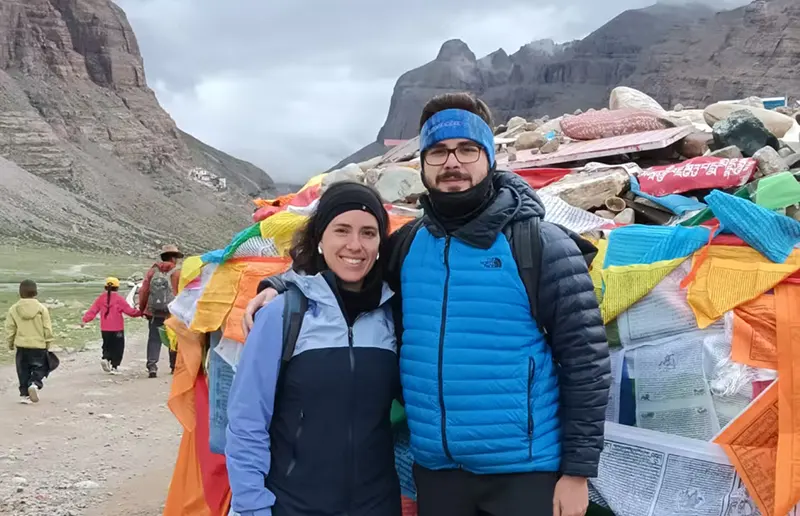 Our foreign guests participating in a Mount Kailash Kora
For Indian pilgrims, we provide 5 specific Kailash Mansarovar Yatra packages ranging from 7 to 12 days. These include shorter overland journeys that allow participants to witness the diverse landscapes along the way, as well as more time-efficient trips that utilize flights for quicker access to the sacred sites. Each route is carefully designed to meet the spiritual expectations of pilgrims, while ensuring comfort, safety, and proper acclimatization at high altitudes. If you want to know more about Kailash Mansarovar yatra routes, feel free to contact us.
 Our Indian guests joining in a Mount Kailash Yatra
11. Is visa required for Kailash Mansarovar Yatra from India?
Yes, China Visa is required for Kailash Mansarovar Yatra. But the requirement for different types of travelers would vary:
For ordinary international tourists and Indians with foreign nationalities, it is sufficient to obtain the necessary documents such as a Chinese Tourist Visa (L-Vis)a/China Group Visa, Tibet Travel Permit, Aliens’ Travel Permit, and Military Area Entry Permit.
For Indian passport holders, you shall participate in a special pilgrimage group organized by the Foreign Affairs Office of TAR and Tibet-India Pilgrim Reception Center, obtaining Tibet Travel Permit, Aliens’ Travel Permit and Military Area Entry Permit together. As a partner with Pilgrim Center, Tibet Horizon can handle your Kailash Mansarovar Yatra from India.
12. Conclusion
In conclusion, Mount Kailash climb is strictly forbidden due to its profound religious significance and official restrictions. However, there are alternative ways to experience its spiritual essence. Pilgrims and adventurers can participate in the 3-day parikrama, a sacred circumambulation around Mount Kailash, join 4-day trekking to touch Kailash, or fly over the Himalayans by helicopter to Mt. Kailash. These journeys offer deep spiritual connections while respecting the mountain's sanctity. Thus, while climbing is not allowed, visiting Mount Kailash through these means honors its sacred status.
20 years exp.| 5.0
 | Reviews
Tell me about your travel plan or contact me via inquiry@tibettourism.com
Kailash Mansarovar Yatra Guide for Indians


Most Popular Kailash Mansarovar Yatra Packages from

Please share your contact information, so we can send you the answer directly by email.

