
 inquiry@tibettourism.com


.webp)


Facts of the Himalayas: Geography, Mountains, History & More


.webp) Content
ContentThe Himalayas are one of the world’s most important mountain systems, stretching across Asia from Pakistan to Bhutan and China. Home to Mount Everest and many of the world’s highest peaks, the Himalayan range plays a vital role in Asia’s geography, climate, rivers, and cultures. This guide covers the essential geographical facts, legendary summits, rich history, and unique biodiversity that define this magnificent range.
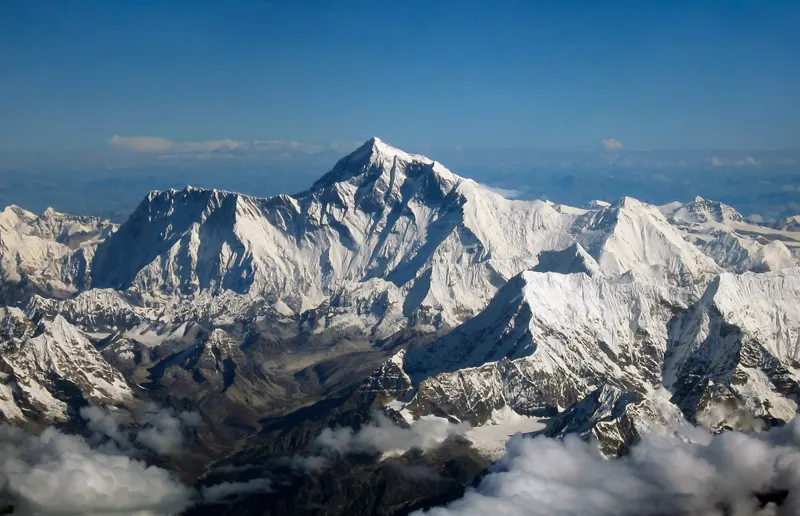 Himalayas
Overview and Key Facts of the Himalayas
Location: South Asia, stretching from Pakistan to Bhutan and China
Length: About 2,400 km
Highest Point: Mount Everest (8,848.86 m)
Countries: Nepal, India, Bhutan, China, and Pakistan
Major Peaks: Mount Everest, Kangchenjunga, Lhotse, Makalu, and Dhaulagiri
Major Rivers: Ganges, Brahmaputra, Indus, and Sutlej
Climate: From subtropical foothills to extreme alpine conditions
Biodiversity: Home to snow leopards, red pandas, and diverse wildlife
What Does the Himalayas Mean?
The name Himalayas comes from the Sanskrit words hima, meaning “snow,” and alaya, meaning “abode” or “dwelling.” Thus, the “Himalayas” means “Abode of Snow,” reflecting the range’s snow-covered peaks and glaciers.
How Did the Himalayas Form?
The Himalayas formed millions of years ago when the Indian Plate collided with the Eurasian Plate, pushing the Earth’s crust upward and creating the world’s highest mountain range. Today, this continuous geological movement spans a 1,500-mile arc across five countries: India, Nepal, Bhutan, China, and Pakistan. Topographically, the range is divided into three distinct parallel zones: the low-lying Outer Sub-Himalayas (Siwalik Hills), the mid-elevation Lesser Himalayas, and the towering Greater Himalayas, which house the highest peaks on Earth.
What Is the History of the Himalayas?
The Himalayas have long connected South and Central Asia through important trade and pilgrimage routes. The Tea Horse Road, often linked with the broader Silk Road network, connected Tibet, Yunnan, Sichuan, and neighboring regions through the exchange of tea, horses, salt, and other goods. Several Silk Road branches also passed through the Himalayan region, linking Tibet with India, Nepal, and Central Asia. In the 20th century, explorers and mountaineers began exploring the Himalayas, leading to the first confirmed ascent of Mount Everest by Edmund Hillary and Tenzing Norgay in 1953.
What Peaks Are in the Himalayas?
The Himalayas are home to many of the world’s highest mountains, including Mount Everest, the highest peak on Earth. The range contains eight of the 14 global 8,000-meter peaks, attracting mountaineers and trekkers from across the globe.
Mount Everest: The Highest Peak in the Himalayas
Mount Everest is the highest mountain in the Himalayas and the world, rising to 8,848.86 meters (29,031.7 feet) above sea level. Located on the Nepal–China border, it is the most famous peak in the Himalayan range.
The Eight 8,000-Meter Peaks in the Himalayas
The Himalayas are home to eight of the world’s 14 eight-thousanders, each rising above 8,000 meters:
| Peak | Elevation | Location |
|---|---|---|
| Mount Everest | 8,848.86 m | Nepal–China |
| Kangchenjunga | 8,586 m | Nepal–India |
| Lhotse | 8,516 m | Nepal–China |
| Makalu | 8,485 m | Nepal–China |
| Cho Oyu | 8,188 m | Nepal–China |
| Dhaulagiri | 8,167 m | Nepal |
| Manaslu | 8,163 m | Nepal |
| Shishapangma | 8,027 m | China |
| Peak | Elevation | Location |
|---|---|---|
| Mount Everest | 8,848.86 m | Nepal–China |
| Kangchenjunga | 8,586 m | Nepal–India |
| Lhotse | 8,516 m | Nepal–China |
| Makalu | 8,485 m | Nepal–China |
| Cho Oyu | 8,188 m | Nepal–China |
| Dhaulagiri | 8,167 m | Nepal |
| Manaslu | 8,163 m | Nepal |
| Shishapangma | 8,027 m | China |
What Rivers and Glaciers Are Found in the Himalayas?
The Himalayas are a major source of water for Asia, with glaciers, snowfields, and rivers supporting millions of people. The region is also known as the “Third Pole” because it contains one of the largest reserves of snow and ice outside the Arctic and Antarctic.
1) Major Himalayan Rivers
Several major Asian rivers originate in or around the Himalayan region, including the Ganges, Brahmaputra, and Indus. These rivers provide water for agriculture, ecosystems, cities, and communities across South Asia.
2) Major Glaciers in the Himalayas
The Himalayan glaciers store freshwater as snow and ice and release meltwater into major river systems. Notable glaciers include the Gangotri Glacier, Siachen Glacier, Rongbuk Glacier, and Khumbu Glacier.
3) Why Are the Himalayas Called the “Third Pole”?
The Himalayas are called the “Third Pole” because of their vast reserves of glaciers and snow. Their frozen water resources are essential to the region’s rivers, ecosystems, and millions of people downstream.
What Is the Climate in the Himalayan Mountains?
The Himalayan climate varies greatly with altitude, season, and location, from warm foothills to cold alpine zones. In the low valleys, summer temperatures can reach 25°C to 30°C, while high-altitude areas can fall below -30°C on winter nights. Rainfall is strongly influenced by the South Asian monsoon, which mainly occurs from June to September. The southern slopes can receive over 2,000 mm of rain, while northern areas such as Ladakh and Tibet are much drier.
For a more comfortable Himalayan tour, choosing the right travel season is important. The best time to visit Tibet is from April to October, while the best time to visit Nepal is from February to April and October to November. For Bhutan, the ideal travel season is October to December, when the weather is generally clear and pleasant.
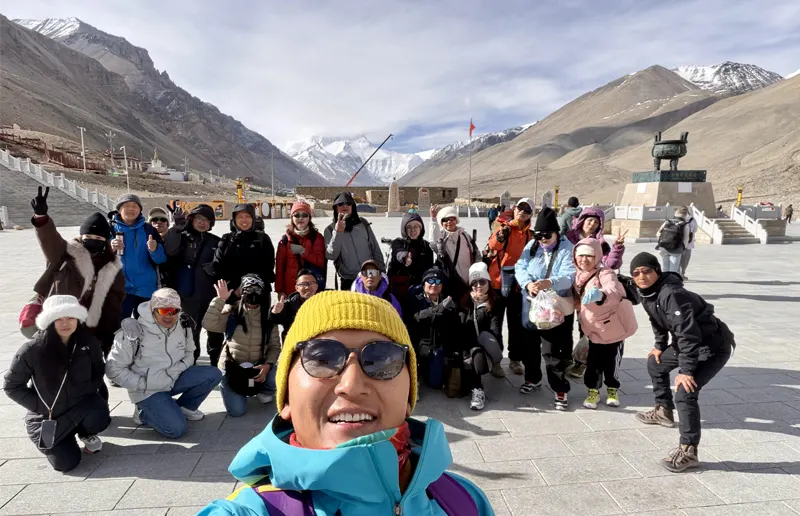 Mount Everest Tour
What Are the Religions and Cultures of the Himalayas?
The Himalayas are not just a vast mountain range but also home to diverse religions, ethnic groups, and cultural traditions. Tibetan Buddhism, Hinduism, and Bon have shaped the spiritual life, architecture, festivals, and traditions of Himalayan communities for centuries. These diverse spiritual traditions and ancient mountain cultures continue to influence life across the Himalayas.
Himalayan Religion: Spiritual Traditions of the High Peaks
Religion plays an important role in Himalayan culture and daily life, shaping community traditions and attitudes toward the natural environment. Tibetan Buddhism is prominent in Tibet, Bhutan, Ladakh, and Nepal, while Hinduism is widely practiced in the Himalayan regions of India and Nepal. Bon, an ancient Tibetan tradition, also influences local rituals and beliefs. Monasteries, pilgrimage sites, prayer flags, stupas, and kora remain important parts of religious life and Himalayan culture.
Himalayan Culture and Traditions: Life Above the Clouds
The culture of the Himalayas reflects the diversity of Tibetan, Nepali, Bhutanese, Indian, and other local communities. Groups such as the Sherpa, Tibetan, Tamang, and Gurung peoples have adapted to high-altitude life while preserving their traditions. Tibetan culture has a strong influence across the northern Himalayas, while Sherpa culture is closely linked to the mountain communities of Nepal.
Himalayan traditions are expressed through festivals, clothing, food, music, and art. Celebrations such as Losar (Tibetan New Year), Dashain, and Cham dances mark important religious and cultural events, while foods such as tsampa and butter tea reflect high-altitude life. Handicrafts, thangka paintings, traditional music, and mountaineering traditions further enrich the cultural heritage of the Himalayas.
What Wildlife Is in the Himalayas?
The Himalayas have diverse ecosystems due to their extreme elevation changes. These habitats support a wide range of rare high-altitude wildlife. Subtropical forests in the foothills are home to the red panda, Himalayan black bear, and Himalayan monal. Alpine areas above the treeline support Himalayan tahr, musk deer, and blue sheep. Mount Everest wildlife includes elusive snow leopards, wild and domesticated yaks, and high-altitude birds such as the yellow-billed chough and golden eagle.
FAQs about Facts of the Himalayas
1) How old are the Himalayas?
The Himalayas are about 40–50 million years old. They began forming when the Indian Plate collided with the
Eurasian Plate, causing the Earth’s crust to rise and creating the mountain range.
2) Which country does the Himalayan mountain range belong to?
The Himalayan mountain range does not belong to a single country. It stretches across China, Nepal, India,
Bhutan, and Pakistan, forming a vast natural boundary across South Asia.
3) What is unique about the Himalayan Mountains?
The Himalayan Mountains are unique for their extreme height, young geological age, vast glaciers, and rich
biodiversity. They contain Mount Everest and seven other 8,000-meter peaks and are also an important source of
water for major Asian rivers. Additionally, the region is known as Earth's "Third Pole," containing the largest
ice reserves outside the Arctic and Antarctic.
4) Do Yetis exist in the Himalayas?
The Yeti is a legendary creature associated with the Himalayas. Stories of the Yeti are deeply rooted in local
folklore. However, there is no scientific evidence that the mythical Yeti exists as a real animal.
Conclusion
The Himalayas are a remarkable combination of dramatic landscapes, diverse ecosystems, and living cultural traditions. Their immense scale and global importance continue to shape Asia’s environment, support local communities, and inspire travelers and explorers. As both a geological wonder and a cultural treasure, the Himalayas remain a vital part of Asia’s natural and cultural heritage. If you have any questions about traveling to the Himalayas, please feel free to contact us. We are happy to provide professional travel advice and services to help you plan your journey, especially a Tibet tour.
2 years exp.| 5.0
 | Reviews
Tell me about your travel plan or contact me via inquiry@tibettourism.com
Related Tibet Travel Guide and Advice
Most Popular Tibet Tour Packages
-
![Lhasa Everest Base Camp Kathmandu Overland Small Group Tour]() Small Group Tour
Small Group Tour7 Days Lhasa Everest Base Camp Kathmandu Overland Small Group Tour
Promo: Classic overland travel route from Lhasa to Kathmandu via Gyirong / Nyalam
Dates & Price
![rili]()
![xiala]()
-
![Lhasa Shigatse Mount Everest Small Group Tour]() Small Group Tour
Small Group Tour8 Days Lhasa Shigatse Mount Everest Small Group Tour
Promo: Once-in-a-lifetime chance to face the tallest mountain in the world
Dates & Price
![rili]()
![xiala]()
-
![Kathmandu to Lhasa Overland Small Group Tour with EBC]() Small Group Tour
Small Group Tour8 Days Kathmandu to Lhasa Overland Small Group Tour with EBC
Promo: Drive Across Himalaya Overland Tour with altitude rising slowly
Dates & Price
![rili]()
![xiala]()


.webp)


Please share your contact information, so we can send you the answer directly by email.

