
 inquiry@tibettourism.com


.webp)


Mount Everest Wildlife Guide: Animals & Birds You Can See


.webp) Content
ContentMount Everest is home to diverse Himalayan wildlife, despite its harsh climate and extreme altitude. More than 50 mammal species and over 200 bird species thrive on the Roof of the World. When you travel overland from Lhasa to Everest Base Camp in Tibet, keep an eye out for some of the iconic Mount Everest wildlife. With a little luck, you may spot Himalayan marmots, blue sheep, Tibetan gazelles, foxes, yellow-billed choughs, and other highland creatures along the way. This guide introduces the wildlife on Mt. Everest, where to look for animals, and what you can expect to see during your Tibet Everest adventure.
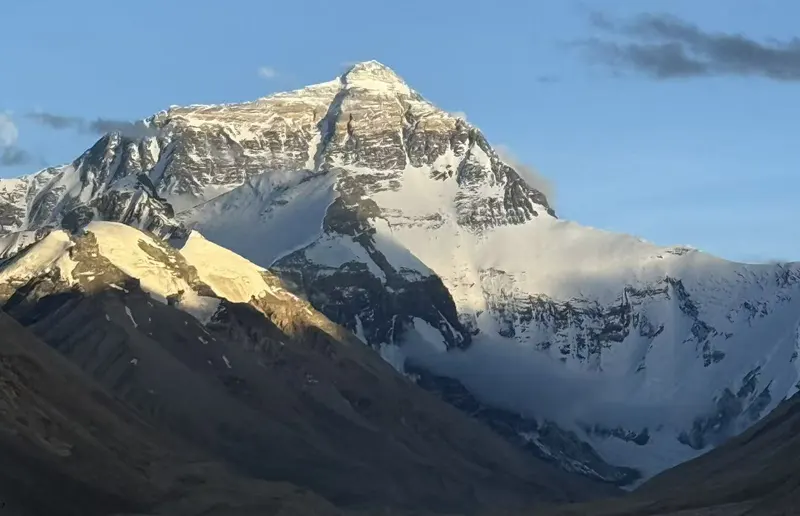 Mount Everest
Blue Sheep: The Cliff-Dwellers of the High Himalayas
Blue sheep, also known as bharal, are among the most recognizable animals in Mount Everest's wildlife. They are well adapted to the rocky slopes and high-altitude terrain around Mount Everest in Tibet.
What Does a Blue Sheep Look Like?
The blue sheep is a sturdy, medium-sized wild ungulate. It has a short, dense coat that ranges from slate gray to brown. The coat has a subtle bluish sheen that helps it blend into the rocky Himalayan scree. Both males and females have distinctive backward-curving horns. Males have larger and smoother horns that curve outward and backward. Dark stripes also appear along their chest, legs, and sides.
Where Can You See the Blue Sheep?
Blue sheep live on steep mountain slopes, rocky valleys, and open grasslands across the Everest region. During a Tibet Everest Base Camp tour, you may spot them from the roadside or along less crowded mountain areas. They are agile climbers and can move quickly across steep terrain.
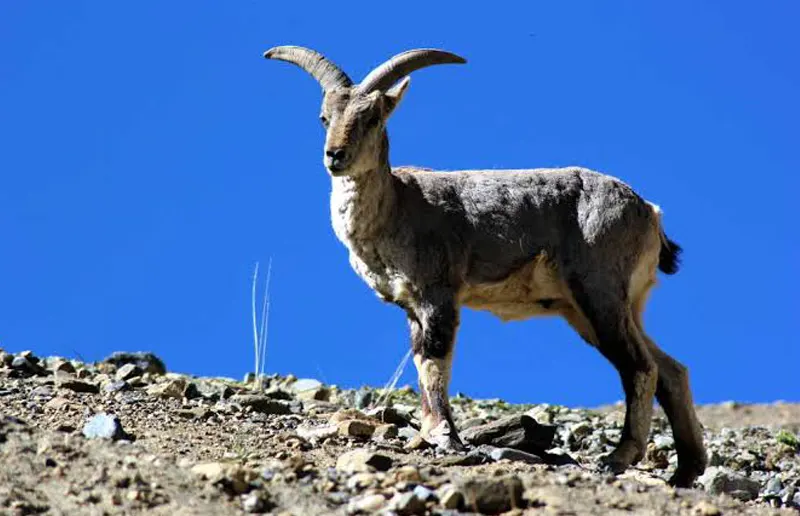 Blue Sheep
Tibetan Wild Ass: A Fast Runner of the Everest Region
The Tibetan Wild Ass, also called Kiang, is one of the notable animals in the Mount Everest region's wildlife. It's renowned for its incredible endurance and graceful speed across the high-altitude Himalayan plains.
What Does a Tibetan Wild Ass Look Like?
The Tibetan Wild Ass has a strong body, long legs, and a short upright mane. Its coat is usually reddish-brown or sandy brown on the upper body. The belly and lower legs are lighter in color. A dark stripe runs along its back. Its large ears and long legs help it survive in the harsh Everest region.
Where Can You See the Tibetan Wild Ass?
Tibetan Wild Ass mainly lives in open grasslands, valleys, and high-altitude plains. Around Mount Everest in Tibet, they are more likely to appear in remote areas away from busy tourist sites. Keep your distance and use binoculars if you spot a herd during your Everest Base Camp tour.
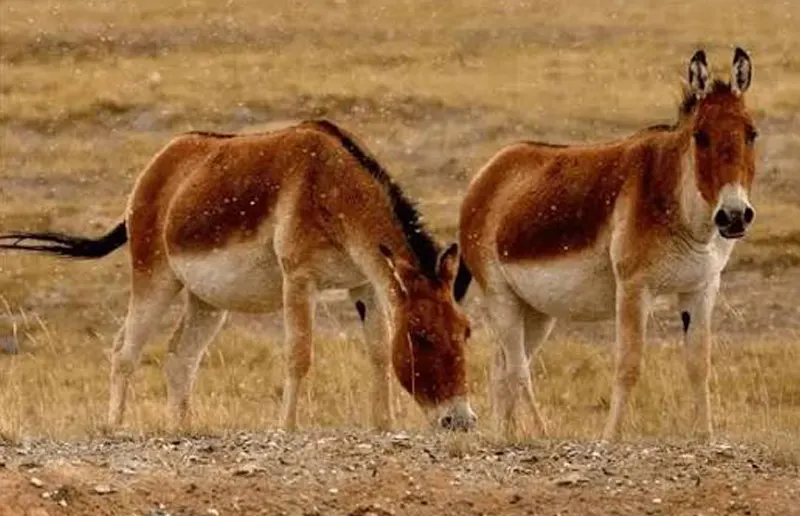 Tibetan Wild Ass
Tibetan Gazelle: The Agile Antelope of the Alpine Steppe
The Tibetan Gazelle is a slender wild ungulate that lives in the high-altitude grasslands of Tibet. It is a notable part of the Mount Everest wildlife and is well adapted to the cold, dry environment.
What Does a Tibetan Gazelle Look Like?
The Tibetan Gazelle has a slim body, long legs, and a light brown or sandy coat. Males have slender, slightly curved horns. Its white belly and rump create a clear contrast with its darker upper body.
Where Can You See the Tibetan Gazelle?
They inhabit open high-altitude plains, dry alpine steppes, and alpine valleys between 3,000 and 5,750 meters across the Tibetan Plateau. In the Everest region, they are more likely to be seen in quiet areas away from busy tourist routes. You may spot them during a Tibet Everest Base Camp tour, but sightings are not guaranteed.
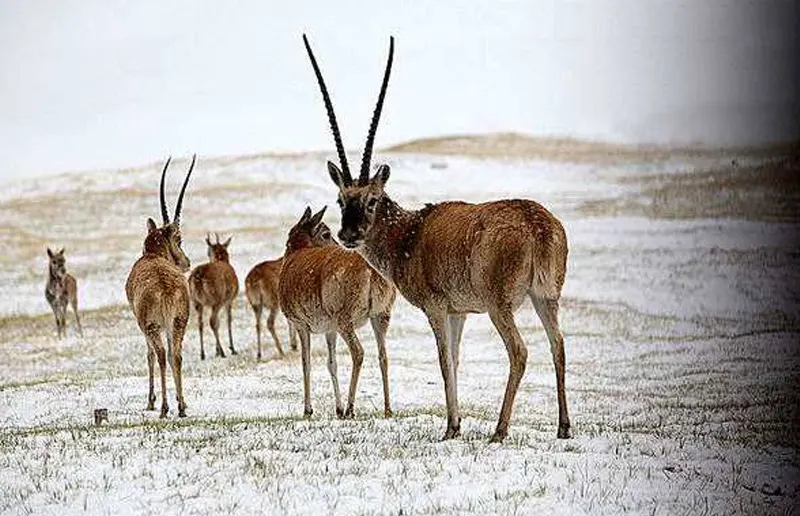 Tibetan Gazelle
Snow Leopard: The Phantom Predator of the Himalayas
The Snow Leopard is one of the most elusive animals in the Mount Everest region. It is well adapted to the cold, rugged terrain of the high Himalayas and is rarely seen by visitors.
What Does a Snow Leopard Look Like?
The Snow Leopard has a thick, pale gray coat with dark rosettes and spots. Its large paws help it walk across snow and rough terrain. Its long, thick tail helps it balance on rocky slopes and stay warm.
Where Can You See the Snow Leopard?
Snow Leopards live in remote rocky mountains and high-altitude valleys around the Everest region. They are extremely difficult to spot near Everest Base Camp because they are shy and mainly active at dawn, dusk, or night. You may occasionally find signs of their presence, but seeing one during a Tibet Everest Base Camp tour is very unlikely.
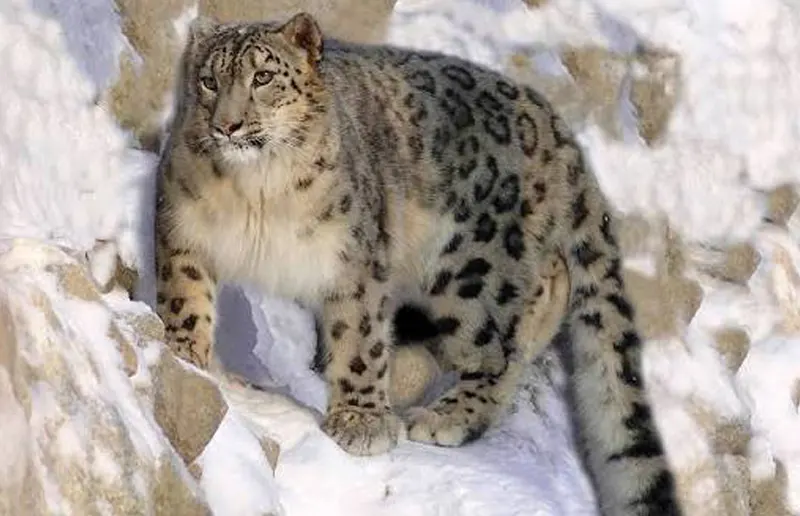 Snow Leopard
Tibetan Fox: The Square-Faced Hunter of the High Plateau
The Tibetan Fox is a distinctive predator found across the high-altitude areas of Tibet. It is an interesting part of Mount Everest wildlife and can survive in the cold, dry environment of the Everest region.
What Does a Tibetan Fox Look Like?
The Tibetan Fox has a compact body, short legs, and a thick coat. Its fur is usually grayish or reddish-brown, with a pale underside. Its square-shaped face and small, triangular ears give it a distinctive appearance.
Where Can You See the Tibetan Fox?
Tibetan Foxes prefer open grasslands, valleys, and rocky areas. Around Mount Everest in Tibet, they are more likely to appear in remote areas away from busy tourist routes. You may occasionally see one hunting pikas during a Tibet Everest Base Camp tour.
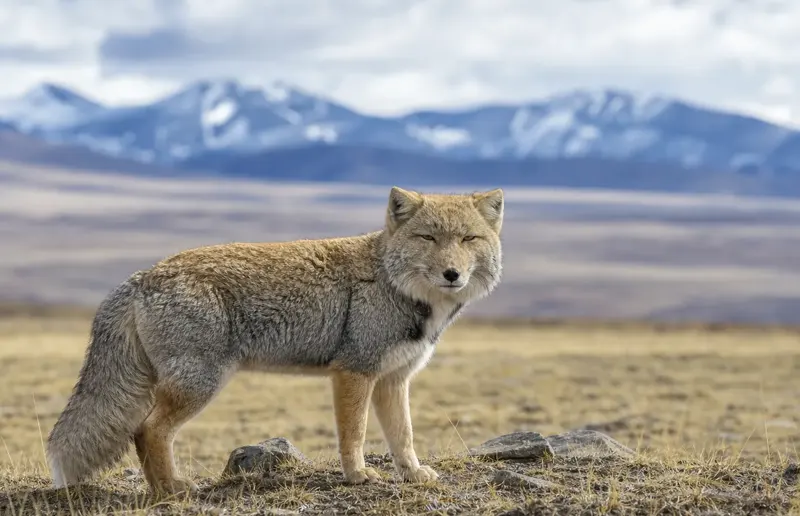 Tibetan Fox
Himalayan Brown Bears: Rare Wildlife of the Everest Region
Himalayan Brown Bears are a rare and elusive part of Mount Everest wildlife. They live in remote, high-altitude areas and are well adapted to the cold conditions of the Himalayas.
What Does a Himalayan Brown Bear Look Like?
The Himalayan Brown Bear has a large, powerful body and thick brown fur. Its coat can range from light brown to dark brown. It also has a rounded head, small ears, and strong limbs that help it move across rugged mountain terrain.
Where Can You See the Himalayan Brown Bear?
Himalayan Brown Bears inhabit remote mountain valleys, alpine meadows, and rocky slopes. In the Everest region, they are rarely seen near popular tourist sites such as Everest Base Camp. You may find signs of their presence in less-visited areas.
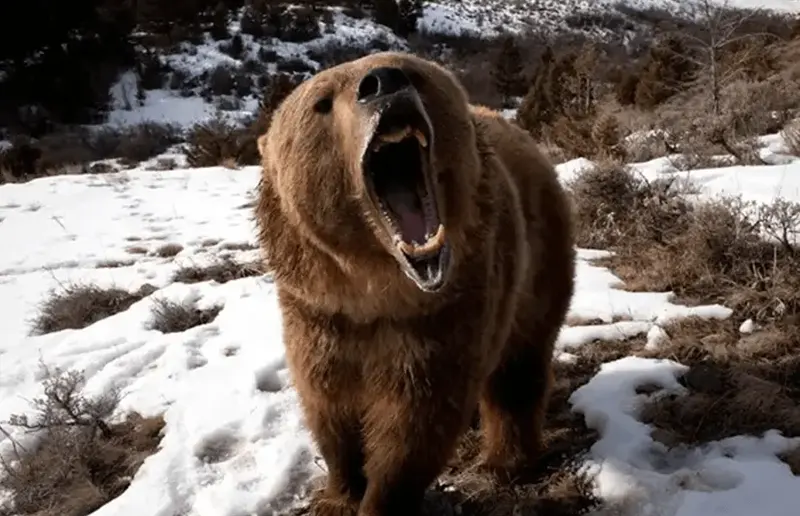 Himalayan Brown Bears
Yellow-Billed Chough: The High-Altitude Acrobat of the Everest Trail
The Yellow-Billed Chough is a familiar high-altitude bird in Mount Everest wildlife. It is well adapted to the cold and windy conditions of the Everest region and can often be seen around mountain settlements and rocky areas.
What Does a Yellow-Billed Chough Look Like?
The Yellow-Billed Chough has glossy black feathers, a bright yellow bill, and red or orange legs. Its slender body and long wings help it fly efficiently in the thin mountain air. Its yellow bill makes it easy to identify.
Where Can You See the Yellow-Billed Chough?
These birds live in rocky valleys, cliffs, alpine meadows, and high-altitude settlements. Around Mount Everest in Tibet, they may be seen near Everest Base Camp, monasteries, and mountain camps. Look for them flying overhead or searching for food on rocky ground during a Tibet Everest Base Camp tour.
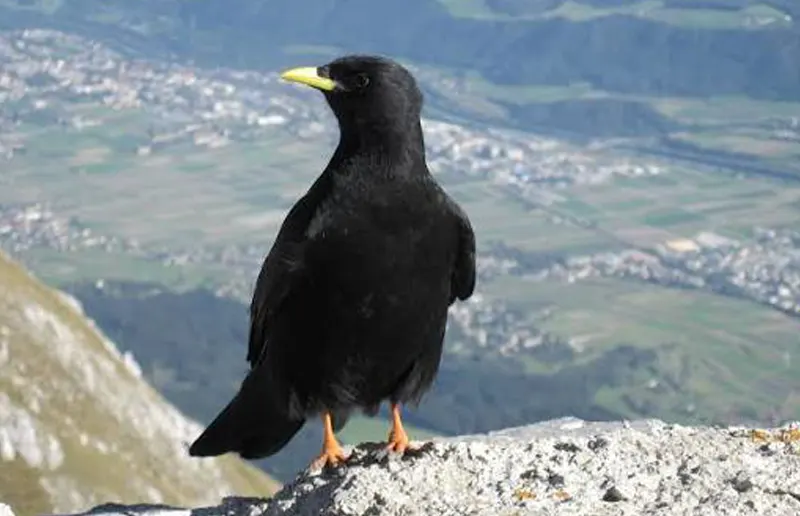 Yellow-Billed Chough
Best Time to Observe Wildlife on Mt. Everest
The best time to observe wildlife on Mt. Everest is from May to October. During these warmer months, animals and birds are more active in the Everest region. Early morning and late afternoon are often good times for wildlife watching. On a Tibet Everest Base Camp tour, keep a safe distance and bring binoculars for better views of Mount Everest wildlife.
Essential Mount Everest Wildlife Spotting Tips & Ethics
Successful wildlife spotting requires proper equipment and ethical trekking habits along the Everest trail. Bring binoculars or a telephoto lens for better views from a safe distance. Always wear quiet trekking gear in muted colors to blend into the alpine environment. Most importantly, follow responsible trekking practices in the Everest region. Don't feed or approach wildlife, and follow local wildlife protection regulations. These simple steps help protect Everest wildlife and preserve the natural environment for future travelers.
FAQs about Mount Everest Wildlife
What kinds of birds can be seen around Mount Everest?
The Mount Everest region is home to several high-altitude birds. You may see Yellow-Billed Choughs, Himalayan
Griffons, Bearded Vultures, Golden Eagles, and Snow Pigeons. These birds often fly over rocky slopes, valleys,
and mountain camps. Some species may also appear near Everest Base Camp.
Where are the best places to observe wildlife near Mount Everest?
The best places for Mount Everest wildlife are open valleys, alpine meadows, rocky slopes, and quieter areas away
from busy tourist sites. The areas around Everest Base Camp, Rongbuk Valley, and remote sections of the Everest
region may offer wildlife sightings. Bring binoculars and keep a safe distance from animals.
Conclusion
Mount Everest wildlife reflects the unique beauty of the high Himalayas. From blue sheep and Tibetan wild asses to Tibetan foxes and high-altitude birds, the Everest region offers a chance to discover diverse wildlife. During your Tibet Everest Base Camp tour, observe animals responsibly, keep a safe distance, and enjoy the natural wonders of Mount Everest.
2 years exp.| 5.0
 | Reviews
Tell me about your travel plan or contact me via inquiry@tibettourism.com
Tibet Shigatse Travel Guide and Advice


Most Popular Tibet Tour Packages
-
![Lhasa Everest Base Camp Kathmandu Overland Small Group Tour]() Small Group Tour
Small Group Tour7 Days Lhasa Everest Base Camp Kathmandu Overland Small Group Tour
Promo: Classic overland travel route from Lhasa to Kathmandu via Gyirong / Nyalam
Dates & Price
![rili]()
![xiala]()
-
![Lhasa Shigatse Mount Everest Small Group Tour]() Small Group Tour
Small Group Tour8 Days Lhasa Shigatse Mount Everest Small Group Tour
Promo: Once-in-a-lifetime chance to face the tallest mountain in the world
Dates & Price
![rili]()
![xiala]()
-
![Kathmandu to Lhasa Overland Small Group Tour with EBC]() Small Group Tour
Small Group Tour8 Days Kathmandu to Lhasa Overland Small Group Tour with EBC
Promo: Drive Across Himalaya Overland Tour with altitude rising slowly
Dates & Price
![rili]()
![xiala]()



.webp)


Please share your contact information, so we can send you the answer directly by email.

