
 inquiry@tibettourism.com


.webp)


Everest Base Camp Food Guide: What to Eat on a Tibet EBC Tour (2026)


.webp) Content
ContentAre you planning a Tibet Everest tour and wondering what you'll eat along the way? In fact, dining on an EBC tour is much more comfortable and varied than you expect. From authentic Tibetan specialties and flavorful Chinese dishes to simple Western-style meals, you'll find plenty of options throughout the journey from Lhasa to Everest Base Camp.
While the food choices become more limited as you ascend, you can still enjoy hot, freshly prepared meals, warm drinks, and convenient snacks. Whether you're a vegetarian, have special dietary requirements, or want to know what to expect before your departure, this complete Everest Base Camp food guide will provide details. We'll introduce the meals available at each stop along the EBC route, recommend Tibetan dishes, and help you discover delicious food to savor during your EBC tour.
Food at Everest Base Camp: Dining at the Tent House Restaurant Is Most Popular
When you arrive at Everest Base Camp, you'll find that the Tent House Restaurant is the most popular place to enjoy a hot meal. These traditional Tibetan-style tent restaurants operate during the peak travel season, providing a warm and welcoming place for travelers to rest and eat.
Although the menu is simpler than what you'll find in Lhasa or Shigatse, the Tent House Restaurant offers a satisfying selection of prepared meals. Popular choices include fried rice, fried noodles, soup noodles, vegetable dishes, yak meat, and egg dishes. Hot drinks such as butter tea, sweet tea, instant coffee, and hot water are also available, so you can stay warm at over 5,000 meters.
For travelers with special dietary requirements, vegetarian meals can also be made with fresh vegetables, eggs, tofu, and rice. If you have specific dietary restrictions, it's best to inform your guide in advance so the restaurant can make appropriate arrangements whenever possible.
Beyond the food itself, dining in a Tent House Restaurant is a memorable part of your Tibet tour experience. Sitting around a warm stove with fellow travelers while enjoying a cooked meal creates a cozy atmosphere that contrasts beautifully with the dramatic Himalayan landscape outside. As night falls and temperatures drop, there becomes a comfortable gathering place where you can relax and chat.
Since supplies must be transported from other towns, food prices at Everest Base Camp are generally higher than in Lhasa or Shigatse. Furthermore, during the winter months, some Tent House Restaurants may close due to harsh weather.
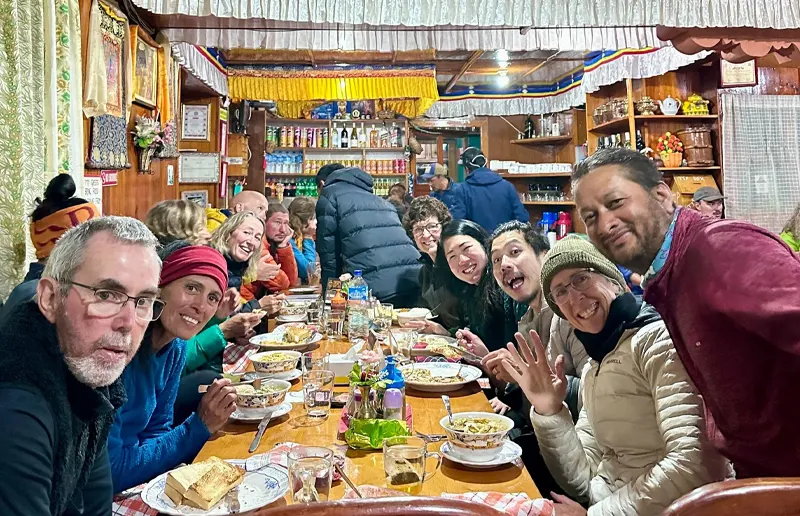 EBC Tent House Restaurant
Restaurant at Rongbuk Hotel Near EBC Is Also Available
Besides the Tent House Restaurant, you can also dine at the Rongbuk Hotel Restaurant. You'll find basic Tibetan and Chinese dishes such as noodles, fried rice, stir-fries, eggs, and steamed buns. The menu prioritizes convenience over variety, and most dishes are served quickly. Besides, there is a shop selling instant food, canned food, etc.
This restaurant is just steps away from the world's highest monastery and only a few kilometers from the main viewpoints for Mount Everest. Furthermore, after the Everest Tent Guesthouses close in winter, Rongbuk Hotel will become the primary accommodation.
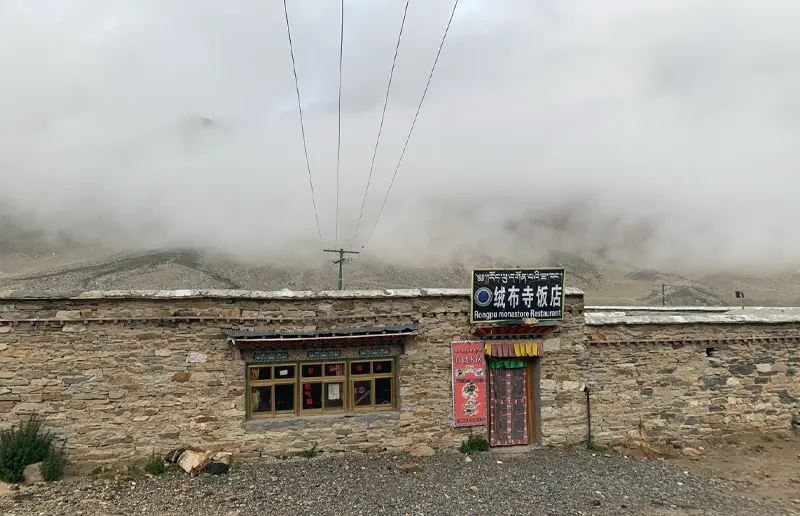 Rongbuk Hotel Restaurant
Where Can I Eat on the Way from Lhasa to Everest Base Camp?
You will experience an unforgettable overland trip from Lhasa to Everest Base Camp. The route will pass through several towns, so you will not be starved for choices.
Dining in Lhasa - The Best Variety and Comfort
Your journey usually begins in Lhasa, where food options are the most diverse and comfortable. Here you can find everything from authentic Tibetan cuisine to Chinese dishes and some Western-style meals. Many travelers take this opportunity to enjoy well-balanced meals before heading into higher altitudes.
Popular options include Tibetan noodles, momos, yak meat dishes, hotpot, fried rice, and bakery-style breakfasts. Lhasa is also the best place to stock up on snacks, energy bars, and any special dietary items you may need for the trip ahead.
Stopover Meals in Gyantse and Shigatse
As you travel west from Lhasa, you will pass through Gyantse and Shigatse, where the meals become limited. These towns offer simple but fresh local restaurants, usually serving Tibetan and Chinese-style food.
Common dishes include fried noodles, stir-fries, rice sets, and soups. Shigatse, the second-largest city, offers slightly more variety and more consistent food quality compared to smaller towns along the route.
The Gateway to Everest: Tingri and Tashi Dzom
Once you cross the high mountain passes and enter the Everest Nature Reserve, the environment becomes rugged, but the food remains accessible.
Tingri County: If your itinerary has you overnight here before hitting base camp, the local hotels (like the Everest Shanghai Hotel) feature large, fully equipped restaurants. The town also boasts several Muslim noodle shops and traditional Tibetan eateries.
Tashi Dzom Township: Located inside the scenic area, most travelers will stop there for lunch before the final stretch to EBC. The small village restaurants here serve up highly authentic Tibetan comfort food, such as Momos and yak meat dumplings.
5 Golden Rules for Eating Safely on a Tibet EBC Tour
Eating well on an Everest tour is not only about enjoying local food, but it’s also about staying healthy at high altitude, where your body reacts differently to digestion, hydration, and fatigue. Following a few simple rules can make your journey much more comfortable and safe.
Rule 1: Eat Light in the First Few Days in Lhasa and Don't Overeat
When you first arrive in Lhasa, your body is still adjusting. Greasy or overly rich meals can make altitude symptoms worse. Stick to simple foods like rice, noodles, and steamed dishes during the first 1-2 days, which helps you adapt gradually and reduces the risk of discomfort.
Additionally, the digestive system slows significantly at high altitudes, making small, frequent meals the best choice.
Rule 2: Stay Hydrated at All Times
High altitude increases fluid loss through breathing, so dehydration happens faster than you expect. Drink water regularly throughout the day, even if you don’t feel thirsty.
Warm drinks like butter tea, hot water, or soup are especially helpful because they support both hydration and body temperature in cold conditions.
Rule 3: Avoid Alcohol and Limit Caffeine
Alcohol is strongly discouraged during your Tibet tour because it can worsen altitude sickness and dehydrate your body. It also interferes with sleep quality, which is already sensitive at high elevation.
Caffeine in small amounts is generally fine, but excessive caffeine can also disrupt your sleep and elevate your heart rate. It is recommended to drink pure water or sweet teas instead.
Rule 4: Listen to Your Guide’s Restaurant Recommendations
Your guide knows the route inside and out, knows which roadside teahouses maintain the highest hygiene standards and have the freshest ingredients. Trusting their choices is also a good way to avoid stomach issues and keep health on the road.
Rule 5: Bring Your Own Food if Necessary
Although the EBC tour offers basic meal options along the route, bringing your own food can be a smart, practical backup strategy.
Energy bars, chocolate, nuts, dried fruits, biscuits, and instant noodles - these foods are lightweight, easy to carry, and provide quick calories when you need them most. Another advantage of carrying your own food is that if you’re not feeling well at altitude or don’t like the local meals, having familiar snacks can make you feel better. However, bringing food is not a replacement for local meals, but rather a backup support option.
FAQs about Food on Everest Tour
Can vegetarians and vegans survive the Tibet EBC tour?
Yes. While traditional Tibetan cuisine relies heavily on meat, the massive influence of Sichuan cuisine on Tibet means vegetable dishes are common. You can easily find egg fried rice (Dan Chaofan), tomato and scrambled eggs, stir-fried shredded potatoes, and vegetable Momos at almost every stop, including the EBC tent houses.
Is food expensive at Everest Base Camp?
Prices are higher than in Lhasa or Shigatse because of its extreme logistics. A simple meal at EBC will cost roughly double what it does in Lhasa. Expect to pay around 50-100 RMB ($7-$15) for a basic noodle or rice dish.
Can I get Western food at Tibet EBC?
Yes, but only in a very limited and simplified form. You will not find steaks or burgers here; they only serve simple Western breakfast items like pancakes, omelets, toast with jam, and instant coffee or hot chocolate.
Can I get altitude sickness from what I eat?
Food itself does not cause altitude sickness, but how and what you eat can influence it. Eating greasy, heavy, or overly large meals can trigger or worsen symptoms like nausea, headaches, and bloating, which can lead to altitude sickness.
Conclusion
Despite some limitations, dining at Everest Base Camp still offers a unique experience. The towns along the route from Lhasa to EBC offer a variety of dining options, from Tibetan cuisine to Chinese food and basic Western meals, catering to most travelers' needs. Enjoying the food on your journey can also give you a glimpse into another side of Tibetan culture. If you have any further questions about your Everest trip or about the food and accommodation, feel free to contact Tibet Horizon.
5 years exp.| 5.0
 | Reviews
Tell me about your travel plan or contact me via inquiry@tibettourism.com
Tibet Everest Travel Guide and Advice
Most Popular Tibet Everest Tour Packages
-
![8 Days Lhasa Yamdrok Mount Everest Base Camp Join-in Group Tour]() Real Join-in Group Tour
Real Join-in Group Tour8 Days Lhasa Yamdrok Mount Everest Base Camp Join-in Group Tour
Promo: Comprehensive Trip to Discover Tibet’s Magic
Dates & Price (More Traveler, Lower Price)
![rili]()
![xiala]()
-
![9 Days Lhasa Mount Everest Base Camp Namtso Join-in Group Tour]() Real Join-in Group Tour
Real Join-in Group Tour9 Days Lhasa Mount Everest Base Camp Namtso Join-in Group Tour
Promo: Classic trails to discover natural and cultural splendors of Tibet
Dates & Price (More Traveler, Lower Price)
![rili]()
![xiala]()


Please share your contact information, so we can send you the answer directly by email.

