
 inquiry@tibettourism.com











Lake Mansarovar vs. Rakshastal: Differences, Legends & Facts


 Content
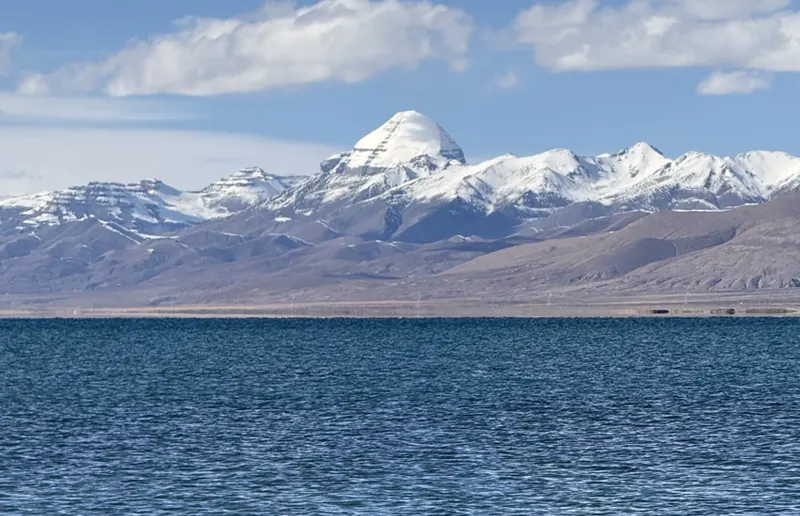
Near the sacred Mount Kailash in western Tibet lie two neighboring lakes: Lake Mansarovar and Lake Rakshastal. Separated by a narrow strip of land, they offer stunning views of the surrounding snow-capped mountains. What is the difference between Lake Mansarovar and Lake Rakshastal? This guide compares their geography, water characteristics, religious significance, and local legends. It also covers the best time to visit and practical tips for exploring both lakes on a Mount Kailash tour.
 Mount Kailash Tour
Lake Mansarovar vs. Rakshastal: 7 Key Differences at a Glance
Although the two lakes are close to each other, they differ in water composition, shape, wildlife, and religious significance. The table below highlights their main differences.
| Comparison | Lake Mansarovar | Lake Rakshastal |
|---|---|---|
| Location | Near Mount Kailash | Near Mount Kailash |
| Elevation | About 4,590 m | About 4,575 m |
| Water Type | Freshwater | Saline water |
| Shape | Nearly circular | Crescent-shaped |
| Water Color | Blue and turquoise | Deep blue, sometimes appearing darker |
| Wildlife | Supports aquatic life and waterbirds | More limited aquatic ecosystem |
| Religious Significance | Sacred in Hinduism, Buddhism, Jainism, and Bon | Associated with Ravana in Hindu mythology |
7 Key Differences Between Lake Mansarovar and Rakshastal
From water composition and shape to religious traditions and local legends, the two lakes have several distinctive features. Here are seven key differences.
1) Water Type: Freshwater vs. Saline Water
Lake Mansarovar is a freshwater lake fed by precipitation, snowmelt, and nearby streams. In contrast, Lake Rakshastal is a saline lake with a higher concentration of dissolved salts. Its water is not suitable for drinking.
2) Shape and Appearance: Round vs. Crescent-Shaped
Lake Mansarovar is almost circular, while Lake Rakshastal has a distinctive crescent shape. In traditional symbolism, the rounded shape of Mansarovar is associated with the sun, purity, and life, while Rakshastal's crescent shape is linked to darkness and negative forces. Their contrasting shapes also make them interesting subjects for aerial photography.
3) Wildlife and Ecosystem: Aquatic Life and Birds
The lakes support different ecosystems because of their contrasting water conditions. Lake Mansarovar supports aquatic life and attracts waterbirds, including black-necked cranes and migratory brown-headed gulls. Rakshastal's high salinity limits aquatic life, making its ecosystem less diverse. Despite its reputation as a lifeless lake in local legends, Rakshastal is not necessarily devoid of life.
4) Religious Significance: Sacred Lake vs. Ghost Lake
Lake Mansarovar is sacred in Hinduism, Buddhism, Jainism, and Bon. Hindus associate it with Brahma and Shiva, while Buddhists regard it as a place of spiritual purification. In contrast, Rakshastal, known as the Ghost Lake, is linked to Ravana, who is said to have performed penance there to please Shiva.
5) Pilgrimage Traditions and Local Customs
At Lake Mansarovar, pilgrims walk around the lake, pray, and take ritual baths as acts of spiritual purification. Some also meditate or perform religious ceremonies along the shore. Lake Rakshastal has no comparable pilgrimage tradition. Visitors usually admire its crescent-shaped shoreline and rugged scenery from accessible viewpoints.
6) Hydrological Connection: The Ganga Chhu Channel
The two lakes are connected by a narrow natural channel called Ganga Chhu. During periods of increased snowmelt, water may flow from Lake Mansarovar into the slightly lower Lake Rakshastal. Local legends interpret this connection as a symbol of harmony between opposing forces. Water levels and flow vary with seasonal conditions.
7) Surrounding Landscapes and Scenic Views
Lake Mansarovar has relatively gentle shores, with views of Chiu Monastery (Chiu Gompa) and the surrounding hills. In contrast, Rakshastal features rugged shores, rocky islands, and reddish-brown terrain. Together, the two lakes showcase the diverse landscapes of western Tibet and make memorable stops on a Mount Kailash tour.
Mythology and Legends: Why Is Lake Mansarovar Sacred and Rakshastal the Ghost Lake?
The different reputations of the two lakes are rooted in Hindu mythology and local legends. Lake Mansarovar is associated with Lord Brahma and Lord Shiva and symbolizes purity and divine creation. In contrast, Rakshastal is linked to Ravana, the demon king of Lanka, and is traditionally considered inauspicious. These stories explain why the neighboring lakes have such contrasting religious reputations.
The Legend of Lord Brahma and the Creation of Lake Mansarovar
According to Hindu mythology, Lake Mansarovar was created by Lord Brahma, the god of creation. Its name comes from the Sanskrit words Manas (mind) and Sarovar (lake), meaning "Lake of the Mind." Legend says Brahma first conceived the lake in his mind before bringing it into existence. This story makes the lake a symbol of purity and divine creation.
Ravana's Penance and the Legend of Lake Rakshastal
According to Hindu mythology, Lake Rakshastal is associated with Ravana, the demon king of Lanka and a devoted follower of Lord Shiva. Legend says Ravana performed intense penance beside the lake to seek Shiva's blessings. He is also believed to have offered his own heads as part of his devotion. This association explains why the lake is traditionally known as the Ghost Lake or Demon Lake and considered inauspicious.
Geographical and Hydrological Facts About Lake Mansarovar and Rakshastal
Located on the Tibetan Plateau, the two lakes have distinctive geographical and hydrological features. Their high altitude, contrasting water compositions, and connection to the wider river systems of the region make them important natural landmarks near Mount Kailash.
1) Location, Elevation and Geographical Features
Lake Mansarovar and Lake Rakshastal are located in Purang County, Ngari Prefecture, in western Tibet, southwest of Mount Kailash. Lake Mansarovar sits at approximately 4,590 meters above sea level, while Rakshastal is slightly lower at around 4,575 meters. Both lakes experience strong sunlight, low temperatures, and significant seasonal changes due to their high-altitude location.
2) Why Is Lake Mansarovar Freshwater While Rakshastal Is Saline?
The different water compositions are mainly due to the lakes' water sources and drainage systems. Lake Mansarovar receives freshwater from precipitation, snowmelt, and nearby streams. Some water can flow through the Ganga Chhu channel toward Rakshastal. In contrast, Rakshastal has more limited drainage. As water evaporates, dissolved salts remain in the lake, gradually increasing its salinity.
3) The Four Great Rivers Originating Around Mount Kailash
The Mount Kailash region is traditionally associated with the sources of four major Asian rivers: the Indus, Sutlej, Brahmaputra (Yarlung Tsangpo), and Karnali, a major tributary of the Ganges. These rivers rise in the wider Trans-Himalayan region and flow in different directions across South and Central Asia. They support communities and ecosystems across the region and add to the geographical and spiritual importance of Mount Kailash.
 Lake Mansarovar Tour
Things to Do at Lake Mansarovar and Rakshastal
A visit to the twin lakes offers opportunities to experience local pilgrimage traditions and enjoy the scenery of western Tibet. You can explore accessible sections of Lake Mansarovar, visit Chiu Monastery, and photograph Rakshastal from scenic viewpoints.
1) What to See and Do at Lake Mansarovar
Lake Mansarovar is a major stop for pilgrims and travelers visiting Mount Kailash. You can walk along accessible sections of the lakeshore, admire the blue water, and enjoy the peaceful surroundings. Popular activities include completing the Mansarovar Kora, visiting Chiu Monastery, and watching the sunrise over the lake.
Mansarovar Kora: Walk around the sacred lake and experience its pilgrimage traditions. The full circuit is
approximately 90 km and usually takes several days on foot.
Chiu Monastery: Visit this small monastery on a rocky hill overlooking Lake Mansarovar for panoramic views.
Lakeside Views and Pilgrimage Experiences: Enjoy the changing colors of the lake and observe pilgrims performing
religious rituals along the shore.
2) What to See and Do at Rakshastal
Lake Rakshastal offers a quieter sightseeing experience with rugged scenery and a remote setting. Stop at accessible roadside viewpoints to photograph its crescent-shaped shoreline, barren hills, and surrounding mountains. Mount Kailash may also be visible on clear days.
Scenic Photography: Capture the crescent-shaped lake, barren hills, and surrounding highland scenery.
Elevated Viewpoints: View the lake's crescent-shaped shoreline from above.
Mountain Views: Look for Mount Kailash and the surrounding peaks from suitable viewpoints on clear days.
Best Time to Visit Lake Mansarovar and Rakshastal
May to October is the main travel season for Lake Mansarovar and Rakshastal. June and September are generally good months to visit, with relatively comfortable temperatures and fewer rainfall disruptions than July and August. May and October are quieter but can be colder. Heavy rainfall in July and August may affect visibility and road conditions.
How to Visit Lake Mansarovar and Rakshastal from Lhasa or Kathmandu
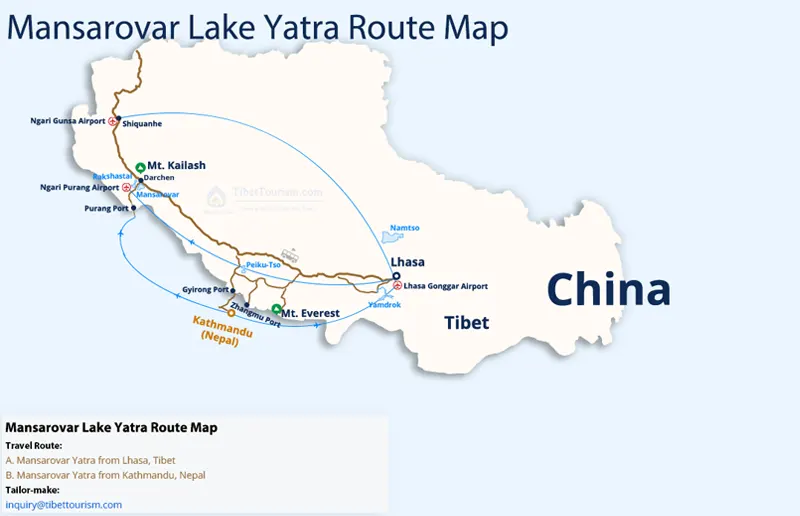
You can reach Lake Mansarovar and Rakshastal from Lhasa or Kathmandu by overland routes. Both journeys offer scenic views of the Tibetan Plateau and the Himalayas. Foreign travelers must arrange the required permits and travel with a licensed local agency, such as Tibet Horizon.
1) Lhasa to Lake Mansarovar and Rakshastal
Traveling from Lhasa is a popular way to reach the twin lakes. The overland route passes through Shigatse, Saga, and Darchen before reaching Lake Mansarovar and Rakshastal. Along the way, you can visit attractions such as the Potala Palace, Yamdrok Lake, and Pelkor Chode Monastery.
Recommended Routes:
12-Day Lhasa Everest Kailash Mansarovar Zhangmu Kathmandu Small Group Tour
15-Day Lhasa EBC to Mount Kailash and Lake Mansarovar Small Group Tour
2) Kathmandu to Lake Mansarovar and Rakshastal via Zhangmu Border
Travelers from Nepal can enter Tibet through the Zhangmu (Kodari) border crossing, subject to current border arrangements. From there, the route continues through Nyalam and Saga to Darchen, followed by visits to Lake Mansarovar and Rakshastal. This route offers dramatic Himalayan scenery and a shorter approach to the lakes than traveling from Lhasa.
Recommended Routes:
10 Days Kathmandu Zhangmu Border Kailash Mansarovar Loop Tour
 Lake Rakshastal Tour
FAQs about Lake Mansarovar and Rakshastal
1) How far is Lake Mansarovar from Rakshastal Lake?
Lake Mansarovar and Rakshastal are approximately 5 km apart at their closest points. They are connected by a
narrow natural channel called Ganga Chhu, making it easy to visit both lakes during the same sightseeing trip.
2) Can I visit the twin lakes during winter?
Yes, but winter travel from November to March can be challenging due to freezing temperatures, snow, icy roads,
and strong winds. Some accommodation and travel services may also be unavailable. May to October is generally a
better time to visit because road access and local services are more reliable.
3) Can I see Mount Kailash from both lakes?
Yes. Mount Kailash may be visible from viewpoints around both lakes on clear days, depending on the weather and
viewing direction. Chiu Monastery is a popular viewpoint overlooking Lake Mansarovar, with distant views of the
mountain.
4) How many days do I need to visit Mount Kailash and the twin lakes?
Most travelers need 10–15 days to visit Mount Kailash, Lake Mansarovar, and Rakshastal from Lhasa. This allows
time for sightseeing, altitude acclimatization, and the three-day Mount Kailash Kora. A shorter private tour may
be possible if you only want to visit the two lakes.
5) Can I visit both lakes in one day?
Yes. The two lakes are close enough to visit on the same day. You can stop at scenic viewpoints around both lakes
and visit Chiu Monastery for panoramic views of Lake Mansarovar.
Conclusion
Lake Mansarovar and Rakshastal offer two contrasting experiences near Mount Kailash. One is known for its freshwater and sacred traditions, while the other is famous for its saline water and mysterious legends. Visiting both lakes allows you to explore the natural beauty and spiritual heritage of western Tibet in one journey.
No documents found.
Tibet Kailash Travel Guide and Advice


Most Popular Tibet Ngari Tour Packages
-
![Lhasa Everest Kailash Mansarovar Zhangmu Kathmandu Small Group Tour]() Small Group Tour
12 Days Lhasa Everest Kailash Mansarovar Zhangmu Kathmandu Small Group Tour
Promo: Uncover the spiritual and natural secrets hidden within Tibet
Dates & Price
![rili]()
![xiala]()
-
![Lhasa to Everest Kailash and Mansarovar Small Group Tour]() Small Group Tour
15 Days Tibet Mount Kailash and Lake Mansarovar Small Group Tour
Promo: Western Tibet tour around Mount Kailash
Dates & Price
![rili]()
![xiala]()
-
![Lhasa Everest Kailash Mansarovar Lhasa Tour with Inner Travel Gateway]() Small Group Tour
16 Days Lhasa Everest Kailash Mansarovar Lhasa Tour with Inner Travel Gateway
Promo: Complete 3-Day Kailash Kora and 1-Day Inner Kora Gateway Excursion
Dates & Price
![rili]()
![xiala]()


Please share your contact information, so we can send you the answer directly by email.

