
 inquiry@tibettourism.com









Lake Mansarovar Mysteries: Legends, Sacred Secrets & Hidden Wonders


 Content
Lake Mansarovar is one of Tibet's holiest lakes, located in Burang County, Ngari Prefecture, near Mount Kailash. Surrounded by the Himalayas, it is famous for its ancient legends, religious significance, and unusual natural features. From sacred stories shared by four religions to the contrasting waters of nearby Rakshas Tal, the lake holds many fascinating mysteries. During a Kailash Mansarovar Yatra, you can explore its shores, visit nearby monasteries, and discover the cultural and natural wonders of this sacred destination.
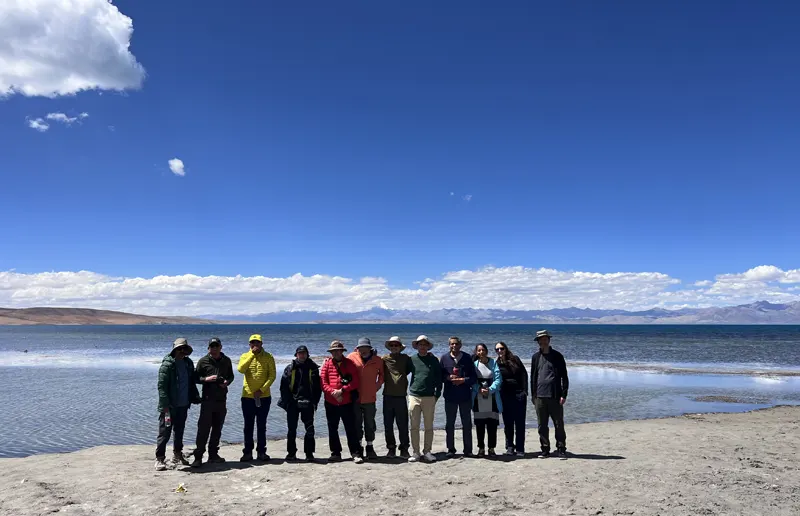 Kailash Mansarovar Yatra
The Sacred Significance of Lake Mansarovar in Four Religions
Lake Mansarovar holds religious significance in Tibetan Buddhism, Hinduism, Bon, and Jainism. Each tradition has its own beliefs and legends associated with the lake and the surrounding Mount Kailash region.
1) Tibetan Buddhism: The Legend of Lake Anavatapta
In Buddhist tradition, Lake Mansarovar is associated with Anavatapta, a sacred lake mentioned in ancient scriptures. Anavatapta is traditionally linked to the origins of four great rivers flowing in different directions. Lake Mansarovar also symbolizes purity and spiritual awakening. Many Buddhist pilgrims visit its shores to pray and seek spiritual merit.
2) Hinduism: Lord Brahma's Creation of the Holy Lake
According to Hindu mythology, Lake Mansarovar was first created in the mind of Lord Brahma before appearing on Earth. Its name comes from two Sanskrit words: Manas (mind) and Sarovar (lake). Hindus also associate the lake with Lord Shiva and Goddess Parvati. Bathing in its waters is traditionally believed to cleanse sins and bring spiritual blessings.
3) Bon: The Sacred Meaning of Mapham Yumtso
In the indigenous Bon tradition, Lake Mansarovar is associated with local deities and guardian spirits. Its Tibetan name, Mapham Yumtso, means "Unconquerable Turquoise Lake." The name reflects the lake's sacred status in Tibetan spiritual traditions.
4) Jainism: The Connection to the First Tirthankara
In Jain tradition, the Mount Kailash region is associated with Rishabhadeva, also known as Adinath, the first Tirthankara. He is believed to have attained liberation at Mount Ashtapada, traditionally associated with the Kailash region. Although Lake Mansarovar is not the main focus of this legend, its proximity to Mount Kailash makes it an important stop for Jain pilgrims exploring the sacred landscape.
Lake Mansarovar vs. Rakshas Tal: The Mystery of Tibet's Twin Lakes
Lake Mansarovar and Rakshas Tal lie side by side near Mount Kailash in western Tibet. Despite their close location, the two lakes have very different appearances, water conditions, and religious meanings.
1) Freshwater vs. Saltwater: Why Are the Two Lakes So Different?
Lake Mansarovar is a freshwater lake known for its clear blue waters and religious significance. Rakshas Tal, by contrast, is a saltwater lake with higher salinity and less aquatic life. Its darker appearance and association with local legends have earned it the name "Demon Lake."
In local legends, Lake Mansarovar symbolizes purity and positive forces, while Rakshas Tal represents darkness and negative energy. These contrasting images reflect religious beliefs rather than supernatural differences.
| Feature | Lake Mansarovar | RakshasTal |
|---|---|---|
| Tibetan Name | Mapham Yumtso | Lhanag Tso |
| Name Meaning | Unconquerable Turquoise Lake |
Dark Lake |
| Water Type | Freshwater | Saltwater |
| Appearance | Clear blue and turquoise | Deep blue and often darker |
| Traditional Symbolism | Purity, life, and holiness | Darkness and destruction |
| Aquatic Life | Supports aquatic life | Limited aquatic life |
2) Ganga Chhu: The Natural Channel Connecting the Two Lakes
A narrow natural channel called Ganga Chhu connects Lake Mansarovar and Rakshas Tal. Water can flow between the two lakes, although the flow may vary with seasonal and environmental conditions.
In local legends, Ganga Chhu symbolizes the connection between purity and darkness. Despite their physical connection, the two lakes retain different water conditions and religious meanings.
Natural Wonders of Lake Mansarovar: Changing Colors, Clear Waters & Starry Nights
Beyond its religious significance, Lake Mansarovar is known for its clear waters, changing colors, and beautiful night skies. These natural features have inspired many local stories and spiritual beliefs. Here are three fascinating sights you may experience during your visit.
1) Why Is Lake Mansarovar's Water So Clear?
Located at approximately 4,590 meters above sea level, Lake Mansarovar is known for its clear freshwater. Its remote location and surrounding natural environment contribute to its relatively unspoiled appearance.
2) Why Does Lake Mansarovar Change Color Throughout the Day?
One of the most beautiful features of Lake Mansarovar is its changing color. Depending on the sunlight, weather, and viewing angle, its surface can appear deep blue, turquoise, or green.
Several natural factors affect the lake's appearance:
Sunlight: The changing angle of sunlight influences its hues.
Sky and Clouds: Reflections of the sky can make the water look brighter or darker.
Water Depth: Different depths may produce different shades of blue and green.
Wind and Waves: Moving water changes how sunlight reflects off the surface.
These natural effects make every visit to Lake Mansarovar visually unique.
3) Starry Nights and Brahma Muhurta: The Sacred Pre-Dawn Hours
After sunset, Lake Mansarovar offers a peaceful atmosphere under the starry sky. Its remote location means relatively little light pollution, allowing you to enjoy clear views of the Milky Way on suitable nights. Some local stories also describe unusual lights as signs of divine presence, adding to the lake's spiritual mystery.
In Hindu tradition, Brahma Muhurta refers to the sacred period before sunrise, traditionally associated with prayer and meditation. Some pilgrims wake early to pray or meditate beside the lake.
Legends and Historical Explorations of Lake Mansarovar
Lake Mansarovar's remote location and sacred reputation have inspired many legends about hidden caves and underwater treasures. Historical explorers also documented the lake and its surrounding landscape, offering valuable records of this remote region.
1) Hidden Caves and Underwater Treasures: Local Legends
Local legends describe mysterious tunnels connecting Lake Mansarovar with nearby sacred mountains. Other stories speak of religious relics, ancient offerings, and treasures hidden beneath its waters, protected by guardian spirits and sacred nagas. However, no reliable archaeological evidence confirms the existence of underwater palaces, treasure chambers, or secret tunnels.
2) Historical Explorers Who Documented Lake Mansarovar
Several explorers and travelers documented Lake Mansarovar and the surrounding region:
Ippolito Desideri (1715–1716):
The Italian Jesuit missionary traveled through Tibet and recorded observations about its geography, culture, and
religious traditions. His writings contributed to early European knowledge of Tibet.
Sven Hedin (1906):
The Swedish explorer surveyed the Mount Kailash region during his Central Asian expeditions. His work documented
the area's lakes, mountains, and surrounding landscapes.
Swami Pranavananda (1930s–1940s):
The Indian Hindu monk and explorer made several journeys to Lake Mansarovar and Mount Kailash. He recorded the
region's geography, religious traditions, and pilgrimage routes.
Their writings helped preserve valuable records of the region's geography and religious traditions. Today, pilgrims and travelers can explore the same remarkable landscape around Lake Mansarovar and Mount Kailash.
Sacred Traditions and Spiritual Practices Around Lake Mansarovar
Lake Mansarovar is an important pilgrimage destination where religious beliefs and local traditions come together. Pilgrims visit its shores to pray, meditate, and seek spiritual blessings. These practices reflect the lake's importance in the religious life of the region.
1) Pilgrimage Traditions and Religious Offerings
Pilgrims from different religious traditions visit Lake Mansarovar to pray, make offerings, and seek spiritual blessings. Many regard its waters as sacred and follow traditional practices along the shoreline. You should respect local customs and avoid polluting the lake or disturbing religious activities.
2) Meditation and Spiritual Retreats Near Chiu Gompa
The area around Chiu Gompa offers a peaceful setting for meditation and prayer. Pilgrims may chant prayers, meditate, or spend quiet moments overlooking the lake. The surrounding mountains and open landscape create a tranquil atmosphere for spiritual reflection.
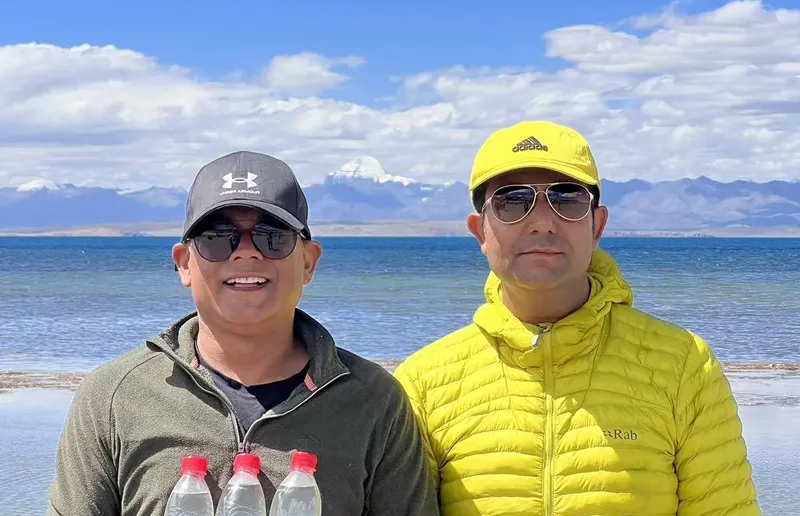 Lake Mansarovar Tour
How to Explore Lake Mansarovar: Top Things to Do
Visiting Lake Mansarovar is a highlight of a Ngari tour. You can walk along the shore, visit nearby monasteries, and learn about local religious traditions. As the lake lies at approximately 4,590 meters above sea level, proper acclimatization and safety precautions are essential.
1) Walk Along the Shores of Lake Mansarovar
A walk along Lake Mansarovar's shoreline offers beautiful views of the lake and surrounding mountains. You can enjoy the peaceful scenery, take photographs, and appreciate the lake's changing colors without completing a full circuit.
2) Religious Rituals: Respecting the Sacred Waters
Many Hindu and Buddhist pilgrims regard Lake Mansarovar's water as sacred. Some pray beside the lake or collect a small amount of water as a religious keepsake. If you wish to take part in a cleansing ritual, you can touch the water with your hands instead of immersing yourself. Follow local guidance and avoid leaving waste or offerings in the lake.
3) Chiu Gompa: A Monastery with Panoramic Lake Views
Chiu Gompa, also known as Chiu Monastery, stands on a rocky hill overlooking the northwestern shore of Lake Mansarovar. It offers panoramic views of the turquoise lake and surrounding mountains.
According to local Buddhist tradition, Guru Rinpoche (Padmasambhava) meditated in a nearby cave. Visitors can explore the monastery's Buddhist statues, murals, and prayer spaces. The hilltop location also makes it a great place to enjoy the scenery and take photographs.
4) Chiu Village Hot Springs: A Relaxing Stop Near the Lake
The hot springs near Chiu Village offer another attraction close to Lake Mansarovar. You can enjoy a warm soak after a long journey and experience the region's geothermal landscape.
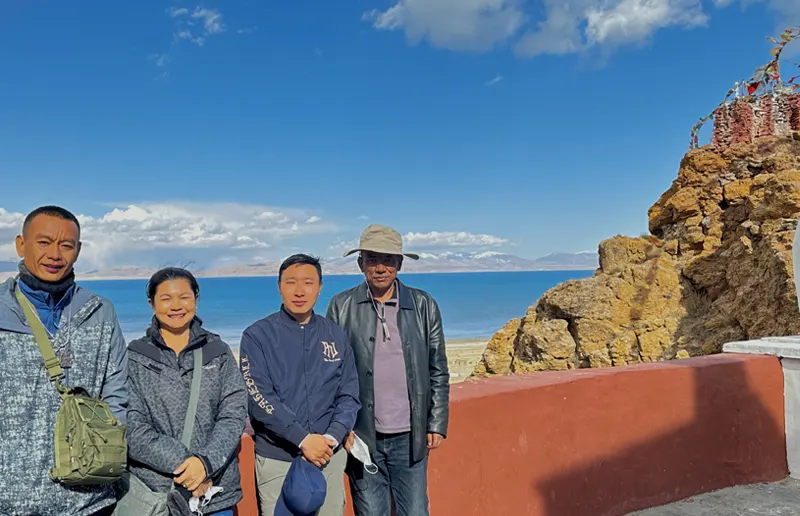 Chiu Gompa
FAQs about Lake Mansarovar
1) What is the best time of year to visit Lake Mansarovar?
The best time to visit Lake Mansarovar is from May to September, when temperatures are relatively mild and road
conditions are generally better. June to August is warmer, while September often offers clearer skies and better
mountain views. Winter brings extreme cold and possible road closures due to snow.
2) How do I get from Lhasa to Lake Mansarovar?
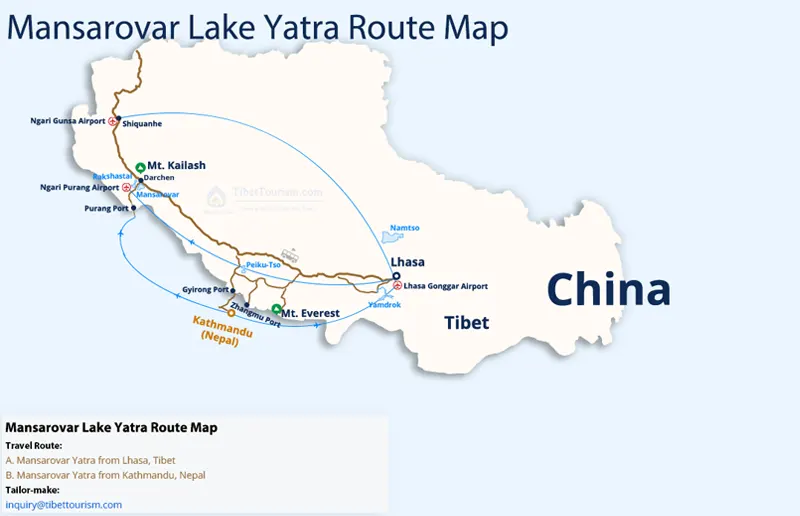
The most common way to reach Lake Mansarovar from Lhasa is by road via Shigatse, Saga, and Darchen. The journey
covers approximately 1,200 kilometers and usually takes several days, allowing time for sightseeing and altitude
acclimatization. You can also join our 15-day Lhasa EBC to Mount Kailash and Lake Mansarovar tour, which includes Lhasa sightseeing, Everest Base Camp, the Mount Kailash Kora, and Lake Mansarovar.
3) What permits do I need to visit Lake Mansarovar?
Foreign travelers generally need Tibet Travel Permit (TTP), an Aliens' Travel Permit (ATP), and a Military Area Entry Permit to visit Lake Mansarovar. You must book through a licensed Tibet travel agency, like Tibet Horizon,
which will arrange the necessary permits and guided itinerary. Prepare your passport and Chinese Visa documents,
if applicable, well in advance.
4) Is Lake Mansarovar safe to visit at such a high altitude?
Lake Mansarovar lies at approximately 4,590 meters above sea level, where altitude sickness is a serious risk.
Symptoms may include headaches, dizziness, nausea, and shortness of breath. Allow enough time to acclimatize
before reaching the lake. Walk slowly, avoid strenuous activities, and descend immediately if you develop severe
symptoms. Consult your doctor before traveling, especially if you have existing health conditions.
5) Can I swim or bathe in Lake Mansarovar?
Some Hindu pilgrims traditionally bathe in Lake Mansarovar as a religious ritual. However, swimming or full-body
immersion is not recommended because the water is extremely cold and can quickly cause hypothermia. You can
instead touch the water, pray beside the shore, or collect a small amount as a religious keepsake.
6) Can I see Mount Kailash from Lake Mansarovar?
Yes, you can see Mount Kailash from Lake Mansarovar on clear days. The sacred mountain rises beyond the lake,
creating a stunning view of snow-covered peaks and turquoise waters. However, visibility depends on weather
conditions, so the mountain may be hidden by clouds on some days.
Conclusion
Lake Mansarovar is a remarkable destination where ancient legends, religious traditions, and natural beauty come together. From its connection to four religions and the contrasting waters of Rakshas Tal to its peaceful shores and mountain scenery, the lake offers a unique cultural and spiritual experience. Visiting Lake Mansarovar is an unforgettable highlight of a Tibet tour.
No documents found.
Tibet Kailash Travel Guide and Advice


Most Popular Tibet Ngari Tour Packages
-
![Lhasa Everest Kailash Mansarovar Zhangmu Kathmandu Small Group Tour]() Small Group Tour
12 Days Lhasa Everest Kailash Mansarovar Zhangmu Kathmandu Small Group Tour
Promo: Uncover the spiritual and natural secrets hidden within Tibet
Dates & Price
![rili]()
![xiala]()
-
![Lhasa to Everest Kailash and Mansarovar Small Group Tour]() Small Group Tour
15 Days Tibet Mount Kailash and Lake Mansarovar Small Group Tour
Promo: Western Tibet tour around Mount Kailash
Dates & Price
![rili]()
![xiala]()
-
![Lhasa Everest Kailash Mansarovar Lhasa Tour with Inner Travel Gateway]() Small Group Tour
16 Days Lhasa Everest Kailash Mansarovar Lhasa Tour with Inner Travel Gateway
Promo: Complete 3-Day Kailash Kora and 1-Day Inner Kora Gateway Excursion
Dates & Price
![rili]()
![xiala]()


Please share your contact information, so we can send you the answer directly by email.

