
 inquiry@tibettourism.com


.webp)


Potala Palace History: Construction, Facts & Timeline


.webp) Content
ContentThe Potala Palace is a historic landmark in Lhasa and a symbol of Tibetan culture and architecture. Built on Marpo Ri Hill, the palace contains Buddhist chapels, statues, murals, and historic halls that reflect Tibet’s religious and cultural heritage. A visit to the palace offers insight into Lhasa’s history, Tibetan Buddhist traditions, and architectural heritage. This guide covers the history of Potala Palace, its major construction phases, key facts, and practical visiting tips.
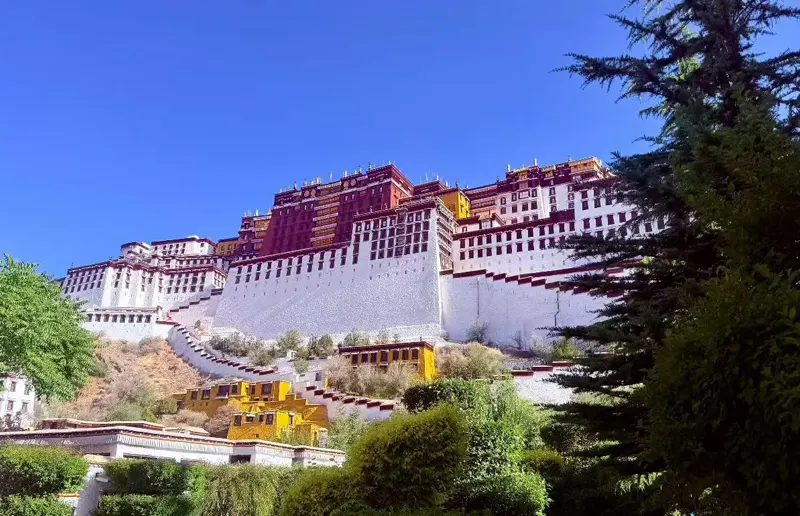 Potala Palace
Fast Facts at a Glance:
Location: Marpo Ri Hill, Lhasa, Tibet
Elevation: Approximately 3,700 meters (12,139 feet) above sea level
Early Origins: Traditionally dated to around 637 AD; major reconstruction began in the 17th century
Structure Height: 117.19 meters (384 feet) spanning 13 stories
Total Rooms: More than 1,000 rooms
Area: Approximately 130,000 square meters
Key Components: The White Palace (administrative quarters) and the Red Palace (religious shrines and stupas)
UNESCO Status: Inscribed on the UNESCO World Heritage List in 1994
The 7th-Century Origins of the Potala Palace
The history of the Potala Palace is traditionally traced to the 7th century, when King Songtsen Gampo is said to have established an early palace on Marpo Ri in Lhasa. The site later became associated with the palace complex that developed into the landmark visitors see today.
When Was Potala Palace Built? (Songtsen Gampo & 637 AD)
The original Potala Palace is traditionally believed to have been built by King Songtsen Gampo around 637 AD on Marpo Ri (Red Hill) in Lhasa. The early palace served as a royal residence and reflected the growing power of the Tibetan Empire. It was also associated with Songtsen Gampo and his marriage to Princess Wencheng of the Tang Dynasty. Much of the original structure did not survive, and the palace underwent major rebuilding centuries later.
What happened to Potala Palace?
The original 7th-century palace suffered severe damage over the centuries, including a major fire reportedly caused by lightning in the late 8th century. Subsequent conflicts and the collapse of the Tibetan Empire left much of the complex in ruins, with only the Chogyal Drupuk cave and Phakpa Lhakhang chapel reportedly surviving. In 1645, the Fifth Dalai Lama began a major reconstruction, laying the foundation for the present-day Potala Palace, including the White Palace and Red Palace.
Rebuilding the Potala Palace: The 5th Dalai Lama (17th Century)
In the 17th century, the Fifth Dalai Lama led the major reconstruction of the Potala Palace, transforming it into a center of Tibetan religious and administrative life. The White Palace served administrative functions, while the Red Palace housed sacred halls, chapels, and stupas. These construction projects shaped much of the palace complex seen today.
1) Construction of the White Palace (Potrang Karpo)
Construction of the White Palace (Potrang Karpo) began in 1645 under the Fifth Dalai Lama and was completed in 1648. Its whitewashed walls and spacious halls housed government offices, ceremonial spaces, and residential quarters for the Dalai Lamas. The White Palace became an important part of the Potala Palace’s administrative and residential functions.
2) Construction of the Red Palace (Potrang Marpo)
The Red Palace (Potrang Marpo) was constructed in the late 17th century by the Desi Sangye Gyatso to house the gold-covered stupa tomb of the 5th Dalai Lama. Built primarily as the spiritual center of the complex, it contains numerous prayer halls, chapels, and sacred stupas dedicated to past Dalai Lamas. Architecturally, it stands out with its striking crimson walls, intricate multi-tiered golden roofs, and a symmetrical layout that towers over the older White Palace.
3) Unique Materials & Engineering Techniques
The Potala Palace combines traditional Tibetan materials with skilled engineering techniques. Builders used granite, timber, rammed earth, and traditional mortar to create its thick walls and multi-story structures. Copper was also used in some structural and decorative elements. These traditional techniques contributed to the palace’s durable construction in a high-altitude environment.
Some popular accounts claim that milk, honey, sugar, or egg whites were added to the wall coatings or mortar. However, these ingredients are better treated as traditional stories unless supported by reliable historical evidence. The palace features thick rammed-earth walls, stonework, wooden beams, and traditional construction techniques.
Chronological Timeline of Potala Palace
The following timeline highlights key milestones in the history and development of the Potala Palace.
· 637 AD - Early Origins: King Songtsen Gampo is traditionally associated with the establishment of an early palace on Marpo Ri.
· 1645 AD - Major Reconstruction Begins: The Fifth Dalai Lama initiates major reconstruction of the Potala Palace.
· 1648 AD - Completion of the White Palace: The White Palace (Potrang Karpo) opens as the government seat and winter residence of the Dalai Lamas.
· 1694 AD - Completion of the Red Palace: The Red Palace (Potrang Marpo) is finished, housing sacred shrines, assembly halls, and the mausoleum stupas of Dalai Lamas.
· 1959 AD - A Major Historical Transition: By the mid-20th century, the Potala Palace became a nationally protected heritage site and museum, showcasing Tibetan history and Buddhist art.
· 1994 AD - UNESCO World Heritage Inscription: The Potala Palace was inscribed on the UNESCO World Heritage List for its outstanding cultural, historical, and architectural value.
Potala Palace Today: Museum, UNESCO Site & Preservation
Today, the Potala Palace is a protected historic and cultural site in Lhasa. It welcomes visitors and plays an important role in preserving Tibetan Buddhist art, architecture, and historical heritage. The palace is also part of a UNESCO World Heritage property.
1) Is Potala Palace Still Used Today?
The Potala Palace no longer serves as the main administrative center and residence it once was. Its historic halls and chapels retain religious significance. Some spaces continue to support Buddhist practices and ceremonies. While the palace retains its religious significance, much of the complex is now preserved for heritage protection and public visitation.
2) Does anyone live in the Potala Palace?
The Potala Palace is not a regular residence today. The Dalai Lamas no longer live there. Most areas are preserved as historic spaces, religious sites, and museum displays rather than private living quarters.
3) Potala Palace as a UNESCO World Heritage Site & Museum
The Potala Palace was inscribed on the UNESCO World Heritage List in 1994. It is recognized for its outstanding architecture, historic importance, and cultural value. Today, the palace functions as a museum and heritage site. Its buildings and collections help preserve important aspects of Tibetan history and Buddhist culture.
4) What Treasures Are Inside Potala Palace?
Inside the Potala Palace, thousands of precious cultural relics and sacred treasures are preserved across its many halls and chapels. The collection includes gilded stupa tombs, centuries-old gilt-bronze Buddha statues, and intricate murals depicting Tibetan history and Buddhist legends. You can also find valuable thangka paintings, delicate porcelain, historical state gifts, and vast libraries of rare scriptures written on palm leaves.
5) Conservation Challenges and Visitor Limits
Protecting the Potala Palace requires ongoing conservation efforts. Its ancient walls, wooden structures, murals, and religious artifacts are vulnerable to deterioration and environmental changes. High visitor numbers can also place pressure on the historic site. Visitor controls and conservation measures help limit damage and preserve the palace for future generations.
Tips for Exploring the History of Potala Palace
When visiting the Potala Palace, foreign travelers should join an organized Tibet tour with a local guide to learn about its history, Tibetan Buddhism, and architecture. Explore the White Palace, Red Palace, and nearby cultural sites to gain a deeper understanding of the palace’s heritage. Follow reservation and entry requirements, wear respectful clothing, avoid touching religious objects, and follow photography restrictions inside the palace. Take your time, walk carefully, and avoid rushing at high altitude for a safe and meaningful visit.
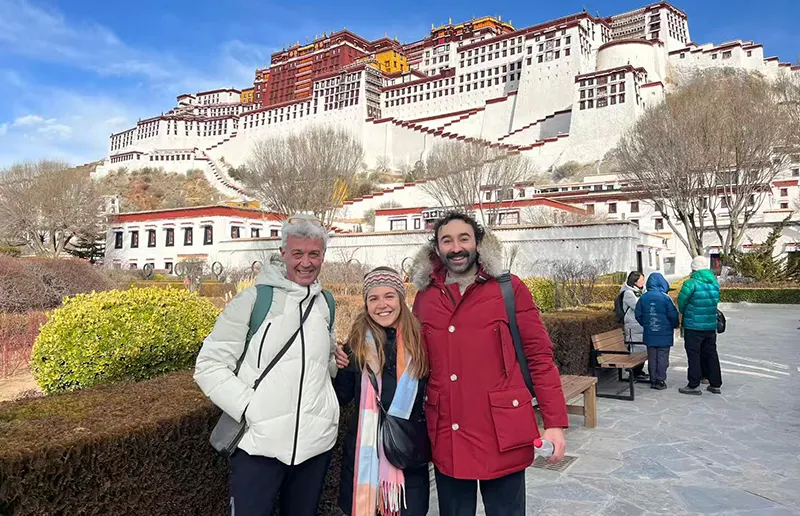
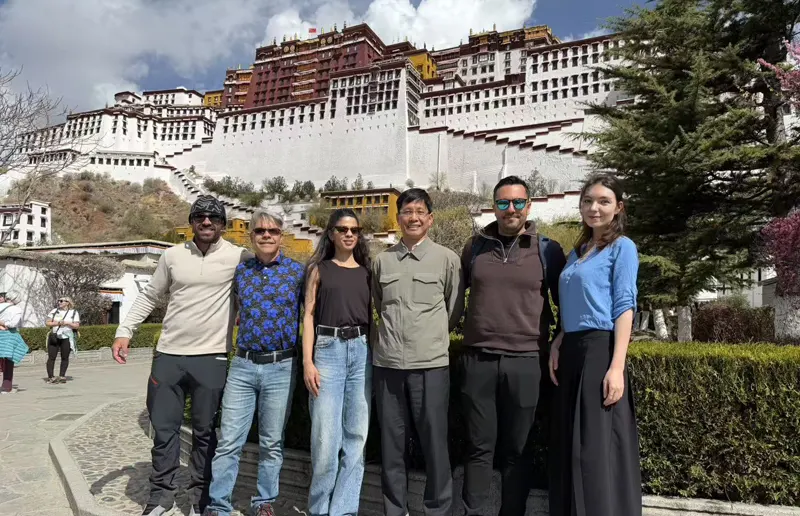 Potala Palace in Lhasa
FAQs about the Potala Palace History
1) Why is Potala Palace famous?
The Potala Palace is an iconic symbol of Tibet, known for its long history, impressive architecture, and rich
cultural heritage. Located on Marpo Ri (Red Hill) in Lhasa, the 13-story complex once served as the winter
residence of the Dalai Lamas and an important administrative center. Its interior features Buddhist statues,
gilded stupas, thangka paintings, murals, and historic scriptures, offering valuable insights into Tibetan
history, art, and religion.
2) How much gold is in the Potala Palace?
The exact amount of gold in the Potala Palace is not publicly established. Gold appears mainly in gilded stupas,
statues, religious objects, and decorative details. Some stupas contain large quantities of gold and precious
materials, but claims about a specific total weight should be treated cautiously unless supported by an
authoritative source.
3) What is inside the Potala Palace?
Visitors to the Potala Palace can explore the former living quarters of Dalai Lamas, sacred prayer halls, and
gold-covered stupa tombs. The guided sightseeing route leads guests through historical chapels and vibrant
murals, finishing at open rooftops with panoramic views of Lhasa and the surrounding mountains.
4) Can I visit Potala Palace?
Foreign tourists can visit the Potala Palace as part of an organized Tibet tour. Foreign passport holders generally need to arrange a Tibet Travel Permit through a licensed Tibet travel agency (like Tibet Horizon)
before traveling to Tibet. You must also follow the palace’s reservation, entry, photography, and other site
regulations.
Conclusion
The history of the Potala Palace stretches from its traditional 7th-century origins to its major reconstruction in the 17th century. Its White and Red Palaces preserve remarkable architecture, Buddhist art, religious treasures, and important historical relics. Today, this iconic landmark remains a symbol of Tibetan culture and heritage. Learning about its history can add depth to a visit to the Potala Palace during a Tibet tour.
2 years exp.| 5.0
 | Reviews
Tell me about your travel plan or contact me via inquiry@tibettourism.com
Related Tibet Travel Guide and Advice

Most Popular Tibet Tour Packages
-
![Lhasa Everest Base Camp Kathmandu Overland Small Group Tour]() Small Group Tour
Small Group Tour7 Days Lhasa Everest Base Camp Kathmandu Overland Small Group Tour
Promo: Classic overland travel route from Lhasa to Kathmandu via Gyirong / Nyalam
Dates & Price
![rili]()
![xiala]()
-
![Lhasa Shigatse Mount Everest Small Group Tour]() Small Group Tour
Small Group Tour8 Days Lhasa Shigatse Mount Everest Small Group Tour
Promo: Once-in-a-lifetime chance to face the tallest mountain in the world
Dates & Price
![rili]()
![xiala]()
-
![Lhasa Shigatse and Namtso Lake Small Group Tour]() Shared Group Tour
Shared Group Tour8 Days Lhasa Shigatse and Namtso Lake Small Group Tour
Promo: Central Tibetan Buddhism cultural tour and the sacred Namtso
Dates & Price
![rili]()
![xiala]()



.webp)


Please share your contact information, so we can send you the answer directly by email.

