
 inquiry@tibettourism.com


.webp)


Mt. Kailash Trek from Nepal: Best Kailash Trek from Nepal


.webp) Content
ContentEmbarking on a Mt. Kailash trek from Nepal is an extraordinary adventure blending spiritual enlightenment with breathtaking natural vistas. Revered as the “Center of the Universe” by Hindus, Buddhists, Jains, and Bon adherents, Mt. Kailash holds unparalleled spiritual and cultural significance. Its pristine beauty, coupled with its mystic aura, captivates adventurers and pilgrims from across the globe. Located in the remote region of Tibet's Ngari Prefecture, this sacred peak offers a rare journey to one of Earth’s most spiritually potent destinations. The trek not only unveils stunning landscapes but also provides a once-in-a-lifetime chance to participate in the revered circumambulation (kora) around the mountain.
While there are numerous routes to Mt. Kailash, Nepal remains a prime gateway for many trekkers, thanks to its proximity and convenient access. Whether opting for a combination of flights and overland travel via Lhasa, taking the direct route through the Gyirong Port border crossing, or choosing a helicopter flight for a faster approach, travelers are presented with versatile options to suit their schedules and preferences.
Travel from Nepal to Mt. Kailash: Routes, Tips, and Logistics
Nepal offers multiple pathways to reach Mt. Kailash, with options catering to various preferences and logistical requirements.
Nepal to Mount Kailash Flight Route via Kathmandu and Lhasa
This popular route combines the cultural essence of both Nepal and Tibet. Travelers typically begin with a flight from Kathmandu to Lhasa, which takes about 1.5 hours. After exploring Lhasa's iconic landmarks like the Potala Palace, you can fly or embark on an overland journey westward to Ngari Prefecture, a drive lasting about three days. This route allows acclimatization and adds an enriching cultural dimension to the journey.
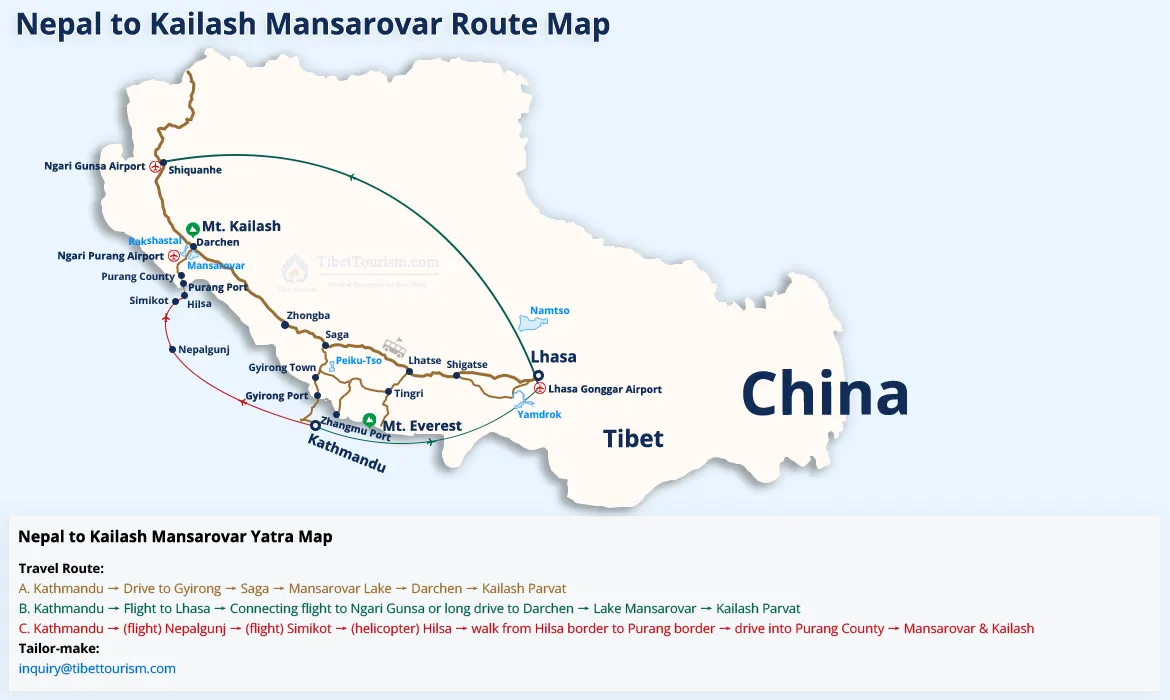 Route Map of Kailash Mansarovar Yatra from Nepal
Nepal to Mount Kailash Overland Route via Gyirong Port
For those preferring a more straightforward approach, the Gyirong Port border crossing is an excellent option. Accessible via a scenic 7-hour drive from Kathmandu, this route minimizes travel time and provides direct entry into Tibet. From Gyirong, travelers can continue the journey overland to Mt. Kailash, typically taking two days.
Nepal to Mount Kailash Helicopter Route via Purang Port
For travelers seeking a more efficient and comfortable way to reach Mount Kailash, a helicopter route from Nepal is an excellent option. This route starts with a flight from Kathmandu to Nepalgunj and then to Simikot, followed by a short helicopter ride to Hilsa, located near the Nepal-Tibet border. After crossing the border on foot, travelers are driven to Purang in Tibet, where they can rest before continuing their journey to the sacred sites of Lake Manasarovar and Mount Kailash.
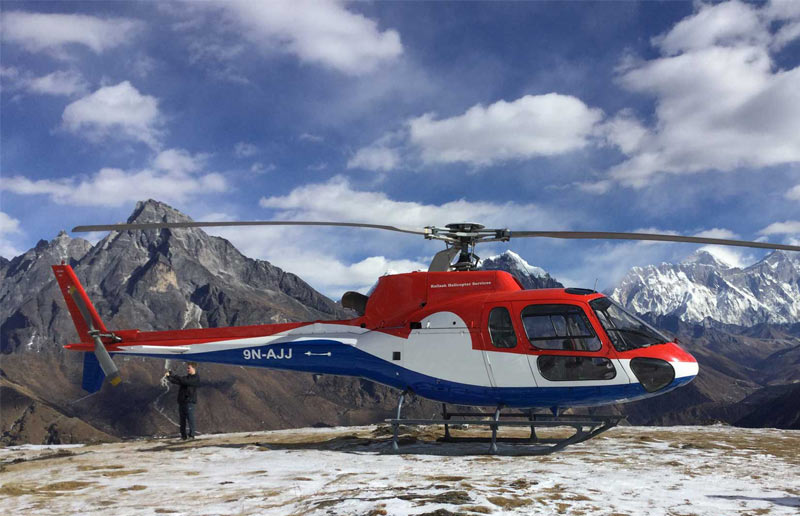 Kailash tour by helicopter from Nepal
The helicopter service significantly reduces the travel time compared to overland routes, providing an efficient way to reach Tibet's most sacred destinations. Travelers can avoid the long, challenging road trips through remote areas of Nepal and Tibet, while still experiencing breathtaking aerial views of the stunning landscapes that surround the Himalayas.
This option is especially popular among those with limited time or physical limitations, as it eliminates much of the strenuous overland travel. It also adds a sense of luxury and convenience to the pilgrimage experience, making it an appealing choice for many. The helicopter service is designed to offer a smooth, hassle-free journey, ensuring that travelers can focus on the spiritual and cultural significance of their journey, rather than the logistical challenges.
Key Logistics
Traveling to Mt. Kailash from Nepal requires careful planning to meet all legal and logistical requirements. Visitors need a valid Chinese Group Visa, a Tibet Travel Permit, an Aliens' Travel Permit, and a Military Area Entry Permit to access Ngari Prefecture. These requirements can seem daunting, but choosing the right travel partner simplifies the process.
Booking Kailash tour with Tibet Horizon, a licensed Tibet travel operator, ensures a hassle-free experience. Our team specializes in securing all necessary permits and crafting seamless itineraries tailored to your preferences. From arranging comfortable transportation and authentic local accommodations to providing experienced guides, Tibet Horizon is committed to making your journey unforgettable. With decades of expertise, we guarantee a smooth and enriching adventure that highlights the best of Tibet's spiritual and natural wonders.
Unmissable Gems: Highlights Along Nepal Kailash Trekking Route
Trekking to Mt. Kailash is a deeply enriching experience, blending natural beauty with cultural and spiritual immersion. Here are the top highlights to expect:
Scenic Attractions
Lake Manasarovar: Revered as one of the holiest lakes in Asia, Manasarovar's crystal-clear waters are believed to purify the soul. The lake's serene surroundings and reflections of the Himalayas make it a visual and spiritual highlight.
Lake Rakshastal: Located adjacent to Manasarovar, this saltwater lake holds contrasting symbolism in Tibetan mythology. Its stark, rugged beauty adds a dramatic edge to the landscape.
Himalayan Vistas: The trek offers awe-inspiring views of snow-capped peaks, high-altitude plateaus, and verdant valleys, creating a constantly changing panorama.
Trail Highlights
Every step of the Mt. Kailash trek is steeped in meaning, blending breathtaking natural scenery with an unparalleled spiritual journey. The kora spans approximately 54 kilometers, with most trekkers completing it within three days. Starting from Darchen, the trail progresses through key landmarks such as:
Dirapuk Monastery: Situated at an altitude of 4,950 meters, this monastery offers mesmerizing views of Mt. Kailash's north face.
Dolma La Pass: The trek's highest point at 5,630 meters, this pass is both a spiritual and physical challenge. Nearby, the emerald-green Gauri Kund Lake adds a serene touch to the arduous ascent.
Zutulpuk Monastery: The final leg of the kora, known for its tranquil environment and association with Milarepa's meditation cave.
Spiritual Significance and Cultural Interactions
For pilgrims, the kora symbolizes the path to enlightenment. Hindus and Buddhists believe that a single circumambulation cleanses lifetimes of sin, while 108 rounds grant ultimate liberation. Bon followers, on the other hand, perform the trek counterclockwise as per their tradition.
Pilgrimage Rituals: Witness the devotion of pilgrims performing the kora (circumambulation), with some prostrating themselves at every step in acts of extreme reverence.
Tibetan Communities: Engage with locals in villages and monasteries along the route. Their warmth, hospitality, and deep spiritual connection to the land provide a memorable cultural experience.
Tailored Trekking Options: Find the Right Pace for Your Mt. Kailash Trek
The Mt. Kailash trek offers flexible itineraries to accommodate different fitness levels, time constraints, and preferences. Below is a detailed comparison:
| Trek Option | Duration | Highlights | Suitable For |
|---|---|---|---|
| Single-Day Trek | 8 - 10 hours | Full circuit around Mt. Kailash (54 km). Features landmarks like Dirapuk Monastery and Dolma La Pass. | Experienced hikers with high endurance or religious pilgrims. |
| Two-Day Trek | 2 days | Day 1: Darchen to Dirapuk Monastery (20 km, altitude 5,080 m). Day 2: Dirapuk to Zuthulpuk via Dolma La Pass (5,630 m). Return to Darchen. |
Average travelers with proper acclimatization. |
| Three-Day Trek | 3 days | Day 1: Darchen to Dirapuk. Day 2: Dirapuk to Dolma La Pass and Zuthulpuk. Day 3: Zuthulpuk to Darchen. |
Ideal for most trekkers looking for a balance between spiritual and physical challenge. |
| Four-Day Trek | 4 days | Day 1: Darchen to Dirapuk. Day 2: Dirapuk to the north slope of Mount Kailash (Charan Sparsh). Day 3: Dirapuk to Dolma La Pass and Zuthulpuk. Day 4: Zuthulpuk to Darchen. |
Suitable for those who prefer a slower pace with more time to explore. |
| Trek Option | Duration | Highlights | Suitable For |
|---|---|---|---|
| Single-Day Trek | 8 - 10 hours | Full circuit around Mt. Kailash (54 km). Features landmarks like Dirapuk Monastery and Dolma La Pass. | Experienced hikers with high endurance or religious pilgrims. |
| Two-Day Trek | 2 days | Day 1: Darchen to Dirapuk Monastery (20 km, altitude 5,080 m). Day 2: Dirapuk to Zuthulpuk via Dolma La Pass (5,630 m). Return to Darchen. |
Average travelers with proper acclimatization. |
| Three-Day Trek | 3 days | Day 1: Darchen to Dirapuk. Day 2: Dirapuk to Dolma La Pass and Zuthulpuk. Day 3: Zuthulpuk to Darchen. |
Ideal for most trekkers looking for a balance between spiritual and physical challenge. |
| Four-Day Trek | 4 days | Day 1: Darchen to Dirapuk. Day 2: Dirapuk to the north slope of Mount Kailash (Charan Sparsh). Day 3: Dirapuk to Dolma La Pass and Zuthulpuk. Day 4: Zuthulpuk to Darchen. |
Suitable for those who prefer a slower pace with more time to explore. |
Tibet Horizon primarily offers 3-day and 4-day itineraries, allowing trekkers to experience the journey at a comfortable pace while ensuring proper acclimatization and a safe, rewarding adventure through the challenging terrain and high altitudes.
Key Considerations:
Acclimatization: Trekkers should be prepared for altitude sickness and harsh weather. Spend 1–2 days in Darchen or a nearby location before starting the trek. High-altitude sickness can be a major challenge for those unprepared.
Physical Fitness: Prepare by building stamina and strength through cardio workouts and hiking practice.
Essential Gear: Carry layered clothing, trekking poles, hydration packs, and sturdy boots. Weather conditions can change rapidly, so being prepared is vital.
Hiring yak and local porter: Hiring yak and porter is recommended for support.
The kora around Mt. Kailash is the pinnacle of the journey, offering spiritual fulfillment and unparalleled scenic splendor. While the trek is demanding, its rewards—a profound sense of peace and achievement—are unmatched. A well-planned trek ensures safety and enhances your overall experience, whether you’re undertaking a rigorous single-day challenge or a more leisurely three/four-day journey.
The Perfect Season: When to Embark on Your Nepal Kailash Trekking
Timing is crucial for a successful and enjoyable Mt. Kailash trek. The prime season for trekking extends from April to September, offering mild temperatures and stable weather conditions. During this period, daytime temperatures range between 5°C and 15°C, with clear skies providing unobstructed views of the majestic Himalayan range. In spring and summer, the lush greenery and vibrant wildflowers enhance the scenic beauty of the region, making it the most picturesque time to visit.
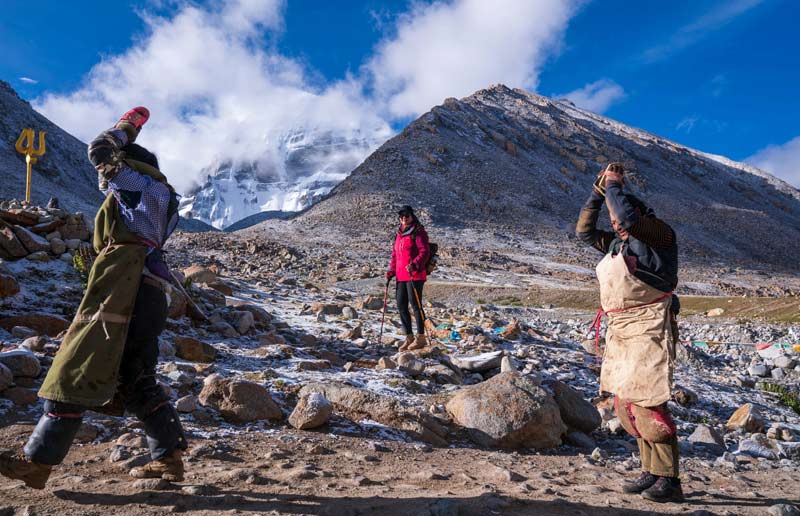 Mt. Kailash Trek
May to June and September are particularly favorable months. While they provide optimal weather, they also avoid the peak tourist influx seen during July and August, offering a more serene experience. Additionally, these months coincide with significant Tibetan festivals like Saga Dawa, adding a cultural dimension to your trek.
In contrast, winter (December to March) presents formidable challenges. The temperatures can plummet below -20°C and the trails often become icy and treacherous. Snowfall can block key passes, and the absence of rescue services in remote areas heightens the risks. For most trekkers, winter trekking is not advisable.
Preparing for the Ultimate Challenge: Overcoming Nepal Kailash Trekking Obstacles
Trekking to Mt. Kailash is a profound yet demanding journey, particularly due to its high altitude and rugged terrain. One of the foremost challenges is the risk of high-altitude sickness, with symptoms like headache, nausea, and fatigue, which can affect even seasoned trekkers. The trek involves reaching elevations of over 5,000 meters, such as the Dolma La Pass (5,648m), requiring excellent physical stamina and mental resilience.
Preparation is key to overcoming these challenges. Start with fitness training at least two months prior, focusing on endurance and cardiovascular strength. Essential gear includes comfortable trekking boots, a high-quality sleeping bag, trekking poles, and warm, breathable clothing for layering. Ensure proper acclimatization by spending a few days in Kathmandu or Lhasa before starting the trek. Staying hydrated, maintaining a steady pace, and consuming high-energy snacks are crucial during the journey.
Hiring experienced guides and porters through a reliable travel agency is highly recommended for navigating the terrain and managing logistics. They can also provide insights into local culture and spiritual practices, enriching the experience. Proper planning and preparation will ensure a safe and rewarding trek.
Conclusion
Embarking on the Mt. Kailash trek from Nepal is a once-in-a-lifetime journey that blends physical challenge with spiritual enrichment. Starting from Kathmandu, the route takes you through awe-inspiring Himalayan landscapes and into Tibet's culturally rich Ngari region. Whether you are a devout pilgrim seeking spiritual cleansing or a trekker yearning for adventure, this journey offers unparalleled experiences.
The trek demands careful preparation and resilience, but the rewards far outweigh the challenges. From the spiritual significance of the sacred kora to the majestic beauty of Lake Manasarovar, the trek encapsulates the essence of the Himalayas. By choosing the right season, preparing adequately, and following expert advice, you can transform this arduous trek into a fulfilling and unforgettable adventure.
Plan your journey meticulously and embrace the opportunity to tread paths that hold centuries of religious and cultural history. Let Mt. Kailash inspire and challenge you, leaving you with memories and insights that last a lifetime.
22 years exp.| 5.0
 | Reviews
Tell me about your travel plan or contact me via inquiry@tibettourism.com
Tibet Kailash Travel Guide and Advice


Most Popular Tibet Kailash Tour Packages
-
![Lhasa to Everest Kailash and Mansarovar Small Group Tour]() Small Group Tour
Small Group Tour15 Days Tibet Mount Kailash and Lake Mansarovar Small Group Tour
Promo: Western Tibet tour around Mount Kailash
Dates & Price
![rili]()
![xiala]()
-
![Lhasa Everest Kailash Mansarovar Guge Kingdom Full Moon Small Group Tour]() Small Group Tour
Small Group Tour17 Days Lhasa Everest Kailash Mansarovar Guge Kingdom Full Moon Small Group Tour
Promo: Explore western Tibetan spirituality and culture around the sacred Mount Kailash
Dates & Price
![rili]()
![xiala]()


Please share your contact information, so we can send you the answer directly by email.

