
 inquiry@tibettourism.com


.webp)


Kailash Mansarovar Yatra from United States: Top FAQs on USA to Kailash
Mount Kailash and Lake Mansarovar attract millions of tourists from around the globe, including from the United States of America, to embark on a once-in-a-lifetime voyage to these sacred sites. The holy Kailash Mansarovar Yatra is not just a trip to appreciate the breathtaking Himalayan landscapes, but also an opportunity to embark on a spiritual quest. With the necessary Tibet travel documents, careful planning, and thorough preparation, US citizens can travel to western Tibet with ease. Discover what questions like-minded travelers from the USA frequently ask about the Kailash Mansarovar Yatra tour, and may this comprehensive guide help clear any obstacles for your journey from the USA to Mount Kailash and Lake Mansarovar.
Eligibility & Travel Documents for Kailash Mansarovar Yatra from the USA
Embarking on a spiritual Yatra to Mount Kailash and Lake Mansarovar from the USA is straightforward once the necessary travel documentation is secured. Entry into China, and by extension, the sacred sites in Tibet, requires a Chinese Visa or Chinese Group Visa, which can be processed at the Chinese Embassy in the USA or arranged in Kathmandu for those entering from Nepal. In addition to these, all international visitors, including US tourists, need to secure a Tibet Travel Permit to access Tibet. For those venturing beyond Lhasa, an Aliens’ Travel Permit is required. Given the proximity of Mount Kailash and Lake Mansarovar to the China-Nepal Border, this region is considered military-sensitive, thus an additional Military Area Entry Permit is also required for visits. These permits are crucial for a smooth and hassle-free journey from the USA to the sacred sites.
For your journey to Kailash Mansarovar from the USA via Chinese Mainland cities, securing a visa is the first step. You need first figure out the visa type that aligns with your travel intentions and routes. For obtaining a Chinese Visa, prepare the required paperwork, which usually consists of a filled-out visa application, a passport valid for at least six months, a current color photo, and any supplementary documents specific to your visa class. Present your application in person to the Visa Office at the Chinese Embassy or Consulate, where they will also take your fingerprints. Complete the process by paying the visa fee and collecting your visa.
If you opt to travel through Kathmandu, a Chinese Group Visa is needed instead of a Chinese Visa. Ensure your passport is valid for at least six months from the entry date and plan to arrive in Kathmandu four days before your scheduled departure to Tibet. Once in Kathmandu, with your guide’s assistance, complete the Visa Application Form and submit your passport, photos, and visa fee. Your guide will also take you to the Chinese Embassy in Kathmandu for an interview and to have your fingerprints recorded. Typically, you’ll receive your Chinese Group Visa and passport back on the fourth working day following your application. With your visa in hand, you and your group can then proceed to Mount Kailash.
Other Tibet travel permits, including the Tibet Travel Permit, Aliens’ Travel Permit and Military Area Entry Permit can only be obtained by your Tibet travel agencies like us Tibet Horizon. Once you book with us, you need to provide copies or photos of your valid passport and visa to us. Taiwanese residents need to provide copies of their Taiwan Compatriot Permits. We will submit the application for Tibet Travel Permit and Military Area Entry Permit on your behalf. After processing your permit, we will give you a color copy or deliver to your address in the Chinese Mainland. After you have entered Tibet, your tour guide will collect the original copy of your Tibet Travel Permit and your passport to apply for the Aliens’ Travel Permit.
No, there is no age restriction for the Kailash Mansarovar Yatra from the USA. Travelers ranging from infants just a few months old to those in their 80s can embark on a journey to the sacred sites of Mount Kailash and Lake Mansarovar. However, a certain level of physical endurance is necessary, as the Kailash Mansarovar Yatra involves a high-altitude trek and the facilities in this remote area are limited. It is highly recommended that US citizens, especially children and the elderly, carefully consider their physical and mental condition before undertaking a journey to Kailash Mansarovar.
No. So far, no strict health requirements have been imposed for traveling to Mount Kailash from the USA. However, it is highly recommended that travelers possess a moderate level of physical fitness to cope with the challenges during the journey. When traveling to the Himalayas, travelers may experience mild symptoms of altitude sickness, and the high-altitude trek also requires a certain level of physical endurance. Individuals with cardiovascular disease may not be suitable for the Kailash Mansarovar Yatra. It is advisable to take a physical examination and consult with a doctor before embarking on the trip, and to engage in regular exercises to strengthen your body.
No, all international travelers, including US citizens, are not permitted to travel independently in Tibet, including the Kailash Mansarovar region. According to the regulations, foreign tourists must join an organized tour group with a registered Tibet travel agency, such as Tibet Horizon. Only local authorized tour agencies in Tibet can apply for the necessary permits on your behalf, including the Tibet Travel Permit, Aliens’ Travel Permit, and Military Area Entry Permit. Upon your arrival in Lhasa or at the Gyirong Border, your guide will pick you up and accompany you throughout the journey.
Routes & Transportation for Kailash Mansarovar Yatra from the USA
No direct transportation is available from the USA to Tibet. Two primary routes from the USA to Tibet are to make a stopover at Chinese Mainland cities or Kathmandu. Departing from the USA, you can find multiple flights to the gateway cities in the Chinese Mainland like Beijing, Shanghai, Guangzhou, Chengdu, Chongqing, Xi’an, Xining, and so on, as well as Kathmandu in Nepal. These cities present several routes to Tibet, including traveling by road, air, train and even helicopter.
Yes, flying to Chinese cities before entering Tibet is a popular choice for US travelers. Numerous direct flights connect various major cities in the US to key Chinese hubs such as Beijing, Shanghai, Guangzhou, Chengdu, Chongqing, Xi’an, and Xining. Acting as gateways to Tibet, these cities offer a variety of ways to access the Tibetan plateau. A popular method is flying from these Chinese cities to Lhasa, with flight times typically between 2 to 4 hours. For those inclined towards a more scenic approach, train rides are available from Xining, Chengdu, Beijing, Shanghai, Guangzhou, Chongqing, and Xi’an, taking you across the world’s highest railway. Upon arrival in Lhasa, the common path to Darchen, the starting point for the Kailash Mansarovar Yatra, is by road. This lengthy journey of 1200 kilometers usually takes about four days and involves stops at significant landmarks like Yamdrok Lake, Tashilhunpo Monastery, and the Everest Base Camp. Alternatively, a flight from Lhasa to Nagri is an option, with Ngari Gunsa Airport being a short 200km from Darchen.
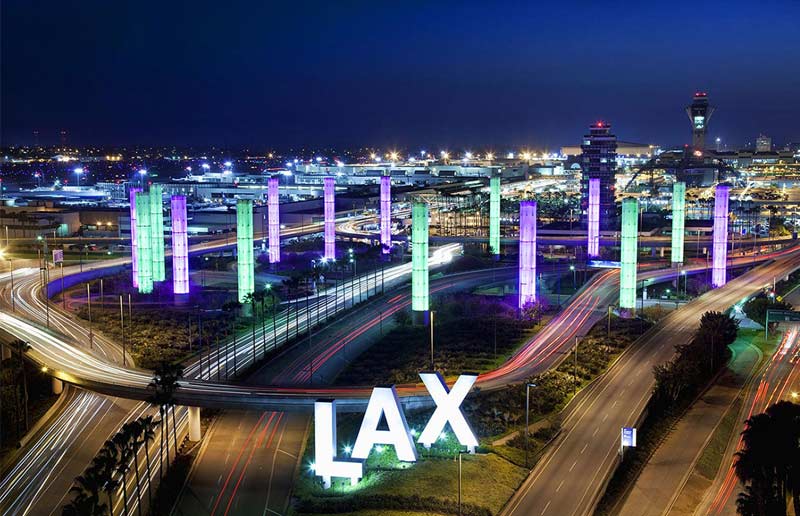 Los Angeles International Airport
Absolutely yes. Kathmandu is a pivotal gateway for travelers aiming to visit Mount Kailash and Lake Mansarovar. There are numerous flights available from the USA to Kathmandu, often with just one stop. From Kathmandu, a variety of paths lead to the Kailash Mansarovar area, with the most popular being the overland journey through the Gyirong Border. This trip typically spans a single day, taking you to Rasuwa Gadhi, a small town near the China-Nepal Border. From there, you’ll traverse the Gyirong Border into Tibet, continuing your drive to Darchen. For those seeking an aerial approach, another option is to fly to Lhasa and then make your way to the Kailash Mansarovar region by either road or air. Adventurers might consider a helicopter journey, starting with a flight to Nepalgunj, followed by a connecting flight to Simikot, a Simikot to Hilsa helicopter ride, and a brief walk to Purang Port. Upon crossing the Purang Border, you can take time to acclimatize and then proceed to Darchen.
Choosing the appropriate route from the USA to Kailash Mansarovar involves considering factors such as your schedule, budget, and the places you wish to visit. If you wish to fully explore Tibetan culture and landmarks, flying to Chinese gateway cities and then taking a train or flight to Lhasa offers a scenic road journey to Mount Kailash. This route is ideal for those with a flexible schedule and a higher budget, as it includes more sightseeing opportunities at Lhasa, Shigatse and Everest Base Camp. For a more budget-friendly and direct approach, consider flying to Kathmandu, Nepal, and then embarking on an overland journey to Mount Kailash via the Gyirong border crossing. This route is shorter and more time-efficient. If you want a special experience, consider the helicopter route to Kailash Mansarovar via Purang Port, offering a bird-view of the Himalayan mountains. Each route offers unique experiences, and consulting with experienced travel agencies like us Tibet Horizon can help tailor your journey to meet your specific needs and desires.
Planning & Facts for Kailash Mansarovar Yatra from the USA
Embarking on the Kailash Mansarovar Yatra from the USA is a journey that generally spans from 13 to 20 days. This duration encompasses the travel to the stopover cities from the USA, the subsequent journey to the Kailash Mansarovar region, the 3-day trek around Mount Kailash and a visit to the sacred Lake Mansarovar. The exact duration of the USA to Kailash Mansarovar Yatra tour may fluctuate based on the selected route and the mode of transportation. The swiftest route might be from the USA to Chinese mainland cities, then to Lhasa, and finally to Ngari, all by flight, taking you to Mount Kailash in approximately 4 days.
Cost considerations for the Kailash Mansarovar Yatra from the USA primarily involve spending for visas, permits, transportation, accommodation, meals, and personal spending. Visa expenses for US citizens include a Chinese Visa at USD 185 and a Chinese Group Visa at USD 155, with potential extra charges for expedited services. The Tibet Travel Permit, Aliens’ Travel Permit, and Military Area Entry Permit are usually included in the tour package. Flight price to China ranges from USD 300 to USD 1300, with additional costs for flights to Lhasa or overland travel. Via Kathmandu, flights from the USA to Kathmandu range from USD 856 to USD 1486, plus an additional USD 485 to fly to Lhasa. Helicopter rides are the most expensive option, at around USD 2000. For lodging, upscale hotels in Kathmandu, Lhasa, and Shigatse may charge over USD 60 per night, while guesthouses during the Kailash Kora typically range from USD 15 to 20 per person per night. In terms of food, simple Tibetan food like noodles and momos only cost about USD 2 per bowl. Daily expenses for food and drink can range from USD 10 to USD 50, depending on your dining choices. Personal expenditures might include hiring yaks or porters for your trek and purchasing Tibetan souvenirs, with these costs varying based on individual preferences.
April to October is the optimal time for the holy Kora around Mount Kailash and Lake Mansarovar. The mild weather during these months makes it the best time to journey from the USA to the sacred sites in western Tibet. This season offers favorable conditions for the Kailash Mansarovar Yatra, with Kathmandu enjoying clear skies and pleasant temperatures and Tibet experiencing a stable climate. For an enhanced spiritual journey, align your visit with the Saga Dawa Festival, a significant Tibetan event on the 15th day of the fourth month, celebrating the life of Sakyamuni, or the full moon period, which is considered especially auspicious for the Yatra.
 The bustling scene at the foot of Mount Kailash during the Saga Dawa Festival.
On your journey from the USA to Kailash Mansarovar region, a variety of lodging choices await you. In major hubs like Kathmandu, Beijing, Shanghai, and within Tibet’s popular tourist destinations such as Lhasa, Shigatse, and Darchen, you’ll have the option to stay in both high-end hotels and basic guesthouses. As you embark on the Kailash trek, the accommodation becomes more rustic, with basic guesthouses at Dirapuk and Dzultripuk Monasteries providing the essentials for a comfortable night’s rest.
Throughout your Kailash Mansarovar Yatra from the USA, you’ll be treated to the flavors of Tibetan, Nepalese, and Sichuan cuisines. Traditional Tibetan dishes like tsampa, momos, yak meat, and the iconic butter tea are common dishes you might come across. For those seeking a taste of home, basic Western-style food is available. Vegetarian options are provided, considering that many pilgrims refrain from eating meat. During the Kailash trek, food options might be limited, with basic items like noodles often being served. Hiring an accompanying chef can enhance your experience.
The Kailash Mansarovar Yatra is typically a 3-day circumambulation around Mount Kailash, amassing a total of 54 kilometers, with 43 kilometers being traversed on foot. The trek commences with a combination of driving and walking from Darchen to Dirapuk Monastery, which includes a 7-kilometer drive and a 13-kilometer hike on the initial day. The following day, the route extends from Dirapuk Monastery to Dzultripuk Monastery, covering a distance of 24 kilometers on foot. The third and final day concludes with a shorter 6-kilometer walk from Dzultripuk Monastery to the eco-bus spot and a 4-kilometer drive back to Darchen. Travelers seeking an immersive experience can choose a 4-day Yatra, which includes an additional trek to the western slope of Mt. Kailash (Charan Sparsh), where you may have the opportunity to touch the glacier.
Preparations for Kailash Mansarovar Yatra from the USA
The first thing to pack is your clothing. Mount Kailash and Lake Mansarovar are subject to cooler climates and substantial temperature fluctuations due to the high altitudes. Therefore, it’s crucial to pack warm clothing such as a warm jacket, along with a hat and gloves. For footwear, choose comfortable sneakers or robust hiking boots that offer good support and grip. At high elevations, sun protection is vital due to intense UV radiation, so don’t forget to pack sunscreen and sunglasses. Personal medications and any necessary altitude sickness medications should be included in your luggage. Keeping hydrated is important, so bring a water bottle. Additionally, packing personal comfort items like a compact pillow, wiping papers, and snacks can significantly enhance your trekking experience.
Preparing for the Kailash Mansarovar Yatra from the USA requires both physical and mental readiness. Physically, aim to build endurance and strength through regular aerobic exercises like jogging and strength training to prepare for the demanding trek. Maintain hydration and a nutritious diet to support your training. Remember to keep warm and avoid catching a cold or fever. Mentally, understanding the spiritual significance of the Yatra can provide additional motivation. Practice meditation to cultivate a positive and focused mindset, which will be essential for coping with the journey’s challenges.
To prepare for the high altitude of the Kailash Mansarovar Yatra, focus on physical conditioning through regular exercises to build up your physical endurance. Gradually acclimate to high altitudes if possible, and stay well-hydrated to prevent altitude sickness. Ensure enough rest and stay healthy, and consult with a doctor about medications for altitude sickness prevention and treatment.
In Tibet and China, the local currency is the Chinese Yuan (CNY), which is the only currency accepted there. If your journey includes a stop in Kathmandu, you’ll need Nepalese Rupees (NPR). It’s advisable to carry cash of both currencies because in remote areas like Mount Kailash and Lake Mansarovar, international debit cards may not be accepted. You can exchange your currency at various money exchange shops in Kathmandu, Lhasa, and other cities in the Chinese Mainland, or the exchange centers at the Nepal-Tibet border.
For the USA to Kailash Mansarovar Yatra, it’s important to be aware of and respect the cultural etiquette. Firstly, show reverence at all religious sites, including monasteries, sacred mountains and holy lakes. This includes refraining from making noise inside monasteries and seeking permission before taking photographs of religious ceremonies. Secondly, dress properly. Adhere to a dress code and do not wear a miniskirt, especially when visiting religious sites. In addition, if you participate in rituals or ceremonies, do so respectfully and follow the guidance of local guides. Last but not least, you can learn basic greetings in Tibetan like “Tashi Delek” (hello in Tibetan). Greeting the locals can show your friendliness and respect.
More FAQs on Kailash Mansarovar Yatra from the USA
During the Kailash Mansarovar Yatra, internet access and mobile phone signals can be quite limited, especially during the trek at Mount Kailash. While in some towns or guesthouses, there might be access to Wi-Fi connections, they may be unstable. Mobile network coverage is sparse in remote areas along the Kailash Yatra route. Therefore, it’s advisable to be prepared for limited connectivity during your journey, particularly as you venture further from populated areas towards the sacred sites.
During the Kailash Mansarovar Yatra, it’s important to adhere to certain environmental and conservation regulations to protect the sacred region’s natural beauty and ecological balance. During your journey, please keep a respectful distance from wildlife and avoid disturbing their natural habitats. Follow the guidance of your guides and adhere to local regulations to help preserve the natural environment and do not damage flora and fauna. When trekking at Mt.. Kailash, remember to carry out all waste. Do not throw litter anywhere. By cultivating an environmental awareness, you contribute to the preservation of the Kailash Mansarovar region’s pristine natural beauty and make your USA to Ksilash Mansarovar tour even more meaningful.
No. In fact, all travelers irrespective of nationalities, are prohibited from climbing Mount Kailash out of respect for both religious beliefs and environmental concerns. Spiritually, Mount Kailash is revered as a sacred site by multiple faiths, such as Hinduism, Buddhism, Jainism, and Bon religion, and is believed to be the spiritual center of the universe. Any attempt to climb the mountain is strictly prohibited. From a natural perspective, the mountain’s steep inclines and rugged landscape pose considerable dangers to climbers.
Typical Tibetan souvenirs that you can consider purchasing and taking back to the USA include handcrafted items such as Tibetan attire, woolen rugs, and traditional jewelry. You might also find unique Thangka and Buddhist artifacts that demonstrate the region’s culture and spirituality. It’s important to ensure that any items you purchase are in compliance with international customs regulations and do not include any restricted items.
Conclusion
Kailash Mansarovar Yatra is a dreamy journey for many US tourists. Embarking on an adventure to the sacred sites of Mount Kailash and Lake Mansarovar from the USA requires careful preparation and consideration. From securing the necessary travel permits to selecting a suitable route, each aspect of the pilgrimage demands attention to detail. This comprehensive guide has stressed the FAQs on Kailash Yatra tour. With the information provided, we are here to help you figure out a perfect travel plan and prepare well for your trip. Hope your Kailash Mansarovar Yatra will be a safe, enriching, and memorable adventure that stays with you for a lifetime. If you have further questions, don’t hesitate to contact us!
United States to Tibet Kailash Travel Guide and Advice
-

How to Plan A Tibet Tour From America
-

Indian-Americans to Kailash Tibet: Kailash Tour Planning for U.S. Passport Holders of Indian Origin
-

United States to Kailash: How to Plan a Kailash Mansarovar Yatra from the USA
-

Kailash Tour Package from United States: Top Kailash Manasarovar Yatras for US Citizens
-

USA Nepal Kailash Yatra Guide: Kathmandu Kailash Yatra Advisory for Americans