
 inquiry@tibettourism.com


.webp)


How to Get to Kailash


.webp) Content
ContentMount Kailash, often referred to as the pillar of the world, is a majestic peak located in the remote western part of Tibet, China. Revered by multiple faiths including Hinduism, Buddhism, Jainism, and Bon, it holds immense spiritual significance and is considered one of the most sacred mountains in the world. Rising to an average elevation of 6,638 meters above sea level, Mount Kailash is nestled amidst the stunning landscapes of the Gangdise Mountain Range, near the source of some of Asia's major rivers, including the Indus, Brahmaputra, Sutlej, and Karnali. People come from all over the world to visit Kailash, either for spiritual reasons or simply to admire its beauty. It's a peaceful and special place that has captivated people for centuries.
1. Travel to Mount Kailash from Kathmandu, Nepal
For everyone planning a journey to Mount Kailash, a common question arises: How can we reach Mount Kailash? Due to its immense height and remote location, traditional travel methods may not apply. It's crucial for every traveller wishing to visit Mount Kailash to understand the various ways of reaching this sacred destination. The more one learns about the different travel options available, the better equipped they will be to plan their pilgrimage.
Among the routes to reach Mount Kailash, the journey from Kathmandu, Nepal stands out as the simplest and shortest, spanning approximately 782 kilometres. There are two primary methods of reaching Kailash from Kathmandu: overland travel and air travel.
 Route Map of Kailash Mansarovar Yatra from Kathmandu
Travel from Kathmandu to Mount Kailash by Road
To embark on an overland journey from Kathmandu to Mount Kailash, traveller can take the route via Gyirong Port. This path traverses the 214 County Road through Shigatse Prefecture, eventually leading to Saga. From there, traveller continue on the G219 National Highway, which extends all the way to Darchen, passing the scenic Lake Manasarovar along the way. Darchen, a quaint Tibetan town, serves as the starting point for the renowned Kailash Kora trek, offering pilgrims and traveller an unforgettable experience amidst the majestic landscapes of the region. Tibet Horizon offers a 10 Days Kathmandu Gyirong Mount Kailash Lake Manasarovar pilgrimage tour, which allows traveller to experience the journey in a well-organized and guided manner overland from Nepal.
Travel from Kathmandu to Mount Kailash by Fight
Traveling to Mount Kailash from Kathmandu by flight offers a convenient and efficient option for those seeking a quicker journey. This route involves direct air transport, which typically includes a combination of flight and helicopter travel from Kathmandu to Kailash. This direct air route provides traveller with the opportunity to enjoy stunning aerial views of the Himalayan landscapes as they make their way to the sacred destination of Mount Kailash. As foreigners can’t travel alone to Mount Kailash, Tibet Horizon provides a comprehensive 11-day helicopter tour starting with arrival in Kathmandu. The tour begins with sightseeing in Kathmandu, followed by a flight to Nepalgunj. Traveller would also board an aircraft to Simikot and then a helicopter to Hilsa, from where they drive to Taklakot. The journey continues to Darchen, setting the stage for the Kailash trek. Kailash trek starts from Darchen to Dirapuk, then to Zuthulphuk, crossing the challenging Dolma La Pass. Lastly, trekkers conclude the trek near Darchen and head back to Purang, continuing the exit journey to Hilsa/Simikot. The final day involves travel from Simikot to Nepalgunj and then to Kathmandu.
2. Travel to Mount Kailash from Lhasa, Tibet
Starting your journey from Lhasa, the heart of Tibet, to Mount Kailash brings together a mix of culture and stunning natural beauty. Lhasa, known for its ancient sites and vibrant atmosphere, sets the stage for this sacred pilgrimage. You have two main options to consider: flying or driving overland. Each mode of transportation offers its own benefits, allowing traveller to choose based on their preferences and needs.
 Four Road Routes to Kailash Mansarovar Map
Travel from Lhasa to Mount Kailash by Road
If you're eager for a fuller Tibetan experience, consider traveling from Lhasa to Kailash. There is a primary way to make this journey: travel overland. Overland travel allows you to soak in the breath-taking landscapes and immerse yourself in the local culture as you traverse the scenic route from Lhasa to Kailash. The adventure begins with arrival in Lhasa, where traveller have the opportunity to explore this vibrant city and its iconic landmarks on guided tours. From Lhasa, the journey continues southward to Gyantse and Shigatse, where ancient monasteries and mountain vistas await. Traveling onwards, traveller make their way to the renowned Everest Base Camp, situated at the altitude of 5200 meters. The route then leads to Saga, passing by the serene shores of Lake Manasarovar, a sacred pilgrimage site for Hindus and Buddhists alike. Continuing the pilgrimage, traveller trek from Darchen to Drirapuk and Dzutrpuk, marveling at the awe-inspiring beauty of the surrounding landscapes. The journey usually concludes with a return to Lhasa via Kyirong and Tingri, allowing for a final opportunity to reflect on the unforgettable experiences and memories created along the way before departing from Lhasa, or traveller can choose to leave to other cities such as Kathmandu. Tibet Horizon provides an enriching 15-day Mount Kailash and Lake Manasarovar tour starting from Lhasa ensuring a worry-free and fulfilling journey for traveller.
Travel from Lhasa to Mount Kailash by flight
Traveling from Lhasa to Mount Kailash by flight is an appealing option for those seeking a quicker and more convenient journey. The Lhasa Ali to Kailash yatra serves as an alternative route, bypassing the long road distance to Manarovar Lake. This newly recognized route is primarily used by special yatries and offers daily flights from Lhasa to Ali, with each flight lasting approximately 2 hours. Upon arrival at Ali airport, traveller proceed overland to Mount Kailash, covering a distance of about 200 kilometres.
 Visit Mount Kailash and Lake Manasaovar in autumn
3. Travel to Mount Kailash from Kashgar, Xinjiang
Traveling from Kashgar, Xinjiang, to Mount Kailash offers two primary options: by road or by flights. The road journey entails a lengthy and scenic drive through rugged terrain, providing traveller with an opportunity to experience the natural beauty of the region. Alternatively, flights offer a quicker and more convenient mode of transportation, allowing traveller to reach their destination in a shorter amount of time.
 Route Map of Kailash Mansarovar Yatra from Xinjiang
Travel from Kashgar to Mount Kailash by Road
Traveling from Kashgar in the north to Mount Kailash is a long journey that needs a lot of energy and endurance. This 17-day Kashgar Kailash Everest Lhasa overland tour route spans through diverse landscapes and cultural regions, offering a unique perspective on the vast expanse of Xinjiang and Tibet.
Starting from Kashgar, traveller embark on an adventure through the heart of the Tibetan Plateau via the G219 Highway. The journey unfolds gradually, with stops at key landmarks such as Yecheng, Pangong Tso Lake, and Zanda, where they can explore iconic sites like the Zanda Earth Forest, Tholing Monastery, and Guge Kingdom Ruins. Continuing onwards, the route winds through marvelous landscapes, before reaching Darchen, the gateway to Kailash Manasarovar. Trekking days offer unparalleled views of Mount Kailash and its surrounding peaks, providing a sense of awe and reverence for the natural world. As the journey nears its end, traveller visit historical sites such as Saga, Shigatse, Mount Everest Base Camp, and the Yamdrok Lake, before finally reaching Lhasa, where they have the opportunity to explore iconic sites like the Potala Palace and Jokhang Temple. Completing a memorable and enriching expedition through Western Tibet, traveller return to Kashgar by flight or continue to explore other cities, cherishing the unforgettable experiences gained along the way.
Travel from Kashgar to Mount Kailash by flight
Opting for a flight from Xinjiang, Kashgar to Ali presents traveller with a convenient and time-saving alternative to reach Mount Kailash. This 13-day Kashgar Kailash EBC Lhasa flight tour route offers a swift transition, avoiding the lengthy road journey to Manasarovar Lake. Upon reaching Ali airport, traveller embark on a road journey to Manasarovar Lake, spanning approximately 200 kilometres. Here, they can partake in various activities such as meditating at the lakeshore, enjoying a hot spring, and exploring the serene beauty of the lake while enjoying breath-taking views of Mount Kailash. The trek commences from Yamadwar to Dirapuk, followed by a trek to Dzultripuk Monastery via Dolma La Pass. Finally, the Kailash Kora Trek concludes at Darchen, from where traveller drive back to Ali, completing their memorable journey.
Recommended Route: Travel to from Kashgar to Mount Kailash via Lhasa
The primary reason to embark on this route is its assistance in adjusting to altitude sickness, a common concern when traveling to high-altitude regions like Mount Kailash. With careful planning and expert guidance, traveller can acclimatize gradually and mitigate the effects of altitude sickness, allowing for a more comfortable and enjoyable exploration of these remarkable destinations. Tibet Horizon offers a 16-day Lhasa Kailash Guge Kashgar tour, ensuring that traveller experience a seamless and unforgettable journey through diverse landscapes, ancient cultures, and sacred pilgrimage sites.
4. Travel to Mount Kailash from Lucknow, India
Traveling from Lucknow, India to Mount Kailash in Tibet is an incredible journey filled with spiritual significance and natural beauty. Chaudhary Charan Singh Airport in Lucknow, India, boasts excellent connectivity with major cities across the country such as Delhi, Mumbai, Bangalore, and Chennai. Additionally, it serves as a convenient entry point for international traveller embarking on the Mount Kailash from destinations like Dubai, Riyadh, and beyond.
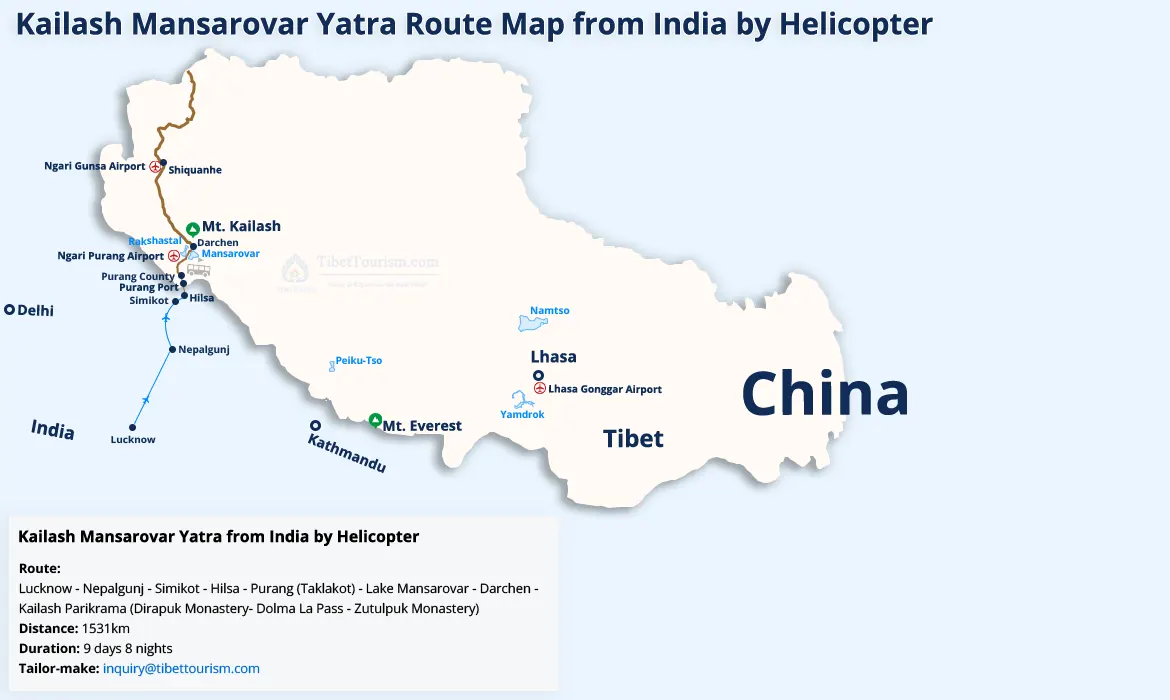 Kailash Mansarovar Yatra by Helicopter from India Map
Starting from Chaudhary Charan Singh Airport in Lucknow, traveller fly to Nepalgunj in Nepal, where they begin their adventure. From Nepalgunj, a short flight to Simikot followed by a helicopter ride to Hilsa leads to the entry point into Tibet via Taklakot/Purang. The helicopter route highlights include the sacred Parikrima of Mount Kailash, a visit to Lake Mansarovar, Yama Dwar, and the opportunity to perform Puja and dip in the holy waters of Mansarovar. After acclimatization in Purang, the journey continues to Darchen, the starting point for the trek around Mount Kailash. Trekking through Dirapuk, Dolma La Pass, and Zuthulphuk offers wonderful views and spiritual fulfillment. 9-day Lucknow to Tibet Mount Kailash helicopter group tour by Tibet Horizon offers a convenient and budget-friendly option for pilgrims with limited time.
5. Visa & Travel Permit for Mt. Kailash Tour
For those setting off on a pilgrimage to Mount Kailash, obtaining the essential permits and visas is a critical part of the preparation. While certain nationalities can enter China visa-free for up to 15 days for tourism or other purposes, the typical duration of Kailash itineraries often exceeds this timeframe. Hence, obtaining an extra Chinese visa is advisable to ensure sufficient time for the journey, particularly if you plan to spend additional days exploring other cities or embark on a lengthy train journey before the fifteen-day tour at Mount Kailash.
Furthermore, as Mount Kailash is located in Tibet, traveller must obtain additional permits, including the Tibet Travel Permit, Aliens' Travel Permit, and Military Permit. These permits typically require around 8-9 days for processing through the Tibet Bureau. Please take note that a Chinese Group Visa is obligatory for traveller entering Tibet from Nepal.
To simplify this process and ease the administrative burden on traveller, Tibet Horizon facilitates the application process for all necessary permits, ensuring a more seamless and hassle-free experience for those preparing for their Kailash journey.
6. Best Time to Visit Kailash
The best time to visit Mount Kailash is usually from late spring to early autumn, which is from April to October. During this time, the weather is generally nice, with comfortable temperatures and less chance of rain. This makes it perfect for hiking and going around the mountain. Also, the trails are easier to walk on because most of the snow has melted, and there's less chance of bad weather.
For an enriched cultural and spiritual experience, consider timing your visit with the Saga Dawa Festival, which usually aligns with the full moon of the 4th month in the Tibetan calendar, typically falling in May or June. This festival, commemorating significant events in Lord Buddha's life, infuses the pilgrimage with religious ceremonies and rituals, making it more spiritually meaningful.
However, due to Mount Kailash's high altitude and the unpredictable weather conditions, it's important to check the forecast and plan your journey carefully. Also, consider things like how busy it might be and where you'll stay, especially in May and October when more tourists come. It's not a good idea to visit Mount Kailash in winter because the weather can be very unpredictable, especially after snowfall at the Droma-la Pass, which is a tough part of the trek.
7. Other Important Things to Know
If you're planning a trip to Mount Kailash, there are some important things to keep in mind when booking. Firstly, note that Tibet is usually closed to international tourists in late February and March due to travel restrictions. Traveller should generally have moderate physical fitness levels for traveling to Tibet. However, individuals with serious health conditions such as hypertension, heart disease, asthma, bronchitis, diabetes, and severe colds should avoid visiting Tibet.
Besides, altitude sickness is a big concern because you'll be traveling at heights above 5,000 metres multiple times during the trip. It's crucial to acclimatize properly when entering Tibet and as you ascend to higher altitudes.
Another important aspect of Mount Kailash is the kora route around the mountain. It's essential to know that for religious reasons, visitors are not allowed to set foot on the actual mountain.
8. Conclusion
In conclusion, embarking on a journey to Mount Kailash requires thorough planning and consideration of various factors to ensure a safe and fulfilling experience. Whether traveling from Nepal, Lhasa, Xinjiang, and India, obtaining the necessary permits, visas, and acclimatizing to high altitudes are crucial steps. With proper preparation and guidance from experienced tour operators, traveller can embark on this sacred pilgrimage with confidence, ready to immerse themselves in the spiritual and natural wonders of Mount Kailash.
22 years exp.| 5.0
 | Reviews
Tell me about your travel plan or contact me via inquiry@tibettourism.com
Tibet Kailash Travel Guide and Advice


Most Popular Tibet Kailash Tour Packages
-
![Lhasa to Everest Kailash and Mansarovar Small Group Tour]() Small Group Tour
Small Group Tour15 Days Tibet Mount Kailash and Lake Mansarovar Small Group Tour
Promo: Western Tibet tour around Mount Kailash
Dates & Price
![rili]()
![xiala]()
-
![Lhasa Everest Kailash Mansarovar Guge Kingdom Full Moon Small Group Tour]() Small Group Tour
Small Group Tour17 Days Lhasa Everest Kailash Mansarovar Guge Kingdom Full Moon Small Group Tour
Promo: Explore western Tibetan spirituality and culture around the sacred Mount Kailash
Dates & Price
![rili]()
![xiala]()


Please share your contact information, so we can send you the answer directly by email.

