
 inquiry@tibettourism.com


Do You Need to Train for Tibet Everest Base Camp?


 Content
Do you need to train for Everest Base Camp? The answer depends entirely on how you plan to get there. If you are visiting Everest Base Camp on the Tibet side by vehicle—which is how the vast majority of travelers do it—you do not need a dedicated fitness training plan. You will be sitting in a vehicle for most of the journey, with only short walks at viewpoints and at the base camp itself. But if you are planning to trek from Old Tingri to Everest Base Camp, a four-day high-altitude route that crosses a 5,150-meter pass, then yes, you need to train. This is a genuine trek, not a leisurely walk, and it demands preparation.
This article covers both scenarios. We will explain what the driving route requires, what the trekking route demands, and how to prepare for each.
Two Ways to Reach Tibet Everest Base Camp
Before we talk about training, let’s clarify the two options to get to EBC.
Option 1: Drive to Everest Base Camp in Tibet
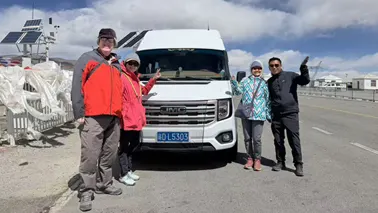
This is the standard Tibet Everest route for most travelers. You start in Lhasa, drive west along the Friendship Highway through Shigatse and Tingri, and eventually reach Rongbuk Monastery and Everest Base Camp. The entire journey is by vehicle. You will get out to take photos, visit monasteries, and walk short distances at viewpoints. At base camp itself, you may walk a few hundred meters from the parking area to the best viewing spot.
There are also two alternative ways to begin this journey. Some travelers enter Tibet from Nepal through the Gyirong or Zhangmu border crossing, driving north from the Nepal border into Tibet and then continuing eastward to EBC. Others take the high-speed train from Lhasa to Shigatse, which cuts several hours of driving, but from Shigatse onward you still travel by road to reach EBC. Whichever way you choose, the final stretch to base camp is always by vehicle.
The altitude gain is significant, rising from 3,650 meters in Lhasa to 5,200 meters at EBC, but the physical exertion is minimal. The challenge is altitude, not fitness.
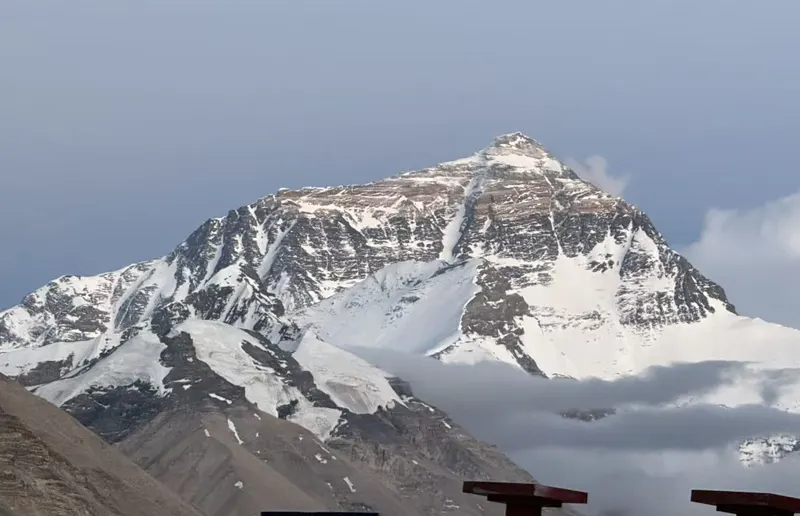 Tibet Everest Base Camp
Option 2: Trek from Old Tingri to Everest Base Camp in Tibet
This is a four-day trekking route that starts from Old Tingri at 4,300 meters and follows a classic trail through high valleys and remote villages to Rongbuk and Everest Base Camp. The route is roughly 70 kilometers and crosses the Lamna-la Pass at 5,150 meters.
Here is the typical itinerary:
Day 1: You walk from Old Tingri (4,300m) to Lungjiang (4,510m), covering approximately 12 kilometers.
Day 2: You trek from Lungjiang to Lamna-la (5,150m), covering approximately 21 kilometers and crossing the pass.
Day 3: You descend from Lamna-la to Zombuk or Chaya Pass, covering approximately 22 kilometers.
Day 4: You trek to Rongbuk and EBC (5,200m), covering approximately 15 kilometers.
This is a genuine high-altitude trek. You will be walking five to seven hours per day, gaining and losing elevation, and sleeping in tents or basic guesthouses. The physical demands are real. If this is your plan, training is not optional. It is essential.
Fitness Requirements for Traveling to EBC in Tibet
Driving to EBC in Tibet
Let’s start with the easier scenario. If you are driving to EBC, here is what you actually need:
You need to be able to sit in a vehicle for five to eight hours per day without severe discomfort. You need to be able to walk short distances, such as a few hundred meters, at an altitude of 5,200 meters. You need reasonably good general health, with no severe heart or lung conditions. You need to be able to sleep at high altitude, which can be challenging but is not a fitness issue.
What you do not need:
You do not need cardiovascular endurance training. You do not need strength training. You do not need to do practice hikes. You do not need any specific fitness regimen. If you can complete a normal day of sightseeing in a city, walking a few kilometers, standing for a while, and sitting in a car, your fitness level is sufficient for the driving route to EBC. The altitude will affect you regardless of how fit you are, and fitness does not prevent altitude sickness.
Also, you do not need to prepare a car by yourself; just join our guided EBC tour and we’ll handle all the logistics including permits, vehicle, and accommodation.
Trekking from Old Tingri to EBC in Tibet
Now the harder scenario. If you are planning the four-day trek from Old Tingri to EBC, you need to prepare properly.
What the trek demands:
You will be walking five to seven hours per day for four consecutive days. You will be hiking on uneven terrain, including rocky paths and stream crossings. You will be crossing a 5,150-meter pass, which is physically demanding. You will be sleeping at high altitude in tents or basic guesthouses.
This is not a technical climb. You do not need ropes, crampons, or mountaineering skills. But after all, it is a trek at high altitude. The combination of daily walking and thin air makes it more challenging than a similar trek at lower elevation.
How fit do you need to be?
You should be able to walk 15 to 20 kilometers in a day without extreme exhaustion. You should be able to climb stairs or a steep hill. If you can do these things, you are physically prepared for the trek. If not, you need to train.
How to Train for the Old Tingri to EBC Trek
If you have decided to trek, here is how to prepare. Start at least two to three months before departure.
Cardiovascular Training
You should build your aerobic base with three to four sessions per week. Running, cycling, swimming, or brisk
walking are all effective. You should start with 30 minutes per session and gradually increase to 45-60 minutes.
The goal is to improve your heart and lung capacity so that you can sustain effort for hours at a time.
Strength Training
You should focus on your legs and core. Squats, lunges, step-ups, and deadlifts build the muscles you will use on
the trail. Core exercises such as planks and leg raises help you maintain stability while carrying a backpack.
You should do strength training two to three times per week.
Hill and Stair Training
The Old Tingri trek involves continuous ups and downs. You should train on hills or stairs whenever possible.
Find a steep hill or a long staircase and walk up and down repeatedly. You should wear the hiking boots you plan
to use on the trek to break them in and strengthen your ankles.
Weighted Hikes
As your trek approaches, you should start doing longer hikes with a weighted backpack. Begin with 5 kilograms and
gradually increase to 10-15 kilograms. This simulates the demands of the trek and helps you dial in your gear.
Altitude Considerations
No amount of training fully prepares you for altitude. Fit people still get altitude sickness. The key is to
ascend slowly, stay hydrated, and listen to your body. If you are doing the Old Tingri trek, the itinerary
includes gradual altitude gain, which helps. But you should still spend two to three days acclimatizing in Lhasa
before starting the trek.
Training Timeline for the Old Tingri to EBC Trek
Three months before departure, you should start cardiovascular and strength training.
Two months before departure, you should add hill training and begin weighted hikes.
One month before departure, you should do longer hikes with your daypack.
One week before departure, you should taper your training and focus on rest and recovery.
On arrival, you should acclimatize in Lhasa for two to three days before beginning the trek.
Mental Preparation: Just as Important
Physical training is only half the battle. High altitude affects your mood, sleep, and energy levels. You may feel irritable, exhausted, or discouraged, even if you are physically fit. You should prepare mentally by accepting that you may feel uncomfortable at times. Listening to your guide’s advice and follow their steps. Remembering that the journey is as important as the destination. Just listen to your body and enjoy the beautiful scenery on route. The trek from Old Tingri to EBC is challenging, but it is also incredibly rewarding. The views of Mt. Everest’s north face from the trail are spectacular, and arriving at base camp on foot gives you a sense of accomplishment that driving cannot match.
 Everest Base Camp Tour in Tibet
Which Option Is Right for You?
You should choose the Everest driving route if: you have limited time, as most Lhasa-EBC tours are seven to eight days. You prefer comfort and want to avoid strenuous physical activity. You are traveling with family members of varying fitness levels. You want to focus on cultural sightseeing alongside the Everest experience.
You may choose the Old Tingri trek if: you have more time and want a genuine trekking experience. You are physically fit and enjoy hiking. You are prepared to train for two to three months before departure.
Conclusion
So, do you need to train for Everest Base Camp? If you are driving, the answer is no. You need general good health and a willingness to take it slow at altitude. If you are trekking from Old Tingri, the answer is yes. You need a proper training plan that builds cardiovascular fitness, leg strength, and hiking endurance.
Either way, the most important preparation is not just physical but also mental. Altitude affects everyone differently, and the best-laid training plans cannot guarantee you will feel great at 5,200 meters. What you can control is your preparation, your pacing, and your attitude. Whether you drive or trek, standing at the foot of the world’s highest mountain is an experience that stays with you forever. Prepare well, and enjoy every step of the journey.
10 years exp.| 5.0
 | Reviews
Tell me about your travel plan or contact me via inquiry@tibettourism.com
Tibet Shigatse Travel Guide and Advice

Most Popular Tibet Tour Packages
-
![Lhasa Everest Base Camp Kathmandu Overland Small Group Tour]() Small Group Tour
7 Days Lhasa Everest Base Camp Kathmandu Overland Small Group Tour
Promo: Classic overland travel route from Lhasa to Kathmandu via Gyirong / Nyalam
Dates & Price
![rili]()
![xiala]()
-
![Lhasa Shigatse Mount Everest Small Group Tour]() Small Group Tour
8 Days Lhasa Shigatse Mount Everest Small Group Tour
Promo: Once-in-a-lifetime chance to face the tallest mountain in the world
Dates & Price
![rili]()
![xiala]()
-
![Kathmandu to Lhasa Overland Small Group Tour with EBC]() Small Group Tour
8 Days Kathmandu to Lhasa Overland Small Group Tour with EBC
Promo: Drive Across Himalaya Overland Tour with altitude rising slowly
Dates & Price
![rili]()
![xiala]()


Please share your contact information, so we can send you the answer directly by email.

