
 inquiry@tibettourism.com


.webp)


Bhutan to Mount Kailash via Kathmandu: Why This Is the Best Way


.webp) Content
ContentFor travelers wishing to embark on a Kailash Yatra from Bhutan, traveling via Nepal is undoubtedly the optimal route. Bhutan is also deeply steeped in Tibetan Buddhist culture, sharing profound historical ties and religious beliefs with Tibet. As one of the most vital international travel hubs in the Himalayas, Kathmandu serves as a crucial gateway connecting South Asia with the Tibet Autonomous Region. From this starting point, travelers can enter Tibet through the Gyirong Border before continuing to Saga and Mount Kailash. Consequently, for pilgrims setting out from Bhutan, the Bhutan - Nepal - Tibet Kailash itinerary represents a pilgrimage route that is rich in both religious significance and cultural charm.
Why Kathmandu Is the Best Gateway for Kailash Tour from Bhutan
Thanks to its prime geographical location and increasingly complex infrastructure, Nepal has emerged as a gateway connecting South Asia with Tibet.
Abundant International Flight Options
One of Kathmandu’s most significant advantages is its convenient international airlines. Tribhuvan International Airport in Kathmandu boasts an extensive network of direct routes linking it to major cities across Asia and the Middle East. This greatly facilitates travelers from Bhutan, India, Thailand, Qatar, and other regions, enabling them to travel directly from Kathmandu to Mount Kailash, bypassing the hassle of multiple transfers.
Simplified China Visa & Tibet Travel Permit Logistics
If you meet China’s visa-exemption policy or already hold a valid China Visa, you can travel directly from Kathmandu to Tibet. Even if your Kailash tour originates in Bhutan, you can still obtain all necessary visas and travel permits for the Kailash trek: Tibet Travel Permit, Aliens’ Travel Permit, and Military Area Entry Permit.
Gradual Altitude Acclimatization
Traveling from Bhutan to Kailash Parvat via a brief stopover in Kathmandu, followed by overland, which allows you ample time to acclimatize to the altitude. This helps you to adapt the environment more effectively while offering greater flexibility in your itinerary.
Cultural Synergy and Sacred Sites
Spanning the majestic Himalayas from Bhutan through Nepal to Tibet, this pilgrimage route offers a journey rich in cultural depth and spiritual significance. In Bhutan, you will immerse yourself in the serene atmosphere of Tibetan Buddhism. Upon arriving in Nepal, the cultural landscape becomes more diverse: world heritage-listed temples, historic Durbar Squares, and a stream of pilgrims. As your journey extends into Tibet, the spiritual experience gradually becomes even more profound and pure.
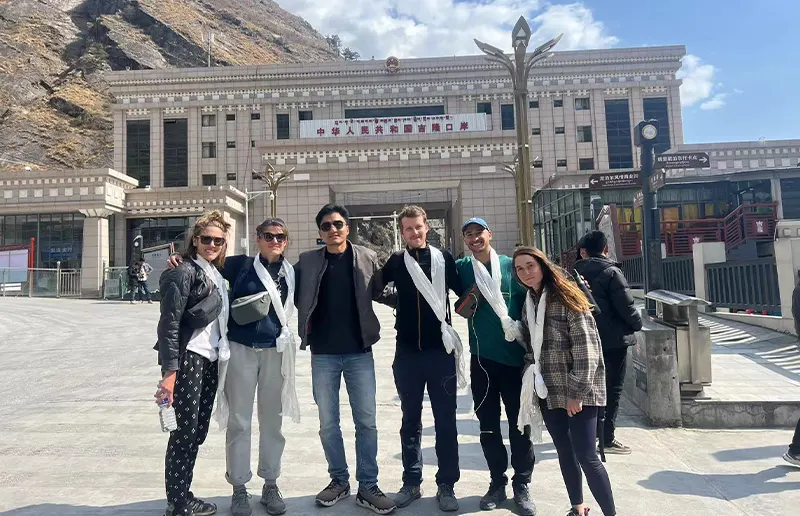 Kathmandu to Kailash via Gyirong Border
Complete Route Breakdown: Bhutan - Nepal - Mount Kailash
Currently, there are no direct flights from Bhutan to Mount Kailash or other regions of Tibet; consequently, traveling via Kathmandu remains the optimal solution. Furthermore, choosing this route offers a unique opportunity to experience the distinct cultural and humanistic flavors of three different regions within a single journey.
Phase 1: Flying from Paro to Kathmandu
Your journey typically begins at Bhutan’s only international airport - Paro International Airport. Currently, international flights from Bhutan to Kathmandu are primarily operated by Bhutan Airlines, offering a convenient cross-border connection.
The flight duration from Paro to Kathmandu is typically around 1 to 1.5 hours. One-way fares are approximately $700. However, flight frequency is limited, with direct flights usually available only on Mondays, Tuesdays, or Wednesdays. Although the flight is relatively short, it offers breathtaking aerial scenery along the way. On clear days, you may even have the opportunity to catch a distant glimpse of Mount Everest and the majestic Himalaya peaks during your flight.
Phase 2: The Overland Route via Gyirong from Kathmandu to Tibet Entry
Upon your arrival in Kathmandu, it is typically necessary to have contacted a travel agency in advance to arrange the relevant Tibet travel permits required for your Kailash Mansarovar tour. Alternatively, you may choose to spend a few days in Nepal to explore its unique culture.
Currently, most international travelers opt to enter Tibet via the Gyirong Border, which is the most frequently used and generally most reliable route. The driving journey from Kathmandu to the border takes about 6 hours, bringing you to Rasuwagadhi Border. After completing your exit formalities there, you will walk a short distance across to the Gyirong Border to undergo Chinese customs inspection. Once the entry procedures are complete, the guide and driver from Tibet Horizon will be waiting for you at the border. Typically, the itinerary includes an overnight stay at Gyirong to allow for acclimatization before continuing to Kailash.
Throughout this journey spanning the Himalayas, you will experience a gradual transition - moving from the vibrant bustle of Kathmandu to the serene, lush landscapes of the Gyirong Valley. Along the way, both the natural scenery and the cultural atmosphere undergo a constant and fascinating change.
Phase 3: Gyirong Border to the Sacred Kailash Kora
Departing from Gyirong, you will set forth toward the sacred Mount Kailash. You will travel through Saga and Paryang, admire distant views of Mount Shishapangma and the breathtaking Pelkhu Tso Lake, and eventually arrive at the shores of Lake Mansarovar. You will have a full day at the lakeside to meditate, offer prayers, and take strolls. After completing the visit, you will continue to reach Darchen - the starting point for the Kailash Yatra. Typically, you will spend one night in Darchen to better acclimatize to the high altitude or to prepare any equipment you may need for the pilgrimage ahead.
Following a night of ample rest, you will officially embark on the Kailash Parikrama - a pilgrimage journey lasting about three days. Traversing Dirapuk and Zutulpuk Monasteries, crossing the Dolma La Pass and Gauri Kund, you will complete a spiritual and physical challenge that becomes an unforgettable experience of a lifetime.
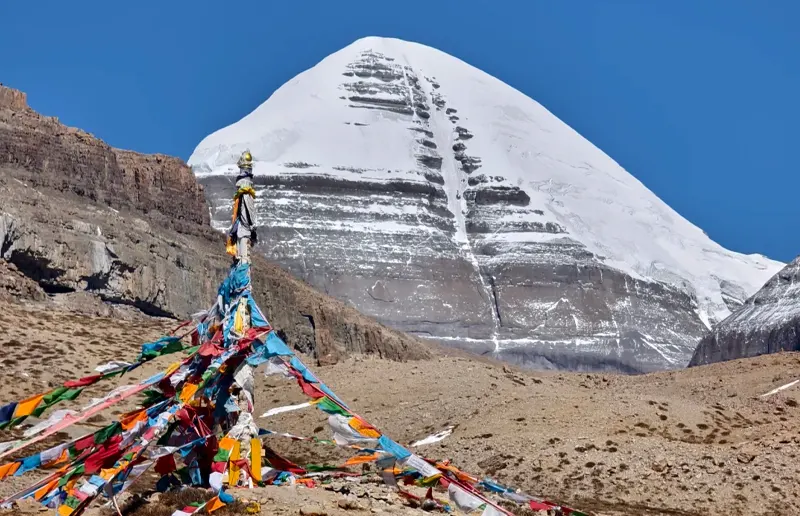 Kailash Yatra from Bhutan
Essential Logistics for Traveling from Bhutan to Kailash 2026
Beyond simply knowing the best travel routes, you also need to familiarize yourself with a range of other essential travel tips to help you better plan your Bhutan to Kailash tour.
Visas and Tibet Travel Permits: Traveling from Bhutan to Kailash
Except for citizens from India, Bangladesh, and the Maldives, all international travelers are required to obtain a visa to enter Bhutan. You may apply for a Bhutanese Visa in advance by contacting a local travel agency in Bhutan or Tibet Horizon. The fee for a single-entry visa is just $40.
Additionally, you will need to obtain a Nepalese Visa to travel from Bhutan to Nepal. The most convenient way to secure a Nepalese visa is to apply for a "Visa on Arrival" upon arrival at the airport. The processing time takes approximately 30 minutes. You will need to have your passport, one passport-sized photo, a completed application form, and the $30 visa fee ready. Once the visa processing is complete, your passport and visa will be returned to you, at which point you may officially enter Nepal.
When traveling from Nepal into Tibet, if you meet China's visa-exemption policy, you may proceed directly to Mount Kailash. Even if you come from a country not covered by the visa-free policy, you can still travel smoothly from Bhutan to Kailash via Kathmandu by obtaining a China Visa in advance within your home country.
Regardless of your starting point for the journey to Kailash, you are required to apply in advance for several essential Tibet travel permits: the Tibet Travel Permit, the Aliens’ Travel Permit, and the Military Area Entry Permit.
Best Time for Kailash Tour from Bhutan
If you want to create unforgettable travel memories encompassing both Bhutan and Kailash Parvat, the best times to visit are typically during the Spring (April to June) and Autumn (September to October).
In the spring, Bhutan’s weather warms up, and flowers are in full bloom; this is also the perfect time to attend the traditional Paro Tshechu and marvel at the dramatic masked cham dance and giant Thangka. Concurrently, this marks the opening of the Mount Kailash, offering you the chance to participate in the Saga Dawa Festival and experience a grand Tibetan cultural celebration. In the autumn, visibility in the Kailash and Mansarovar is exceptionally high, making it an ideal time for trekking and photography, while the scenery throughout Tibet is at its most beautiful. Meanwhile, autumn in Bhutan coincides with the harvest season, allowing you to gaze upon vast expanses of golden rice paddies and participate in Thimphu Tshechu.
Packing List for Bhutan to Kailash Tour
Traveling from Bhutan to Tibet Kailash via Kathmandu involves transitioning from warm, humid valleys to high-altitude plateaus, resulting in significant shifts in both climate and terrain. Regarding clothing, you should pack changeable clothing that includes lightweight attire but also warm layers, such as down jackets, to accommodate the substantial temperature fluctuations between day and night. Additionally, it is essential to bring moisturizing and sun-protection products, as the Kailash region has intense ultraviolet radiation and dry air. Finally, you may also wish to pack common medications to help safeguard your health.
Conclusion
For travelers from Bhutan to Kailash, the route via Nepal is undoubtedly the most ideal choice. Compared to flying to a Chinese Mainland city before entering Tibet, this route is more direct, efficient, and flexible. You can fly directly from Bhutan to Kathmandu and enter Tibet through the Gyirong Border. Furthermore, this route enriches your trip with additional cultural and travel experiences, transforming the journey from a singular destination into a diverse multicultural expedition spanning Bhutan, Nepal, and Tibet.
7 years exp.| 5.0
 | Reviews
Tell me about your travel plan or contact me via inquiry@tibettourism.com
Bhutan to Tibet Kailash Travel Guide & Advice


Most Popular Bhutan to Kailash Tour Packages

Please share your contact information, so we can send you the answer directly by email.

