
 inquiry@tibettourism.com


.webp)


Where Is Mount Everest Located?


.webp) Content
ContentMount Everest, the world’s highest peak, measures 8,848.86-meter high. It sits on the border between China and Nepal. The north slope belongs to China, the south slope to Nepal. The summit itself marks the meeting point of the two countries’ border—it belongs to both nations, and to all of humanity.
But for travelers, all that geography fades the moment you stand at Everest Base Camp and look up at that massive pyramid-shaped peak. The coordinates, the border lines, the statistics stop mattering. What matters is that you’re there, standing at the foot of the highest place on Earth.
This article tells you where Everest is, how to get there, when to see it at its most beautiful, and—most importantly—why you should come see it for yourself.
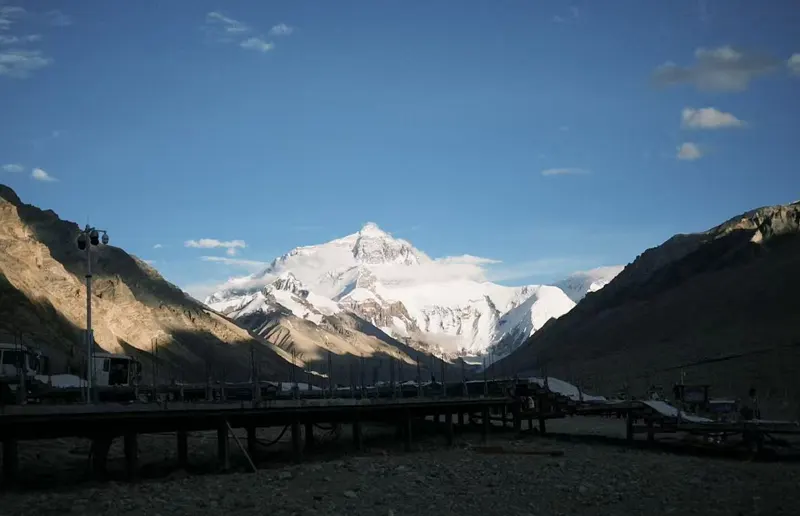 Mount Everest
Which Mountain Range Does Everest Belong To?
Mount Everest is part of the Himalayas. The Himalayan range stretches about 2,400 kilometers across five countries: China, Nepal, India, Bhutan, and Pakistan. It contains 10 of the world’s 14 peaks over 8,000 meters—and Everest is the highest of them all.
About 50 million years ago, the Indian plate collided with the Eurasian plate, pushing up the Earth’s crust to form the Himalayas and the Tibetan Plateau. That collision is still going on. Everest is still rising by about 4 millimeters every year. In other words, every time you visit, it’s a tiny bit higher than before.
Which Country Does Mount Everest Belong To?
Mount Everest belongs to both China and Nepal.
The north slope lies in Tingri County, Tibet Autonomous Region, China. The south slope lies in Nepal. The summit itself marks the border between the two countries. They share the mountain.
But this border wasn’t always there. Before 1960, China and Nepal had differing views on who owned Everest. Nepal’s position was strengthened when New Zealander Edmund Hillary and Nepali Sherpa Tenzing Norgay made the first successful summit from the south side in 1953. At that time, no one had ever climbed Everest from the north side. It was considered more difficult.
In 1960, a Chinese expedition team made the first successful ascent from the north slope. This achievement not only made mountaineering history but also strengthened China’s position in border negotiations. In 1961, China and Nepal signed a border treaty officially establishing Everest as a border peak—the north slope to China, the south slope to Nepal, with the summit marking the boundary.
For travelers, this means you can stand at the foot of the world’s highest peak from the Tibet side—no climbing required, just a visit to Everest Base Camp.
Where Is Everest Base Camp?
Mount Everest has two main base camps, one on each side:
Nepal Side (South Base Camp)
Elevation: approximately 5,364 meters
Requires 10-14 days of trekking to reach
Tibet Side (North Base Camp)
Elevation: approximately 5,200 meters
Accessible by vehicle—this is the big advantage. Best for most travelers; no trekking or climbing experience
needed.
For 99% of visitors, the Tibet side is the best way to see Everest. No long treks, no multi-day hikes. Just a scenic drive to the foot of the world’s highest mountain.
How to Get to Everest Base Camp
Getting to Everest Base Camp on the Tibetan side is surprisingly straightforward. Unlike the Nepali side, which requires a multi-day trek, the Tibet EBC is accessible by road. There are two main ways to get there: starting from Lhasa in Tibet, or entering Tibet from Kathmandu, Nepal.
Option 1: From Lhasa (The Classic Route)
This is the most popular route for travelers visiting Tibet. The journey from Lhasa to Everest Base Camp takes 3 to 5 days by road and is one of the world's great overland trips .
Here's what the typical route looks like:
Lhasa (3,650m): Start your journey with 2-3 days of sightseeing and acclimatization. Explore the Potala Palace,
Jokhang Temple, and Barkhor Street.
Shigatse (3,800m): Drive west along the Friendship Highway, passing the turquoise Yamdrok Lake, Karola Glacier,
and the historic town of Gyantse. In Shigatse, visit the Tashilhunpo Monastery, the seat of the Panchen Lama.
Gyawula Pass (5,200m): An incredible viewpoint where, on a clear day, you can see five 8,000-meter peaks in a
row, including Everest, Lhotse, Makalu, Cho Oyu, and Shishapangma.
Rongbuk Monastery (4,980m): The world’s highest monastery and a spiritual landmark just 8 kilometers from the
base camp.
Everest Base Camp (5,200m): Your final destination. From here, you'll have an unobstructed view of Mt. Everest’s
majestic north face.
Recommended Lhasa to Everest Base Camp Tours
8 Days Lhasa Shigatse Mount Everest Small Group Tour: The classic Everest loop, perfect for travelers with
limited time. This well-paced journey combines Lhasa’s cultural treasures with the unforgettable moment of
standing at Everest Base Camp. From the Potala Palace to the north face of Mount Everest, this tour delivers
Tibet’s greatest hits in just over a week.
7 Days Lhasa Everest Base Camp Kathmandu Overland Small Group Tour: A cross-border adventure from Tibet to Nepal,
with Everest at its heart. Start in Lhasa, travel overland to Everest Base Camp, then continue through the
Himalayan foothills into Kathmandu. Perfect for travelers who want to experience two countries in one
unforgettable journey.
9 Days Lhasa Shigatse Everest Base Camp Namtso Small Group Tour: Mt. Everest and a sacred lake in one trip. After
visiting Everest Base Camp, return via the northern route to the turquoise Namtso Lake, framed by the
snow-capped Nyenchen Tanglha range. A perfect balance of mountain majesty and lake serenity.
Note: Since Gyirong Port was damaged by a mudslide in August 2026, it is better to travel back to Lhasa and fly to Kathmandu or your next destination.
Option 2: From Kathmandu, Nepal
For travelers combining Nepal and Tibet, this route offers a seamless overland transition from Kathmandu to Everest. The total driving distance from Kathmandu to Everest Base Camp in Tibet is approximately 500 kilometers.
Step-by-Step Route:
Drive to the Border (6-7 hours): From Kathmandu, you’ll travel by private or public vehicle to Rasuwagadhi on the
Nepali side.
Cross the Gyirong Border: After completing Nepali exit formalities, you will cross into Gyirong Port in Tibet,
where you’ll pass through Chinese immigration.
Drive to EBC: It’s a full day’s drive to Everest Base Camp, passing through stunning mountain scenery and high
passes.
Note: It is better to fly from Kathmandu to Lhasa and then join a tour from Lhasa to EBC. The flight takes about 1.5 hours and offers stunning views of the Himalayas, but can be affected by weather.
When Is the Best Time to See Mount Everest?
The best time to see Mount Everest from the Tibetan side is during the spring months of April and May and the autumn months of September and October. During these windows, the weather is generally stable, the skies are clear, and visibility is at its peak—offering you the best chance to see Everest’s iconic north face unobstructed. April and May bring mild temperatures and fewer crowds, making it a favorite among photographers and early-season travelers. September and October, often called the “golden season”, deliver the most reliable weather and crisp, crystal-clear air, perfect for sunrise and sunset views of the peak.
June through August falls within the summer monsoon season—while you can still travel, afternoon clouds and occasional rain showers may obscure the summit, though the surrounding valleys are lush and green. From November through March, extreme cold, heavy snow, and frequent road closures make travel to Everest Base Camp challenging and not recommended for most visitors.
For the clearest, most breathtaking views of the world’s highest peak, plan your journey for spring or autumn—and prepare for a moment you will never forget.
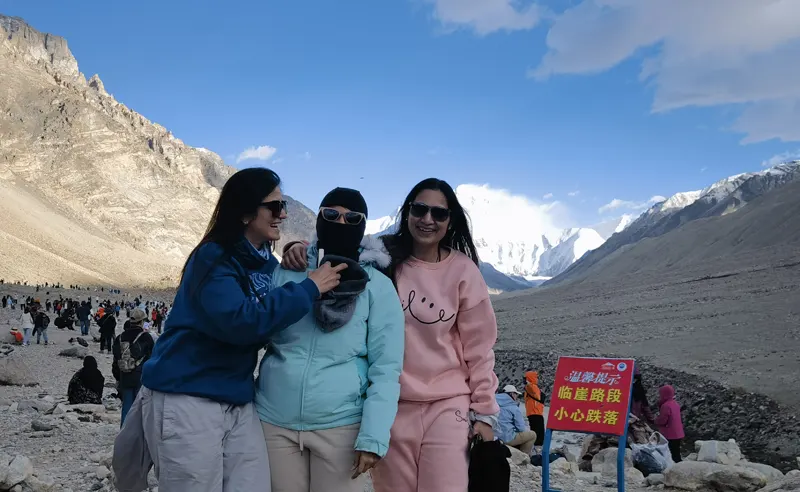 Mount Everest Base Camp
Conclusion: Mount Everest is Within Your Reach
Where is Mount Everest? On the border between China and Nepal, towering above the Himalayas. But more importantly—it’s within your reach.
Why Should You See Everest with Your Own Eyes? Mount Everest is the highest place on Earth. For most people, 8,848.86 meters is just a number until you stand in front of it. When you stand at base camp and look up at that immense peak, you feel something words can’t capture. It’s not just awe. It’s something deeper. You’ll understand why climbers risk everything to reach the summit, and why travelers cross oceans just to stand in its shadow.
Our Everest Base Camp tours take you to the foot of the world’s highest peak. No climbing, no extreme trekking—just the chance to stand before the greatest mountain on Earth. You just need to stand at base camp and look up and you’ll remember it for the rest of your life.
2 years exp.| 5.0
 | Reviews
Tell me about your travel plan or contact me via inquiry@tibettourism.com
Tibet Shigatse Travel Guide and Advice

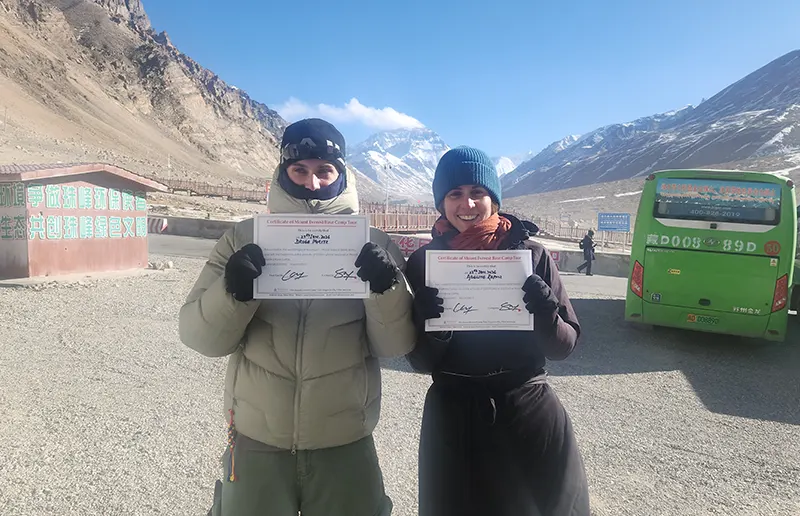


Most Popular Tibet Tour Packages
-
![Lhasa Everest Base Camp Kathmandu Overland Small Group Tour]() Small Group Tour
Small Group Tour7 Days Lhasa Everest Base Camp Kathmandu Overland Small Group Tour
Promo: Classic overland travel route from Lhasa to Kathmandu via Gyirong / Nyalam
Dates & Price
![rili]()
![xiala]()
-
![Lhasa Shigatse Mount Everest Small Group Tour]() Small Group Tour
Small Group Tour8 Days Lhasa Shigatse Mount Everest Small Group Tour
Promo: Once-in-a-lifetime chance to face the tallest mountain in the world
Dates & Price
![rili]()
![xiala]()
-
![Kathmandu to Lhasa Overland Small Group Tour with EBC]() Small Group Tour
Small Group Tour8 Days Kathmandu to Lhasa Overland Small Group Tour with EBC
Promo: Drive Across Himalaya Overland Tour with altitude rising slowly
Dates & Price
![rili]()
![xiala]()


.webp)


Please share your contact information, so we can send you the answer directly by email.

