
 inquiry@tibettourism.com


.webp)


Tibet Train Survival Guide: Food, Toilets, Oxygen & Altitude Sickness


.webp) Content
ContentWhat is it like on the Tibet Train? Is it comfortable, safe for foreigners, and worth taking? Does it have hot water and oxygen? These are some of the most common questions asked by first-time travelers to Tibet. This guide covers everything you need to know about food, toilets, oxygen supply, and altitude sickness, helping you prepare for a safe, comfortable, and unforgettable Tibet train tour.
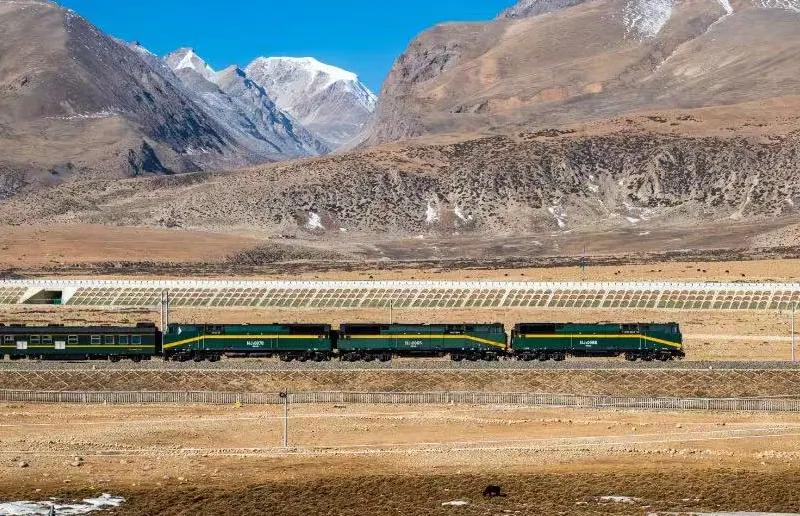 Tibet Train
Tibet Train Food Options: What to Eat on the Journey to Lhasa?
Food is an important part of any Tibet train journey, especially on the long trip to Lhasa. Many first-time travelers wonder what food is available on the Qinghai-Tibet Railway, whether meals are included, and if they can bring their own snacks. The good news is that the Tibet Train offers dining cars, snack trolleys, and free hot water for instant meals. Knowing your food options in advance can make your journey more comfortable and enjoyable.
1) Is Food Included on the Tibet Train Ticket? (And What Is Available Onboard)
No, food is not included in the price of a standard Tibet train ticket. However, you can buy meals and snacks onboard. The train provides a dining car, snack trolleys, bottled drinks, instant noodles, biscuits, and packaged foods. You can easily purchase food throughout your journey to Lhasa.
2) What Is on the Qinghai-Tibet Train Dining Car Menu? (And Is It Expensive?)
The Qinghai-Tibet Train dining car serves a variety of Chinese dishes, including rice meals, noodles, stir-fried vegetables, meat dishes, and soups. A freshly cooked dish in the dining car costs between $6 and $12 (approx. 40–80 RMB), while the boxed lunches from the aisle trolleys cost around $3 to $5 (approx. 20–35 RMB). Prices are generally higher than those in ordinary restaurants but are still reasonable for a long-distance train journey. Vegetarian options are also available on some trains.
Note: The menus are usually entirely in Chinese, and the kitchen staff rarely speak English. Pointing at pictures or using a translation app on your phone is the easiest way to order.
3) Is There Free Hot Water on Tibet Trains for Instant Meals? Yes!
All Tibet trains provide free hot water in every carriage. Passengers can use it to prepare instant noodles, oatmeal, tea, coffee, and other instant foods. Bringing your own cup noodles and snacks is a convenient way to save money and enjoy familiar food during the trip.
4) Can I Bring Food on the Tibet Train? (Best Snacks for the Tibet Train)
Yes, you can absolutely bring your own food, and doing so is one of the smartest Tibet train travel tips. Packing your own comfort food ensures you always have something to eat, especially if you are vegetarian, vegan, or have a sensitive stomach.
Refer to the comparison table below to choose the best dining option on the Tibet train.
| Food Source | Avg. Cost per Meal | Pros & Cons | Best For |
|---|---|---|---|
| Dining Car | $6 - $12 | Freshly cooked, great views, but limited English menus, and crowded | Lunch & Dinner |
| Aisle Food Trolley | $3 - $5 | Convenient (comes to your seat), but cools down quickly, fixed options | Quick, budget lunch |
| Bringing Your Own | Varies | 100% fits your taste, snacks available 24/7, but it adds luggage weight | Breakfast & Late-night |
| Food Source | Avg. Cost per Meal | Pros & Cons | Best For |
|---|---|---|---|
| Dining Car | $6 - $12 | Freshly cooked, great views, but limited English menus, and crowded | Lunch & Dinner |
| Aisle Food Trolley | $3 - $5 | Convenient (comes to your seat), but cools down quickly, fixed options | Quick, budget lunch |
| Bringing Your Own | Varies | 100% fits your taste, snacks available 24/7, but it adds luggage weight | Breakfast & Late-night |
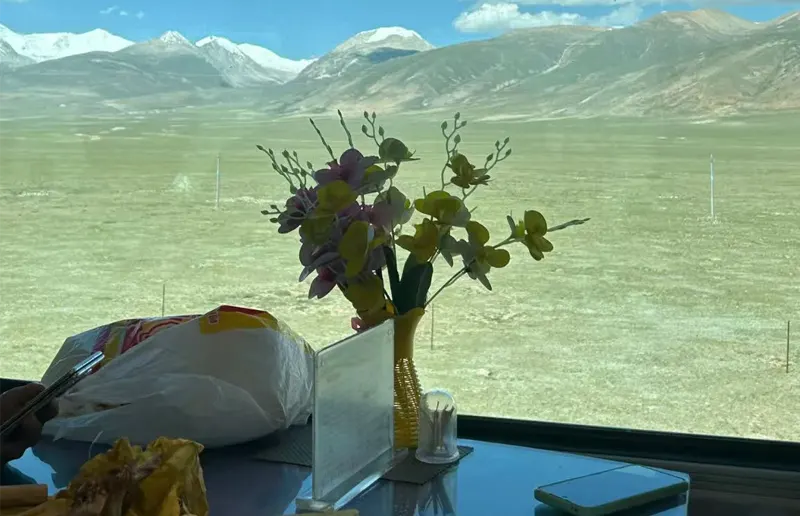 Dining Car
Tibet Train Toilet Conditions: What to Expect and How to Prepare?
Tibet train toilet conditions are a common concern for international travelers. As the journey to Lhasa can take 20 to 40 hours, knowing what to expect can help you prepare better. This section introduces the bathroom facilities and shares useful tips for a more comfortable Tibet train tour.
1) What Are the Tibet Train Toilet Conditions Really Like? (Are They Clean?)
The reality of the Tibet train toilet conditions depends heavily on your ticket class and the duration of your trip. When the train departs, the bathrooms are thoroughly cleaned and well-maintained. Onboard attendants work hard to clean and mop them regularly throughout the journey. However, cleanliness can vary depending on the number of passengers and the length of the journey. Bringing tissues, wet wipes, and hand sanitizer can help you stay comfortable during your trip to Lhasa.
2) Western vs. Asian Squat Toilets on Lhasa Train: What’s the Difference?
You do not need to worry about being forced to use a squat toilet if you aren't comfortable with it. Every passenger carriage on the train to Lhasa is equipped with two separate restrooms, one at each end of the car:
Western-style Toilet: One end features a modern, sitting toilet.
Asian Squat Toilet: The other end features a traditional stainless-steel squat toilet.
Tips: Because the train twists, turns, and rocks at high speeds, using either type of toilet on the Lhasa train requires some balance. Many travelers consider squat toilets more hygienic on a moving train because they avoid direct contact with the seat.
3) Are There Showers on the Tibet Train for Long Journeys? No!
There are no showers on the Tibet train, regardless of whether you book a hard seat, a hard sleeper, or a soft sleeper cabin. To maintain your personal hygiene, every carriage features a shared, open washing basin station outside the restrooms. This area includes three sinks with mirrors and faucets. While you cannot take a full bath, you can easily wash your face, brush your teeth, and do a quick cleanup here.
4) What Are the Absolute Tibet Train Bathroom Essentials to Pack?
For a comfortable journey on the Qinghai-Tibet Railway, it is recommended to pack tissues, wet wipes, hand sanitizer, a toothbrush, toothpaste, a small towel, and personal toiletries. A roll of toilet paper and disposable seat covers can also be useful. These Tibet train bathroom essentials will help you stay clean and comfortable during your trip to Lhasa.
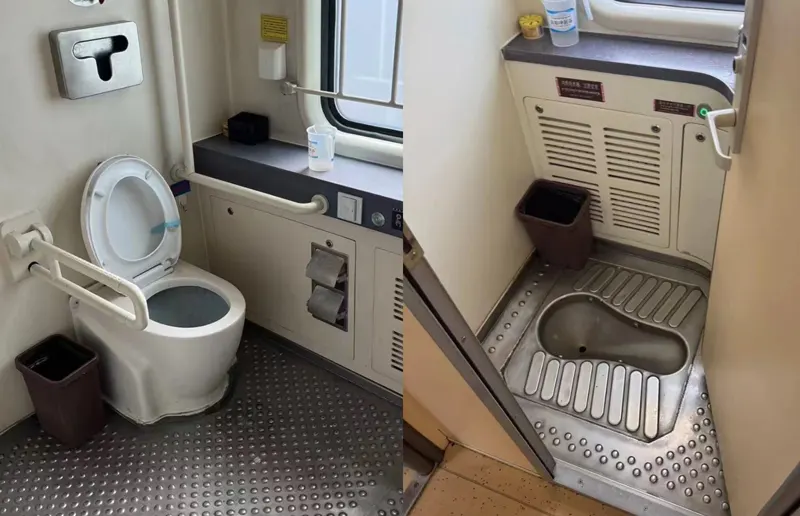 Western vs. Asian Squat Toilets on TIbet Train
Tibet Train Oxygen System: How to Breathe Easy at 5,000 Meters?
One of the biggest concerns for first-time travelers on the Tibet Train is whether they will have enough oxygen at high altitude. The Qinghai-Tibet Railway reaches elevations of more than 5,000 meters, including the Tanggula Pass (5,220m), the highest point on the journey to Lhasa. To help passengers adapt to the thin air, the train is equipped with a modern oxygen supply system. Understanding how the Tibet train oxygen system works can help you travel more confidently and reduce concerns about altitude sickness.
1) How Does the Tibet Train Oxygen System Work? (The Dual Modes)
The Tibet train oxygen system operates in two modes. The first is a diffused oxygen supply system, which releases oxygen throughout the carriage and increases the oxygen concentration in the cabin. The second is an individual oxygen supply system, which allows passengers to use supplemental oxygen through personal oxygen outlets. These dual modes help make the journey on the Qinghai-Tibet Railway safer and more comfortable.
2) Does Every Cabin Have Oxygen Access on the Train to Lhasa? Yes!
Every cabin has oxygen access, regardless of your ticket type. The whole-carriage oxygen system operates 24/7 in all cabins, including soft sleepers, hard sleepers, and hard seats. Furthermore, individual oxygen ports are available throughout all passenger areas. Every traveler can easily access supplemental oxygen if early symptoms of altitude sickness appear.
3) Where Are the Oxygen Outlets on the Lhasa Train Located?
Knowing exactly where the oxygen outlets on the Lhasa train are located will give you immediate peace of mind once you step on board. They are built directly into the infrastructure of your specific travel area:
In Soft and Hard Sleeper Cabins: The outlets are conveniently located on the wall right beside the head of each
bed or bunk.
In Hard Seat Carriages: The ports are built directly into the walls under the windows or beneath the seats.
In the Aisles: Emergency outlets are also placed along the corridor walls of the sleeper cars.
To access this individual supply, simply ask the train conductor for a disposable plastic oxygen tube (called a cannula). Plug one end into the blue wall outlet and place the other end under your nose to breathe normally.
4) Do I Need Extra Oxygen on the Tibet Train? (And Can You Buy It on Board?)
Most travelers do not need extra oxygen because the onboard oxygen system is usually enough to adapt to the high altitude. In addition, railway security regulations strictly prohibit passengers from carrying personal pressurized oxygen canisters. Such items will be confiscated during the security check before boarding.
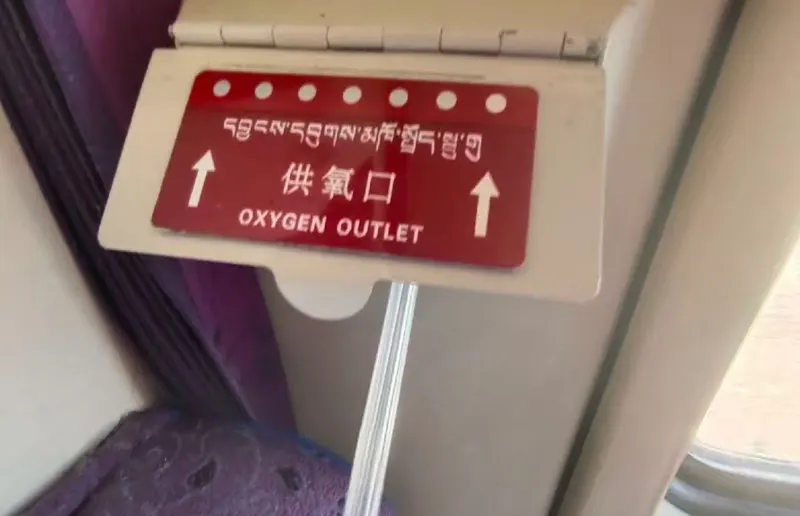 Tibet Train Oxygen System
Tibet Train Altitude Sickness: Is the Tibet Train Good for Acclimatization?
A common myth among travelers is that taking the train to Lhasa automatically prevents altitude sickness (AMS) by giving the body time to adapt. In reality, the train ascends too rapidly as it crosses the Tibetan Plateau for true natural acclimatization. However, because the train is equipped with emergency medical staff and a state-of-the-art oxygen supply, managing symptoms here is much easier than flying straight into Lhasa. This section explores what to expect regarding elevation changes and how to avoid AMS on the train to Lhasa.
1) Will I Get Altitude Sickness on the Tibet Train? (And How Bad Is It?)
Not everyone gets altitude sickness on the Tibet Train. Most travelers experience only mild symptoms, such as headache, dizziness, shortness of breath, or slight fatigue. Severe AMS is uncommon because the train ascends gradually and provides supplemental oxygen. However, individual reactions to high altitude vary, and some passengers may feel uncomfortable after the train passes 4,000 meters.
2) Can I Sleep Well on the Tibet Train with Altitude Sickness?
Most travelers can sleep reasonably well on the train to Lhasa, especially in soft sleeper cabins. However, high altitude may cause mild insomnia, frequent waking, or light sleep for some passengers. To get a restful night of sleep and combat high-altitude insomnia, use these practical tips:
Hook Up to the Oxygen Port: Do not hesitate to use the individual oxygen port next to your pillow. Breathing
concentrated oxygen while you sleep prevents nighttime hypoxia and headaches.
Elevate Your Head: Use an extra pillow or your jacket to prop your head up, which helps ease breathing and
reduces head pressure.
Avoid Sleeping Pills: Unless strictly prescribed by a doctor who understands high-altitude medicine, avoid heavy
sedatives. Sleeping pills suppress your respiratory system, which can dangerously worsen oxygen deprivation.
3) How to Avoid AMS on the Train to Lhasa? (Prevention & Treatment)
To prevent Acute Mountain Sickness (AMS) on the Tibet train, get enough rest before departure, stay hydrated, and avoid overeating and alcohol. Eat light meals and move around the carriage occasionally to improve circulation. If you develop symptoms such as headache or nausea, rest, drink water, and use supplemental oxygen if needed. Travelers with serious symptoms should seek assistance from train staff and consult a doctor if symptoms worsen after arriving in Lhasa.
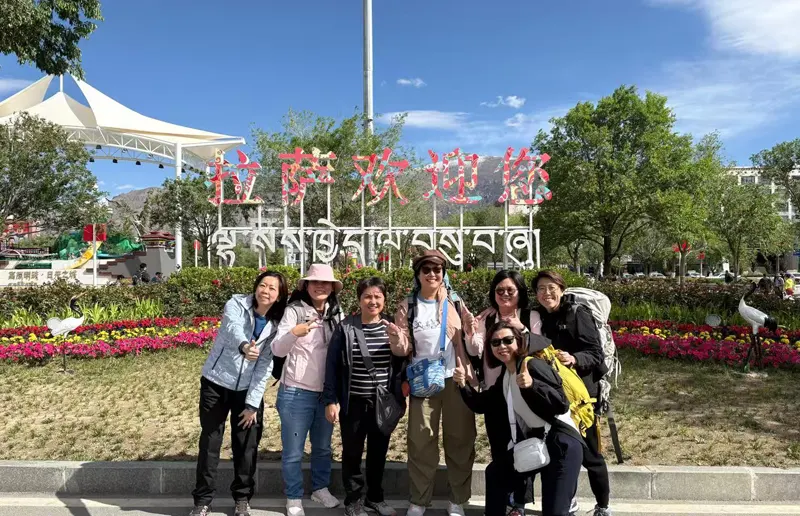 Tibet Train to Lhasa
Conclusion
Ultimately, this Tibet Train Survival Guide is all about smart preparation. By understanding the essentials of Tibet train food, toilets, oxygen supply, and altitude sickness, you can travel to Lhasa with confidence. With proper planning and a few practical travel tips, your Qinghai-Tibet Railway adventure will be safe, comfortable, and unforgettable.
2 years exp.| 5.0
 | Reviews
Tell me about your travel plan or contact me via inquiry@tibettourism.com
Related Tibet Travel Guide and Advice


Most Popular Tibet Tour Packages
-
![9 Days Lhasa Mount Everest Base Camp Namtso Join-in Group Tour]() Real Join-in Group Tour
Real Join-in Group Tour9 Days Lhasa Mount Everest Base Camp Namtso Join-in Group Tour
Promo: Classic trails to discover natural and cultural splendors of Tibet
Dates & Price (More Traveler, Lower Price)
![rili]()
![xiala]()


Please share your contact information, so we can send you the answer directly by email.

